Most of us learn our ABCs before we learn to tie our shoes. These twenty-six building blocks serve as the fundamental lexicon through which we navigate the world, construct knowledge, and articulate our deepest thoughts. Yet, despite their ubiquity in education, society often leaves a critical gap in our development: we are rarely taught the "Anxiety ABCs."
While anxiety is an evolutionarily ingrained, normal human emotion designed to protect us from genuine threats, it has become a pervasive source of distress in the modern era. When the biological "alarm" of anxiety strikes, many individuals are left without a psychological framework to interpret or manage the experience. This deficit of knowledge often transforms a protective mechanism into a debilitating hindrance. To bridge this gap, mental health advocates and practitioners are increasingly turning to the ABCtracker™—a systematic framework designed to help individuals decode their triggers and transform their response to distress.
Main Facts: Defining the ABCtracker™ Framework
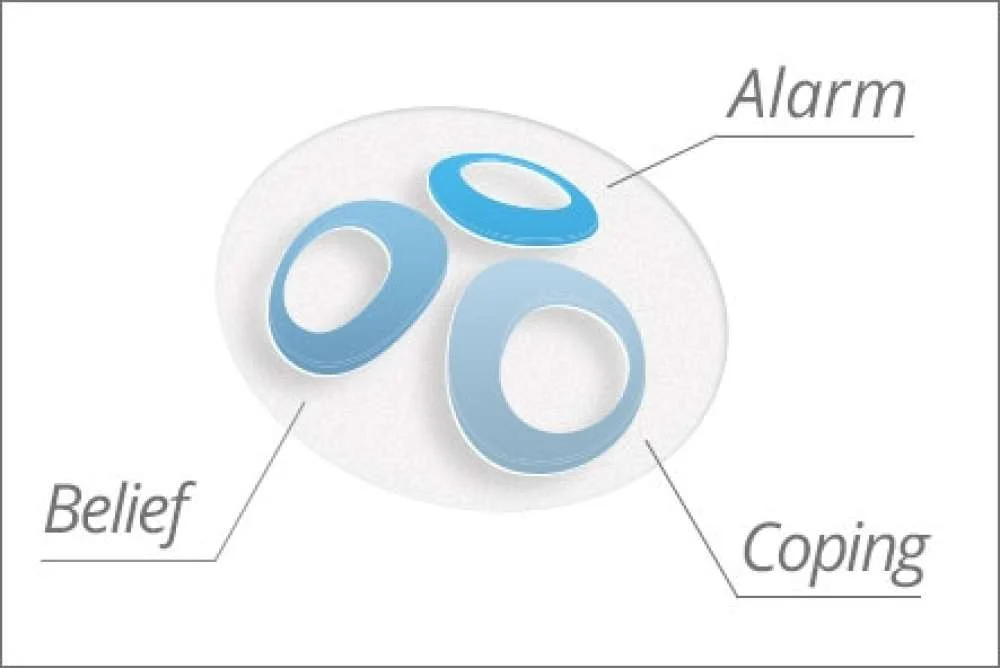
The ABCtracker™ is an acronym-based cognitive behavioral tool designed to demystify the anxiety cycle. By categorizing the internal experience into three distinct stages—Alarm, Belief, and Coping—the framework provides a roadmap for individuals to gain objectivity over their internal states.
The primary premise is that anxiety is not a monolithic "feeling" that just happens to us; it is a process. By breaking this process down, users can move from a state of reactive panic to one of conscious observation. The system is designed to be used in conjunction with guidance from physicians, psychologists, or licensed mental health professionals, serving as a diagnostic bridge between a patient’s lived experience and clinical intervention.
Chronology: The Evolution of Emotional Literacy
The integration of cognitive frameworks like the ABCs into daily mental hygiene did not happen overnight. Historically, anxiety management was relegated to either acute pharmacological intervention or long-term psychodynamic analysis.
- The Early Recognition Phase: For decades, psychologists have identified that anxiety disorders are often characterized by "catastrophic misinterpretation." Patients often viewed their physiological symptoms as inherently dangerous, creating a feedback loop of fear.
- The Cognitive Revolution (1960s–1980s): The development of Cognitive Behavioral Therapy (CBT) by Aaron Beck revolutionized the field. It introduced the idea that thoughts—not just external events—dictate our emotional responses.
- The Systematic Tracking Era (2000s–Present): With the rise of mobile health (mHealth) and the digital tracking movement, the need for simplified, portable cognitive tools became evident. The ABCtracker™ emerged as a practical application of CBT principles, allowing users to document their triggers in real-time, effectively creating a "data log" of their emotional life that could be reviewed during therapy sessions.
Supporting Data: Why "Alarms" Go Off Unchecked
To understand the efficacy of the ABC framework, one must first look at the neurobiology of anxiety. Research suggests that the amygdala—the brain’s "smoke detector"—is often hyper-reactive in those with generalized anxiety disorder (GAD) or panic disorder.
A: The Anatomy of the Alarm
An "Alarm" is an instinctive, physiological surge. In our ancestors, this was the fight-or-flight response triggered by a predator. Today, the "predator" might be an impending deadline, a social interaction, or even a vague sense of dread. For many, the problem is not the existence of the alarm, but its sensitivity. People with anxiety disorders often possess a "hair-trigger" alarm system, responding to neutral stimuli as if they were life-threatening. By tracking these alarms, users can distinguish between perceived danger and actual danger.
B: The Role of Beliefs
Once the alarm sounds, the brain immediately attempts to interpret the signal. This is the "Belief" stage. A person might feel a rapid heartbeat (the Alarm) and immediately conclude, "I am having a heart attack" or "I am going to fail this presentation." These beliefs are the fuel for the anxiety fire. The ABCtracker™ encourages users to challenge these automatic thoughts, forcing the brain to transition from emotional reasoning to logical evaluation.
C: The Architecture of Coping
The final stage is the action taken in response to the alarm and the belief. This is "Coping." Humans are instinctively driven to seek safety. If we believe a situation is dangerous, we will naturally attempt to avoid it or escape it. These are "maladaptive" strategies. While they provide short-term relief, they reinforce the belief that the situation was indeed dangerous. Developing "adaptive" coping strategies—such as grounding techniques, box breathing, or cognitive reappraisal—allows the individual to face the trigger without the cycle of fear, effectively "rewiring" the alarm system over time.
Official Responses: The Clinical Perspective
Mental health professionals have largely lauded the move toward "psychoeducation" tools like the ABCtracker™. Dr. Helena Vance, a clinical psychologist specializing in anxiety disorders, notes, "The most powerful tool a patient has is the ability to label their experience. When a patient can say, ‘My alarm is triggered, and I am currently forming a catastrophic belief about it,’ they have already created a degree of separation between their identity and their anxiety."
Professional organizations, including the American Psychological Association (APA), have consistently emphasized that tools for self-monitoring are most effective when supervised. The ABCtracker™ is not intended to replace therapy but to act as a catalyst for deeper therapeutic work. By providing the therapist with concrete, documented instances of how a patient processes stress, the clinical "data" becomes much richer, allowing for more precise interventions.
Implications: The Future of Proactive Mental Health
The shift toward using systematic frameworks to handle emotions has profound implications for public health. By normalizing the "ABCs of Anxiety," society can reduce the stigma associated with mental health struggles. When anxiety is framed as a biological alarm system that requires recalibration rather than a character flaw, individuals are more likely to seek help.
The Societal Impact
- Early Intervention: Teaching these ABCs in schools and workplaces could mitigate the development of chronic anxiety disorders. If a student understands their "Alarm" before it becomes a panic attack, they can apply "Coping" mechanisms early.
- Personal Agency: The digital age has brought an increase in reported anxiety symptoms, largely due to information overload and the constant "pinging" of our devices. A framework that encourages users to track their internal alarms provides a necessary counter-balance to the external noise.
- Optimizing Clinical Outcomes: As healthcare moves toward a model of personalized medicine, the use of data-driven tracking tools will likely become standard. Patients who are "data-literate" regarding their own triggers are more likely to adhere to treatment plans and achieve long-term remission.
Conclusion: Mastering the Beginner’s Mind
Every master starts as a beginner. The ABCtracker™ is a deceptively simple tool, yet its implementation requires consistent practice. It asks us to look directly at our fear, to name our internal alarms, to interrogate our beliefs, and to choose our coping mechanisms with intention.
In a world that is increasingly volatile, the ability to maintain emotional stability is perhaps the most valuable skill one can acquire. By mastering our own ABCs, we do more than just manage anxiety; we reclaim the narrative of our lives. We move from being passive recipients of our physiological reactions to becoming the masters of our own psychological well-being. The alarm will always sound—that is part of being human—but through the ABCtracker™, we gain the power to decide how we respond to the noise.