










By [Your Name/Journalist Name]
Published: August 11, 2026
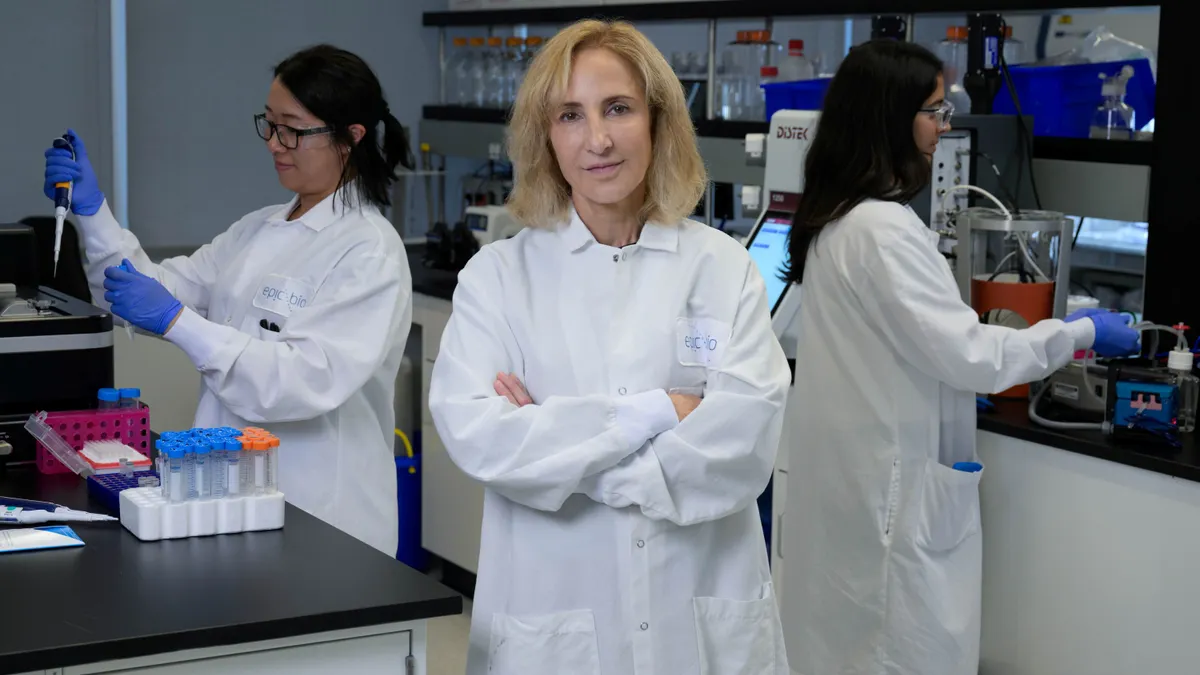
In a significant milestone for the rapidly evolving field of genetic medicine, Epicrispr Biotechnologies has announced the successful closure of a $90 million Series C financing round. The capital infusion is earmarked to accelerate the clinical development of the company’s lead candidate, EPI-321—a first-of-its-kind treatment designed to address facioscapulohumeral muscular dystrophy (FSHD) through the precision of epigenetic editing.
As the biotech sector continues to pivot toward more nuanced genetic interventions, Epicrispr’s progress represents a potential paradigm shift. By moving away from permanent DNA modification and toward the reversible "tuning" of gene expression, the company is positioning itself at the vanguard of a new generation of programmable medicines.
The Core Innovation: Epigenetic Editing vs. Traditional CRISPR
At the heart of the company’s platform is the distinction between "editing" and "modulating." Traditional CRISPR-based gene editing functions like a pair of molecular scissors, physically cutting the DNA strand to delete or replace genetic sequences. While powerful, this approach carries inherent risks, including the potential for off-target double-strand breaks that could lead to unintended, permanent genetic consequences.
EPI-321, however, utilizes epigenetic editing. Instead of altering the code itself, the therapy uses CRISPR tools to target the regulatory mechanisms of the genome. By binding to specific regions of the DUX4 gene—the known genetic driver of FSHD—EPI-321 employs a chemical modification to "silence" or suppress the gene’s expression.
"Epigenetic editing allows us to modulate the cell’s activity without the risks associated with breaking or rewriting the DNA," says Amber Salzman, CEO of Epicrispr. "It is a more precise, safer, and potentially more versatile approach to addressing diseases that stem from the overexpression of toxic proteins."
Chronology: A Trajectory of Growth
The path to the current $90 million Series C has been marked by steady, calculated growth since the company’s inception.
- July 2022: Epicrispr Biotechnologies launches with significant backing, signaling the arrival of a new player in the epigenetic space founded by CRISPR pioneers.
- Early 2024: The company secures substantial Series B financing, providing the necessary runway to transition from preclinical validation to human clinical trials.
- Late 2025: Enrollment begins for the early-stage clinical trial of EPI-321, focusing on patient safety and the identification of biological markers of success.
- August 2026: Epicrispr reaches a pivotal milestone by completing enrollment for the current study. The company announces its $90 million Series C round, co-led by Octagon Capital and Janus Henderson Investors.
- October 2026 (Upcoming): The company expects to report crucial six-month follow-up data from its clinical study, which will provide the first robust look at the drug’s impact on human patients.
The Challenge of FSHD: A Competitive Landscape
Facioscapulohumeral muscular dystrophy is a progressive, debilitating condition characterized by the weakening of muscles in the face, shoulders, and upper arms. It is caused by the toxic expression of the DUX4 protein, which leads to chronic muscle cell death and severe atrophy. Because of its clear genetic cause, FSHD has become a "hotbed" for drug development, attracting intense interest from both legacy pharmaceutical giants and agile biotech startups.
The field is currently crowded with various approaches to blocking DUX4. Major players currently active in this space include:
- Novartis: Leveraging its massive infrastructure to explore gene therapy pathways for neuromuscular disorders.
- Arrowhead Pharmaceuticals: Utilizing siRNA technology to knock down the expression of the problematic gene.
- Dyne Therapeutics: Developing specialized therapeutic conjugates aimed at muscle tissue.
- Sarepta Therapeutics: A dominant force in muscular dystrophy research, currently testing multiple modalities to address the root causes of muscle degeneration.
Despite this competition, Epicrispr remains confident. Their belief is that by focusing on the epigenetic switch rather than just the downstream protein, they can achieve a more durable and efficient suppression of the disease.
Supporting Data and Clinical Prospects
Early data from the ongoing study have been encouraging, providing initial evidence that EPI-321 is capable of reaching its target and exerting the intended biological effect. While the patient cohort in the current early-stage study is small, the results have shown a correlation between the administration of the drug and the suppression of DUX4-related biomarkers.
"While these are still early data from a small number of patients, they provide important initial evidence supporting EPI-321’s potential to address the underlying biology of FSHD," Salzman noted in an email to BioPharma Dive.

The upcoming October release of the six-month follow-up data is highly anticipated by investors and the patient advocacy community. Success in these metrics—specifically regarding increased muscle volume and the sustained reduction of DUX4 expression—could solidify Epicrispr’s position as a leader in the FSHD pipeline.
Official Responses and Strategic Implications
The Series C round saw participation from a powerhouse group of investors, including Fidelity Management & Research, Sanofi Ventures, and Cormorant Asset Management. The inclusion of these institutional heavyweights underscores the industry’s growing confidence in epigenetic engineering as a viable long-term strategy.
As part of the funding agreement, Anran Li, an investment analyst at Octagon Capital, will join the startup’s board of directors. This move is intended to provide the company with increased financial guidance as it scales its operations and begins planning for potential Phase 2/3 trials.
"This financing gives us the resources and flexibility to advance EPI-321, invest in our broader pipeline, and build the company for the long term," said Salzman.
The Broader Implications for Genetic Medicine
The success of Epicrispr’s funding round speaks to a broader trend: the diversification of gene therapy. For years, the industry was defined by "editing" (changing the DNA sequence). We are now entering the era of "modulation" (changing how the DNA is read).
The implications are profound. If Epicrispr can prove that epigenetic editing is safe and effective in the muscles, the platform could theoretically be adapted to address a wide range of other conditions—from neurodegenerative diseases to metabolic disorders—where specific genes are either "stuck" in an active state or silenced when they should be expressed.

Furthermore, the shift toward reversible therapies addresses one of the primary concerns of regulators like the FDA: the permanency of genetic changes. Because epigenetic editing does not alter the underlying DNA sequence, it is theoretically safer, offering a "safety valve" that conventional CRISPR methods currently lack.
Looking Ahead
The next six months will be a defining period for Epicrispr. The biotech industry will be watching the October data readout closely. Should the six-month follow-up show sustained suppression of DUX4 and improved clinical outcomes for patients, the company will likely look to expand its footprint in the neuromuscular space.
However, the company also faces the challenges inherent in all early-stage biotech ventures: the high cost of drug development, the complexity of clinical trial design in rare diseases, and the ongoing race against well-capitalized competitors.
For now, the $90 million infusion ensures that Epicrispr is well-equipped to navigate these challenges. As the company prepares for its next phase of growth, the spotlight remains on the potential for EPI-321 to turn the tide for those living with the daily realities of FSHD. Whether this "epigenetic switch" will provide a permanent solution remains to be seen, but the progress made thus far represents a leap forward in the mission to treat, rather than just manage, genetic muscle disease.