







Main Facts: A Grassroots Challenge to the Medical Model
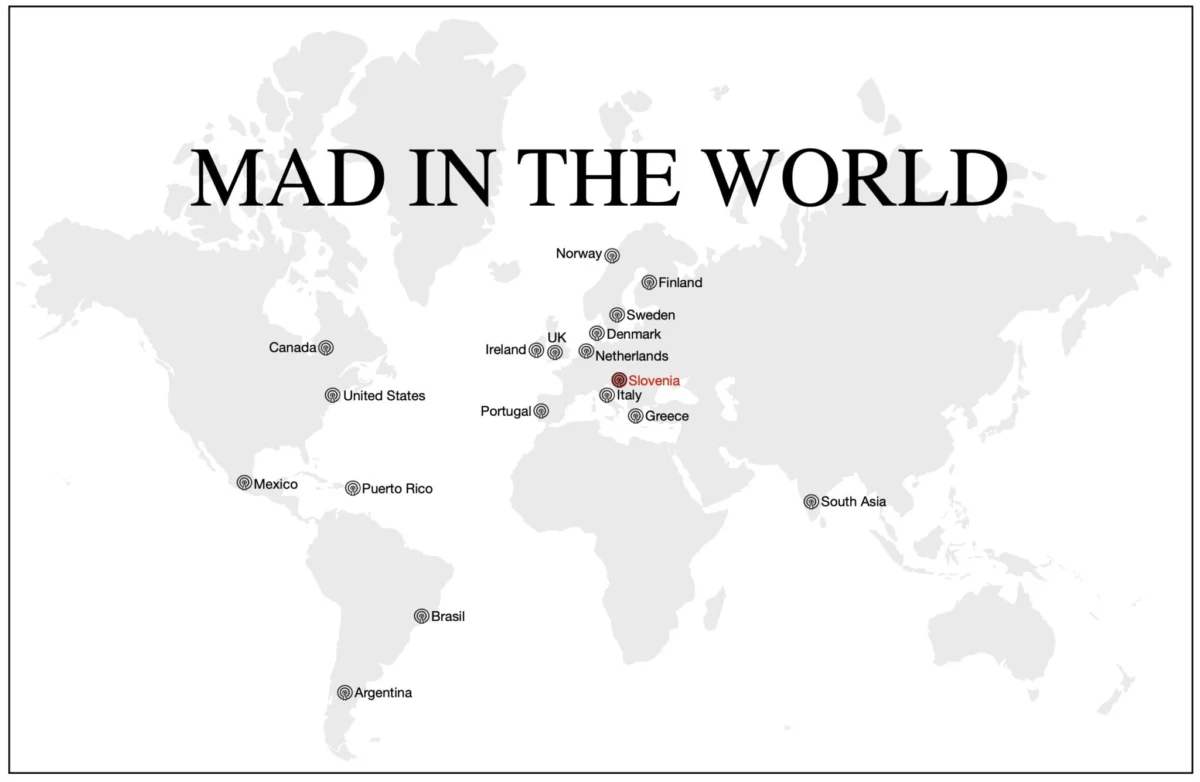
In a quiet but persistent corner of Central Europe, a burgeoning network of clinicians, researchers, and psychiatric survivors is challenging the fundamental architecture of mental healthcare. Known as Mad in Slovenia, the organization is an affiliate of the global "Mad in the World" network, which seeks to provide an alternative narrative to the traditional biomedical model of psychiatry.
The movement is anchored by the personal experiences of individuals like Saša Kranjc, who, thirteen years ago, found herself caught in the gears of a system that prioritized compliance over conversation. At twenty-three, Kranjc was admitted to a psychiatric hospital for three days. During this brief but life-altering stay, she was presented with a stark ultimatum: take prescribed antipsychotic medication or face a court appearance.
"I went to the doctor because my friend said so," Kranjc recalls. "I didn’t get any idea of what was going to happen there." Fearing the legal repercussions and wanting to preserve her future—her career, her family, and her autonomy—she complied. However, the "informed consent" she received was hollow. She was never told of the long-term physiological or psychological side effects of the drugs. Today, over a decade later, Kranjc is in the arduous process of tapering off the medication, a journey that has transformed her from a patient into a prominent advocate for systemic reform.
Mad in Slovenia now consists of approximately seventy members. It is a diverse coalition of mental health experts, "psychiatric survivors" (those who have lived through the system), and family members. Their mission is twofold: to provide the public with the information necessary to make truly informed decisions about psychiatric treatment and to advocate for a "rethinking" of care that moves beyond the near-exclusive reliance on pharmacology.
Chronology: From Forced Compliance to Collective Advocacy
The evolution of Mad in Slovenia mirrors the personal trajectories of its founders and members. The timeline of the movement can be traced through three distinct phases: the experience of systemic trauma, the discovery of alternative perspectives, and the formalization of a counter-network.
1. The Catalyst of Coercion (2011–Present)
The seeds of the movement were sown in the early 2010s, during a period when the Slovenian psychiatric system—much like many Western systems—was heavily reliant on rapid diagnosis and pharmaceutical intervention. Saša Kranjc’s experience at age twenty-three serves as a case study for this era. The threat of court-ordered treatment was used as a tool for stabilization, but it left a vacuum of understanding. For thirteen years, Kranjc lived within the constraints of this treatment plan before beginning the slow, medically sensitive process of tapering.
2. The Formation of a Network
Recognizing that her experience was not an anomaly, Kranjc joined forces with a small group of clinicians and researchers who were also skeptical of the "deficit-based" approach to mental distress. By joining the Mad in the World affiliate program, they gained access to a global platform. The Slovenian branch grew primarily through word-of-mouth, attracting those who felt "unheard" by the mainstream medical establishment.
3. The Introduction of the ‘Compass Club’
In recent years, the network has moved from passive information sharing to active community building. A significant milestone was the creation of the Compass Club. This initiative represents a shift from "treating symptoms" to "navigating life." It provides a space where members can ask existential and practical questions: Where am I now? How do I like my current state? How can I change what I don’t like? This shift from clinical management to personal agency marks the current phase of the organization’s development.
Supporting Data: The Landscape of Mental Health in Slovenia
To understand the necessity of Mad in Slovenia, one must examine the broader healthcare context in the country. Slovenia operates a public healthcare system, but like many nations, it faces significant bottlenecks in mental health services.
The Gap in Public Psychotherapy
While psychiatric consultations and medications are generally covered by the state, specialized psychotherapy is often inaccessible. Nika Goršič, another member of the network, highlights a critical disparity: while she found psychotherapy to be a vital tool for her recovery, it is not readily available through the public system. This forces patients to pay out-of-pocket for talk therapy—a luxury many cannot afford. Consequently, for those in the public system, "treatment" often becomes synonymous with "pills."
The Burden of Diagnosis
Goršič’s experience reflects a recurring data point in the network’s feedback: the speed of diagnosis. During three separate hospital stays, she observed that psychiatrists rarely took the time to listen to the "story" behind the distress. "They just give you a diagnosis and give you pills and not really focus on what’s your story, what happened to you," she explains. This "diagnostic overshadowing" often leads to patients being viewed as "broken" rather than as individuals responding to life’s traumas.
Digital Reach and Resources
The Mad in Slovenia website serves as a repository of alternative data. It features:
- Tapering Guides: Resources on how to safely reduce psychiatric medication.
- Translated Research: Slovenian translations of international studies that challenge the "chemical imbalance" theory.
- The "For Relatives" Portal: Guidance for families to help them understand their loved ones’ struggles without resorting immediately to clinical labels.
- Podcasts: Interviews with international and local experts who advocate for holistic or social-determinant models of mental health.
Official Responses: The Mainstream Paradigm vs. The Survivor Perspective
While there has been no formal "counter-protest" from the Slovenian Medical Association, the tension between Mad in Slovenia and the "official" psychiatric establishment is evident in the lived experiences of the patients.

The "Box" of Mainstream Psychiatry
The official approach in Slovenia, as described by members of the network, is characterized by the "box" methodology. Psychiatrists are trained to identify symptoms that align with the International Classification of Diseases (ICD) or the DSM. Once a patient is categorized, the focus shifts to symptom suppression.
From the perspective of the medical establishment, these symptoms—hallucinations, deep depression, or mania—are seen as purely negative biological malfunctions. Mad in Slovenia, however, argues that these are often "important messages" or survival mechanisms. "They forget that these are sometimes very important messages from which we could learn," says Kranjc.
The Issue of Volunteer Sustainability
One reason the network has not yet become a formal political lobby is its current structure. Mad in Slovenia is entirely volunteer-run. With seventy members and no central leader, the group faces the "official" challenge of organizational management. They currently meet for only two hours a month, as members must balance their advocacy with full-time jobs.
Furthermore, the network has intentionally avoided a comments section on its website. This is not due to a lack of transparency, but rather a lack of resources. Moderating a forum on such sensitive topics requires significant time and emotional labor that a volunteer staff cannot currently provide.
Implications: A New Horizon for Slovenian Mental Health
The rise of Mad in Slovenia carries profound implications for the future of social and medical policy in the region.
1. The Push for Institutionalization
To move from a support network to a systemic influencer, Saša Kranjc acknowledges that the group may need to become a formal institution. Institutional status would allow the network to apply for state or EU funding. "If we get that funding, we’ll be more active," she explains. This transition could allow them to offer services that the state currently lacks, such as peer-led support groups and non-medical crisis centers.
2. Changing the Narrative of Potential
Perhaps the most significant implication is the shift in how "mental illness" is viewed by the public. By emphasizing that people are "persons with potential" rather than "broken subjects," Mad in Slovenia is attempting to reduce the stigma that prevents individuals from reintegrating into society. Nika Goršič’s testimony—that the network helped her when the hospital could not—suggests that peer-led models may be more effective for long-term recovery than clinical models alone.
3. The Global "Mad" Influence
The success of the Slovenian affiliate demonstrates the power of the global "Mad in the World" movement. It shows that even in smaller nations, there is a hunger for a more democratic, transparent, and humanistic approach to mental distress. As more people like Kranjc and Goršič share their stories, the pressure on the mainstream medical system to provide more than just "diagnosis and pills" will likely increase.
4. Challenges of Participation
Despite their optimism, the network faces a hurdle in attracting more "non-experts." Many people who have experienced psychiatric distress are hesitant to join because they do not want their lives to be defined by their mental health history. Others feel intimidated by the number of clinicians and researchers in the group. Bridging this gap between "the expert" and "the survivor" remains one of the network’s primary challenges.
Conclusion: A Demand for Hope
The story of Mad in Slovenia is not a story of being "against" medicine, but rather "for" a more comprehensive understanding of the human condition. As the network continues to grow, it serves as a reminder that the most effective form of treatment is often found in being heard, understood, and given the agency to navigate one’s own life.
"It’s a really good thing that it’s in Slovenia," says Goršič. "We need more hope."
For Saša Kranjc, the journey from a coerced patient in a psychiatric ward to a leader of a national movement is nearly complete. As she continues her tapering process, her focus remains on the next generation of twenty-three-year-olds who might find themselves in a doctor’s office, confused and afraid. Through Mad in Slovenia, she hopes to ensure they receive the one thing she didn’t: a choice.
"I really believe we could make a difference," she concludes. In the quiet, mountainous landscape of Slovenia, that difference is already beginning to take root.