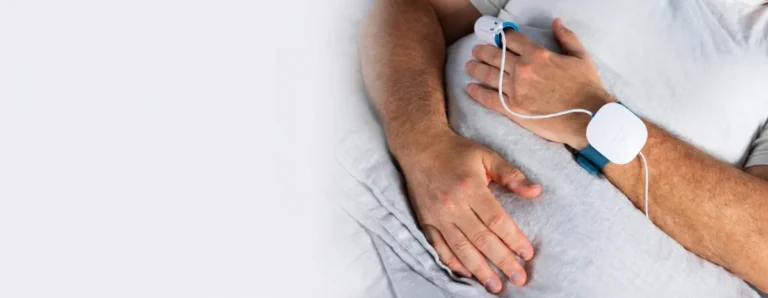
For decades, the "gold standard" for diagnosing obstructive sleep apnea (OSA) has been the single-night polysomnography—an overnight stay in a clinical sleep lab where a patient is tethered to a suite of sensors. However, groundbreaking new research from Flinders University is calling this foundational practice into question.
A study published in npj Digital Medicine reveals that the variability of sleep apnea from one night to the next is significant enough that a single snapshot in time may result in misdiagnosis or inaccurate severity assessments. As sleep medicine evolves, this research suggests that the future of diagnosis lies not in a one-off laboratory visit, but in longitudinal, multi-night monitoring conducted in the comfort of a patient’s own home.
The Problem with the Snapshot: Main Facts
Obstructive sleep apnea is a common, often serious disorder in which breathing repeatedly stops and starts during sleep. When left untreated, it is linked to a host of comorbidities, including hypertension, heart disease, type 2 diabetes, and stroke.
The current diagnostic protocol relies on the Apnea-Hypopnea Index (AHI), which calculates the number of breathing interruptions per hour of sleep. Traditionally, clinicians record this data over a single night to determine if a patient requires intervention, such as CPAP (continuous positive airway pressure) therapy.
The Flinders University study challenges the reliability of this "snapshot" approach. Researchers found that OSA is not a static condition; it is dynamic, fluctuating based on sleep position, stress levels, alcohol consumption, and circadian factors. By relying on a single night of data, clinicians risk "misclassifying" patients—labeling those with moderate apnea as mild, or missing a diagnosis entirely for patients whose breathing was relatively stable on the specific night of the test.
A Timeline of Diagnostic Evolution
The shift toward questioning the one-night study has been a long time coming. To understand why this discovery is so pivotal, we must look at the evolution of sleep diagnostics:
- 1970s–1980s: The Rise of the Polysomnogram (PSG): The formalization of sleep medicine centered on the clinical laboratory. Monitoring a patient in a controlled environment with technicians present was deemed the only way to ensure data integrity.
- 1990s–2000s: The Rise of Home Sleep Apnea Testing (HSAT): As technology shrunk, portable devices allowed for home-based monitoring. However, these were still largely treated as "single-night" substitutes for the lab, often failing to account for night-to-night variability.
- 2010s: The Digital Health Revolution: Wearable technology and low-burden sensors emerged, allowing researchers to track sleep architecture and respiratory events over weeks rather than hours.
- 2024–2025: The Paradigm Shift: The Flinders University trial represents the culmination of this technological progress. By comparing gold-standard lab tests against weeks of home-based "low-burden" data, researchers have finally gathered the clinical evidence to prove that a single night is statistically insufficient to capture the true nature of the disease.
Supporting Data: The Case for Longitudinal Analysis
The prospective clinical trial involved approximately 100 adults who had been referred to a clinic for suspected sleep apnea. The methodology was robust, pitting the traditional in-lab polysomnography against a prolonged monitoring period in the patients’ home environments.
The "First Night" Effect
One of the most compelling aspects of the data relates to the environment itself. The study highlighted the "first-night effect"—a phenomenon where patients sleep poorly, experience higher anxiety, or have altered sleep stages simply because they are in an unfamiliar laboratory environment.
When researchers compared the lab-based AHI results with the multi-night home averages, they found a meaningful percentage of patients whose diagnosis changed significantly between the two assessments. In some cases, patients who appeared healthy in the lab showed significant apnea when monitored at home over a week, while others showed the inverse.
Fluctuations and Cardiovascular Risk
The study also touched upon the biological reality of variability. For some patients, OSA is intermittent. The research suggests that the degree of "night-to-night variability" might actually be a clinical marker in its own right. Previous, separate research has indicated that patients with high variability in their breathing patterns are at a higher risk for cardiovascular complications. By moving to multi-night testing, clinicians might gain more than just an average; they might gain insight into the patient’s underlying physiological instability.
Official Perspectives: The Expert Voice
The research team, led by experts at the FHMRI Sleep Health institute, emphasizes that this is not a condemnation of sleep medicine, but a call for modernization.
"Our findings show that sleep apnea can vary considerably from one night to the next, so if you only measure it once, you may not capture the true severity of the condition," says Dr. Bastien Lechat, the lead author of the study. Dr. Lechat’s team argues that the clinical community must move away from the binary "yes/no" diagnosis based on a single night and toward a more nuanced, longitudinal understanding of patient health.
Dr. Sutapa Mukherjee, a professor in respiratory and sleep medicine at Flinders University and senior consultant at the Southern Adelaide Local Health Network, highlights the diagnostic frustration many patients face. "These findings help explain why misdiagnosis occurs," she explains. "It’s not just measurement error—it reflects real differences in how sleep apnea presents from night to night."
By acknowledging that the laboratory environment can mask the true, "natural" presentation of a patient’s sleep, these experts are advocating for a system that trusts the patient’s data from their own bedroom more than the data from a sterile hospital setting.
Clinical Implications: The Future of Personalized Medicine
The implications of these findings extend far beyond the research lab. If implemented, this shift could fundamentally change how sleep clinics operate globally.
1. Enhanced Precision in Treatment
If a patient’s severity is underestimated due to a "good night" in the lab, they may be denied treatment they desperately need. Conversely, if a patient is over-diagnosed, they may be prescribed CPAP therapy unnecessarily. Multi-night data provides a baseline that allows for "precision medicine," ensuring that the treatment plan matches the long-term reality of the patient’s breathing.
2. The Role of Wearable Tech
The study validates the growing trend of "low-burden" technologies. As smartwatches, rings, and chest-strap sensors become more accurate, the barrier to entry for multi-night testing drops. Patients no longer need to sleep in a hospital gown with wires attached to their scalps for a week; they can wear comfortable, non-invasive sensors while going about their daily lives.
3. Economic and Practical Impacts
While some may argue that multi-night testing is expensive or cumbersome, the study suggests that the cost of misdiagnosis—resulting in untreated cardiovascular disease, daytime fatigue, and lost productivity—is far higher. Furthermore, the use of automated, home-based sensors could actually reduce the strain on sleep laboratories, reserving the facility for the most complex cases while handling standard diagnostics through digital health platforms.
4. Patient Empowerment
For the patient, this transition is a significant win. The stress of the "sleep lab visit" is a known deterrent to diagnosis. Knowing that a diagnosis can be confirmed through home-based, repeated measurements may encourage more individuals to seek help for their snoring or daytime sleepiness, thereby catching the condition before it manifests as a serious heart condition or stroke.
Conclusion: A Better Night’s Sleep
The Flinders University research is a watershed moment for sleep science. By proving that the "one-night-only" model is insufficient, they have opened the door to a more accurate, patient-centered approach to diagnosing sleep apnea.
As we look toward the future, the integration of multi-night data will likely become the new standard. It is a transition that promises not just better diagnostics, but a deeper understanding of the complex, changing nature of the human body during sleep. For the millions of people suffering from the silent, nightly struggle of obstructive sleep apnea, this shift represents a long-awaited path to better health, more personalized care, and ultimately, a better night’s sleep.