
For many, the realization that hamstring strength is fading doesn’t come from a dramatic injury, but from the subtle, nagging inconveniences of daily life. Perhaps it is the tightness felt when leaning over to tie a shoe, the unexpected fatigue during a simple uphill walk, or that sharp, unwelcome sensation in the lower back when standing up from a chair. As we cross the threshold into our 60s, the posterior chain—the group of muscles running down the back of the body—often becomes a neglected asset.
Increased sedentary time and a shift away from high-intensity lower-body training can cause the hamstrings to lose both muscle mass and elasticity. While many fitness enthusiasts rely on lunges, these movements often prioritize the quadriceps and glutes, leaving the hamstrings to play a supporting role rather than the lead. To effectively restore power, stability, and hip control, one must look toward targeted training that emphasizes hinging, bridging, and controlled tension.
The Core Problem: Why Conventional Training Falls Short
When we think of "leg day," our minds often drift toward squats and lunges. While these are foundational movements, they are primarily quad-dominant. The hamstrings require specific mechanical loads to thrive: they need to be lengthened under tension and contracted through a full range of motion.
For those over 60, the goal is not to lift the heaviest weight in the room; it is to maximize the functional utility of the hamstrings. When these muscles are weak, the lower back is often forced to compensate, leading to chronic stiffness and pain. By shifting the focus to movements that isolate the posterior chain, we can alleviate this burden on the spine, restore a natural gait, and reclaim the ability to move through the world with confidence and fluidity.
1. The Banded Good Morning: Reclaiming the Hinge
The "Good Morning" is a classic movement, but when performed with a resistance band, it becomes a masterclass in hip control and hamstring engagement. Unlike a squat, which involves vertical knee flexion, the good morning teaches the body to hinge at the hips—a movement pattern essential for picking up groceries, playing with grandchildren, or simply navigating daily tasks without spinal strain.
Why It Works
By using a resistance band, you create constant tension that forces the hamstrings to work through their entire length. This movement improves the connection between the brain and the posterior chain, teaching the glutes and hamstrings to "drive" the movement, which protects the lumbar spine.
How to Execute
- Stand with your feet shoulder-width apart, stepping onto a resistance band.
- Hold the other end of the band at your shoulders or across your upper back.
- Keep your back flat and your knees slightly soft (not locked).
- Initiate the movement by pushing your hips straight back as if you are trying to touch a wall behind you with your glutes.
- Once you feel a deep stretch in your hamstrings, return to a standing position by driving your hips forward.
Recommended Volume: 3 sets of 10 to 15 repetitions. Rest for 45 seconds between sets.
2. The Glute Bridge Walkout: Building Posterior Power
The glute bridge walkout is an ingenious exercise for those who want to build significant strength without the need for heavy, cumbersome gym equipment. By extending the legs while in a bridge position, you change the leverage point, forcing the hamstrings to fire intensely to keep the hips elevated.
The Biomechanics of the Walkout
When the feet are close to the body, the glutes handle most of the load. As you "walk" your feet away from your torso, the lever arm increases, putting the hamstrings under extreme, manageable tension. This is the exact type of stress needed to rebuild strength in the back of the legs.
Proper Form
- Lie flat on your back with your knees bent and feet flat on the floor.
- Lift your hips toward the ceiling until your body forms a straight line from shoulders to knees.
- Keeping your hips high, slowly "walk" your heels out away from your body one step at a time.
- Stop when you feel your hamstrings engaging significantly, but before your lower back begins to arch or "dip."
- Slowly walk your feet back to the starting position.
Recommended Volume: 3 sets of 6 to 8 repetitions. Rest for 45 to 60 seconds.
3. The Single-Leg Glute Bridge Hold: Isolating Weakness
Muscular imbalances are common after 60, often caused by favoring one leg over the other during daily movement. The single-leg glute bridge hold is an excellent diagnostic and corrective tool. By isolating one leg at a time, you remove the ability of the stronger leg to compensate for the weaker one.
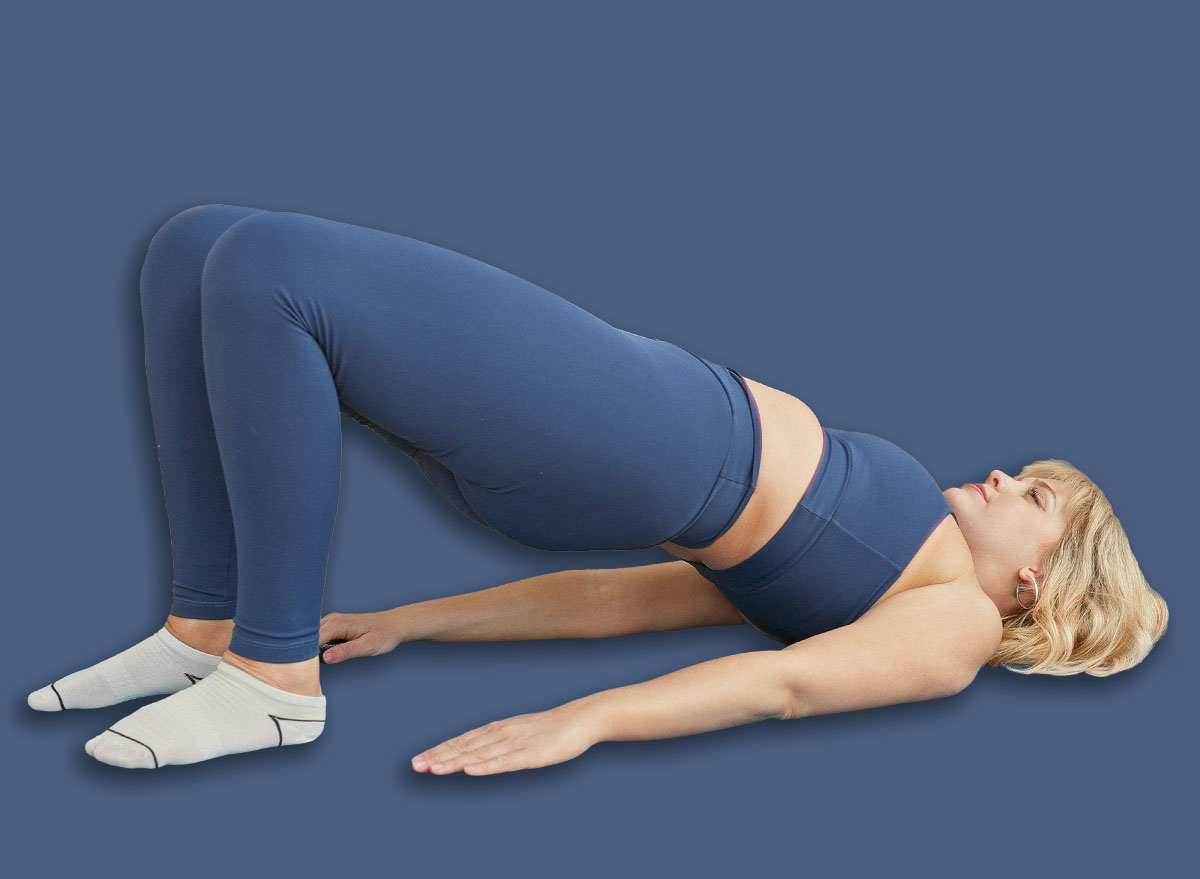
Focus and Stability
This exercise demands total core engagement to prevent the pelvis from tilting or twisting. It mimics the stability required for walking, where one leg is constantly tasked with supporting the body’s entire weight during the swing phase of a gait.
The Technique
- Lie on your back, knees bent.
- Extend one leg straight out in the air or keep it hovering just above the ground.
- Drive through the heel of the planted foot to lift your hips.
- Hold the top position, ensuring your hips remain level and your core stays tight.
- Breathe steadily and maintain the hold for the target duration.
Recommended Volume: 3 sets of 15 to 25 seconds per side. Rest for 30 to 45 seconds between sets.
4. Slider Hamstring Curls: Controlled Lengthening
The eccentric, or lengthening, phase of a muscle contraction is vital for strength gains. Slider hamstring curls are arguably the most effective way to challenge the hamstrings in a controlled, safe environment.
The Power of the Curl
Most leg exercises focus on pushing away from the ground. Curls, however, focus on pulling. This movement strengthens the hamstrings in their capacity to stabilize the knee joint, which is critical for preventing knee pain and maintaining a smooth, balanced walk.
Execution
- Lie on your back with your heels on two sliders (or paper plates on a smooth floor).
- Lift your hips into a bridge.
- Slowly slide your heels away from your body, extending your legs while keeping your hips elevated.
- Once your legs are nearly straight, use your hamstrings to curl your heels back toward your glutes.
- Keep your hips steady throughout the motion; do not let them touch the floor.
Recommended Volume: 3 sets of 6 to 10 repetitions. Rest for 60 seconds between sets.
Implications for Long-Term Mobility
The decision to incorporate these four movements into a morning routine has implications that extend far beyond the gym. Strengthening the posterior chain is a form of "longevity insurance."
The Functional Shift
- Spinal Protection: By strengthening the hamstrings, you effectively take the "parking brake" off your lower back. Your hips become the primary hinge for movement, meaning the spine no longer has to compensate for weak legs.
- Gait Efficiency: Strong hamstrings allow for a more powerful push-off during walking. This leads to better balance and a more confident, upright posture.
- Reduced Injury Risk: A muscle that is strong and flexible is much less likely to strain. As you age, the ability to control eccentric movement—the ability to lower yourself slowly—is the primary defense against falls and sudden injury.
A Professional Perspective on Recovery
It is important to note that the hamstrings are a sensitive muscle group. After age 60, recovery times may be slightly longer, and the connective tissues require consistent, gentle loading rather than sudden, high-intensity shock.
If you find that these movements create discomfort, prioritize the "Form Tip" provided for each exercise. The goal is to feel the work in the muscle belly, not in the joints or the spine. If a movement feels too difficult, regress to a simpler variation—such as a standard glute bridge before attempting a walkout—and progress as your strength returns.
Conclusion: Consistency Over Intensity
The most successful strength programs for those over 60 are characterized by consistency, not intensity. You do not need to spend hours in the gym to rebuild your hamstrings. By committing to these four moves just a few times a week, you provide your body with the stimulus it needs to adapt, strengthen, and support you for years to come.
Remember, the goal is to "wake up" the backside of your legs. When the hamstrings are strong, the body feels lighter, movement feels easier, and the dreaded stiffness of age begins to recede. Start slowly, focus on the quality of every repetition, and listen to your body. With patience and precision, you can reclaim the strength and stability that allow you to live life on your own terms.