








In a landmark decision that sends a chilling message to the pharmaceutical industry, a federal jury in Boston has delivered a verdict that could reshape how brand-name drug manufacturers negotiate with generic competitors. After a grueling five-year class-action legal battle, Takeda Pharmaceutical faces a staggering financial penalty following allegations that it engaged in an illegal "pay-for-delay" scheme to block generic competition for its blockbuster gastrointestinal drug, Amitiza.
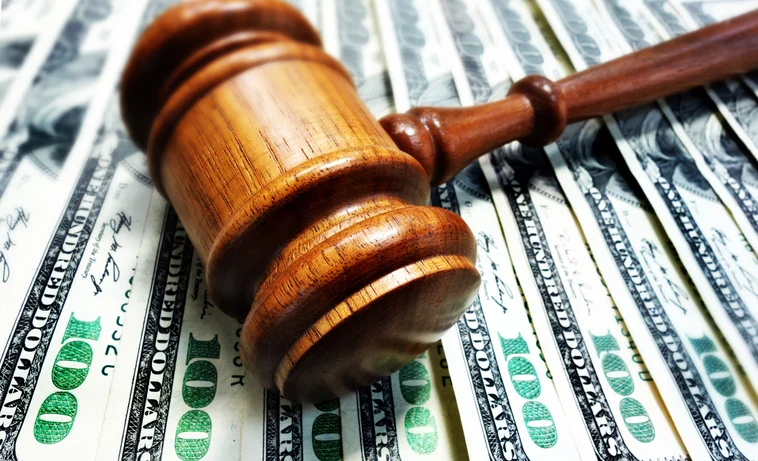
The jury awarded nearly $885 million in damages to a class of pharmacies and wholesalers who claimed that Takeda’s 2014 settlement with generic manufacturer Par Pharmaceutical artificially inflated the price of the drug by stifling market entry. While the initial damages are substantial, the implications are even more severe: under federal antitrust law, damages in such cases are subject to mandatory tripling. Consequently, Takeda faces a potential total liability exceeding $2.6 billion, a figure that has already prompted the company to signal an aggressive path of appeals.
The Core Dispute: Defining "Pay-for-Delay"
At the heart of the litigation lies the controversial practice of reverse payments. In a typical patent dispute, a generic company challenges a branded drug’s patent, arguing it is invalid or unenforceable. If the brand-name manufacturer wins, they keep their monopoly; if they lose, the generic enters the market, driving down prices for consumers.
"Pay-for-delay" occurs when the branded company—fearing a loss in court—pays the generic challenger to drop the litigation and delay the launch of their cheaper version. The plaintiffs in the Amitiza case argued that Takeda’s settlement with Par Pharmaceutical was a classic example of this anti-competitive behavior. By allegedly paying Par to stay off the market until 2021, Takeda effectively extended its monopoly, forcing pharmacies and wholesalers to purchase the brand-name product at inflated prices for years longer than they would have in a competitive market.
Chronology of a High-Stakes Legal Battle
The legal and commercial history of Amitiza provides the framework for this massive antitrust dispute:
- 2004: Sucampo Pharmaceuticals and Takeda Pharmaceutical enter into a collaborative development and commercialization agreement for Amitiza (lubiprostone).
- 2006: The FDA grants regulatory approval for Amitiza, a twice-daily capsule used to treat chronic idiopathic constipation and other GI conditions.
- The Patent Challenge: Following its success, Takeda moved to defend its intellectual property. Par Pharmaceutical, seeking to market a generic version, challenged the validity of Takeda’s patents.
- 2014: Takeda and Par reach a settlement. Under the terms, Takeda makes a payment to Par, and in exchange, Par agrees to refrain from launching a generic version of the drug until 2021.
- 2021: The class-action complaint is filed in federal court in Boston (Case No. 1:21-cv-11057-GAO). Plaintiffs, including major entities like Meijer Inc., allege they were forced to pay "many hundreds of millions of dollars in overcharges" due to the lack of generic competition.
- 2024: Takeda terminates its partnership with Sucampo and ceases all sales of Amitiza.
- 2025 (The Verdict): After years of discovery and pre-trial motions, a federal jury finds in favor of the plaintiffs, awarding $885 million in damages, triggering the mandatory treble damages provision of the Sherman Antitrust Act.
Supporting Data: Why the Plaintiffs Prevailed
The plaintiffs’ argument hinged on the distinction between "core" patents and "weak" secondary patents. According to the complaint, the primary patent for lubiprostone—the active pharmaceutical ingredient in Amitiza—expired in 2014. Takeda, however, held other patents associated with the drug that carried later expiration dates.
The plaintiffs characterized these later patents as "weak, easily-designed around" barriers that were used as leverage to justify the settlement. By securing a settlement that lasted until 2021, the plaintiffs argued that Takeda prevented the entry of low-cost generic versions that should have hit the shelves years earlier. The economic impact was compounded for the wholesalers and pharmacies, who were forced to pay higher premiums for the branded drug during the period when they should have had access to significantly cheaper generic alternatives.
Official Responses and Corporate Strategy
The response from Takeda has been one of defiance and professional disappointment. In a formal statement released following the verdict, the company expressed its intent to challenge the outcome at every level of the appellate process.
"We remain firm in our conviction that the plaintiffs’ case lacks merit," a Takeda spokesperson stated. The company cited "evidentiary and legal errors" made during the trial as the primary basis for their expected appeal. Takeda further defended its conduct by asserting that the 2014 settlement was fully compliant with the framework of the Hatch-Waxman Act, the seminal 1984 legislation designed to balance the need for pharmaceutical innovation with the public interest in affordable generic drugs.
Takeda’s defense also highlighted that the settlement agreement did, in fact, permit the launch of Par’s authorized generic in 2021—six years before the expiry of its secondary patents and 17 months before Par’s own abbreviated new drug application (ANDA) had even been approved by the FDA. From Takeda’s perspective, the agreement was a standard commercial arrangement that accelerated generic entry compared to what might have happened had the patent litigation continued for several more years.
The Broader Implications for the Pharma Industry
The size of this verdict, combined with the tripling of damages, creates a massive ripple effect for the pharmaceutical sector.
1. Re-evaluating Settlement Risks
For decades, pharmaceutical companies have used reverse-payment settlements as a tool to manage patent risk. This verdict significantly increases the "price" of losing such a gamble. If juries are willing to award nearly a billion dollars in actual damages, the total exposure for large-scale antitrust suits could reach into the billions, potentially threatening the financial stability of even the largest multinational firms.
2. Heightened Scrutiny of "Evergreening"
The case underscores the ongoing tension surrounding "evergreening"—a practice where drug manufacturers file for new, often secondary, patents on existing drugs to extend their market exclusivity. The plaintiffs’ success in convincing a jury that Takeda’s secondary patents were "weak" suggests that courts are becoming increasingly skeptical of these strategies. This may lead to more aggressive challenges from generic manufacturers who now have a blueprint for how to frame these patents as anti-competitive barriers.
3. Impact on Healthcare Costs
For the average consumer and the healthcare system, this case is a significant win. The antitrust framework is designed to prevent "overcharges" that ultimately trickle down to patients through higher insurance premiums and out-of-pocket costs. By signaling that "pay-for-delay" will be met with severe financial consequences, the court is reinforcing the competitive spirit of the Hatch-Waxman Act, which is intended to lower the cost of prescription medications.
4. A Shift in Litigation Strategy
We are likely to see a shift in how pharmaceutical companies approach settlement negotiations. Companies may now be more inclined to pursue patent litigation to its conclusion rather than settling, fearing that a settlement could be interpreted as an admission of anti-competitive intent by a future jury. Conversely, if companies do choose to settle, they will likely structure those agreements with extreme caution, ensuring that they cannot be interpreted as "pay-for-delay" by federal regulators or private class-action plaintiffs.
Conclusion
As Takeda prepares for the next phase of this legal battle, the industry is watching closely. The $2.6 billion potential judgment serves as a stark reminder that the courts are increasingly prioritizing market competition over the strategic use of intellectual property to protect monopoly profits. For wholesalers and pharmacies, the verdict represents a significant victory in the fight against high drug prices. For Takeda, it is a high-stakes turning point that will likely define their legal and regulatory strategy for years to come. Whether the verdict holds on appeal or is overturned, the message to the pharmaceutical industry is clear: the era of "pay-for-delay" is facing its most significant reckoning yet.