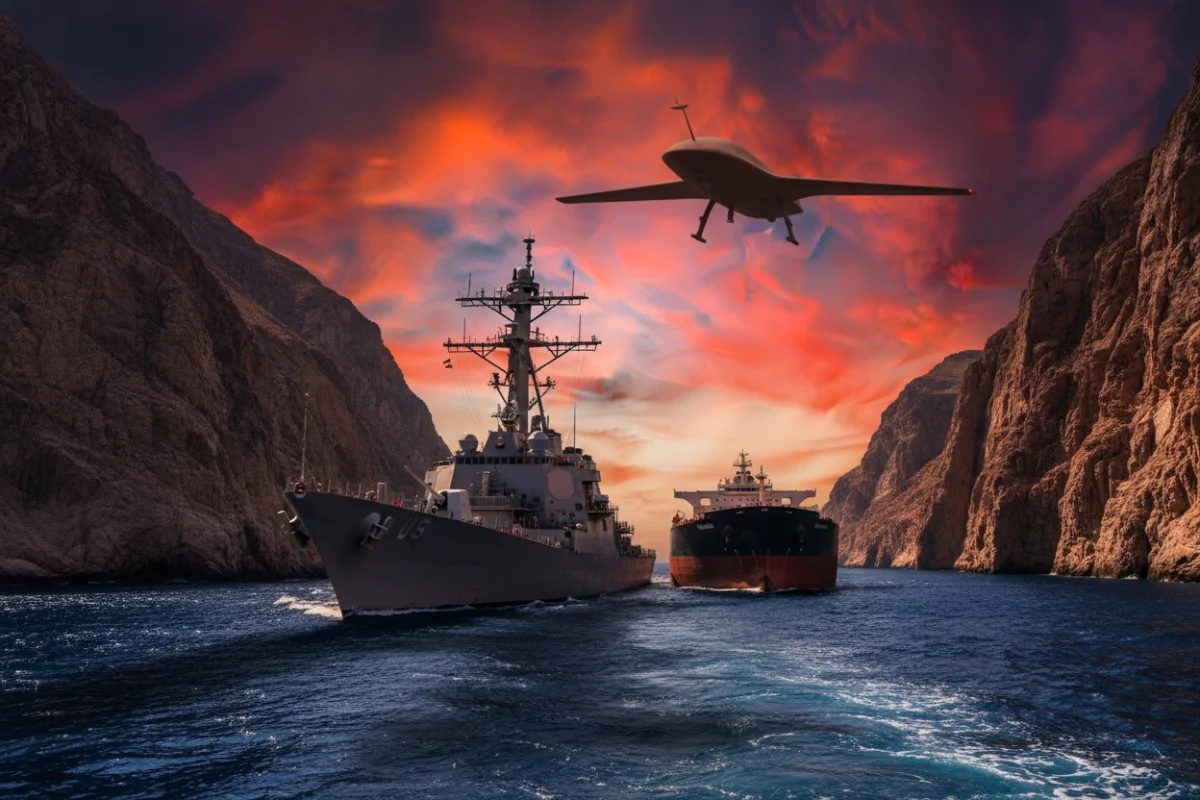
The Strait of Hormuz, a narrow artery through which roughly 20% of the world’s seaborne oil once flowed, has been effectively severed. What was once the globe’s most vital energy chokepoint—a bustling corridor hosting 3,000 vessel transits per month—has been reduced to a maritime ghost town. By April 2026, the volume of traffic plummeted to a mere 191 ships, signaling the most severe disruption to global energy markets since the 1973 oil embargo.
As the U.S.-Israeli military campaign against Iran continues to yield a volatile stalemate, the resulting closure of the waterway is pushing the global economy toward a precipice. With mines littering the seabed, persistent ship seizures, and the total withdrawal of commercial insurance coverage, the strait is no longer a global common; it is a contested zone of attrition.
A Chronology of the Collapse
The disintegration of security in the Persian Gulf did not happen overnight, but rather through a systematic escalation of regional hostilities.
- Pre-Conflict Baseline: Until early 2026, the Strait of Hormuz functioned as the heartbeat of the global economy. Approximately 3,000 vessels traversed the 13-to-21-mile-wide passage every month, transporting crude oil and liquefied natural gas to the markets of Europe, Asia, and North America.
- The Military Campaign: Following the onset of the U.S.-Israeli military offensive, the strategic environment shifted from commercial cooperation to kinetic warfare.
- The Insurance Blackout: As attacks on tankers mounted, the global reinsurance industry—including giants like Chubb, AIG, and Berkshire Hathaway—withdrew. A $40 billion U.S.-backed reinsurance initiative failed to gain traction because the prerequisite of guaranteed U.S. naval escort could not be met, leaving commercial carriers to face the risks alone.
- May 2026 Escalation: The situation reached a critical juncture in mid-May. On May 14, a Honduras-flagged floating armory was seized by Iranian forces. Shortly thereafter, an Indian-flagged livestock barge was destroyed off the coast of Oman by a major explosion, bringing the total number of recorded regional maritime incidents to 49, with 27 confirmed as direct attacks.
The NATO Dilemma: A Divided Alliance
The crisis has exposed deep, structural fractures within the North Atlantic Treaty Organization. While the U.S. remains committed to a policy of maximum pressure, European allies are increasingly hesitant to commit naval assets to a theater that has already proven too difficult for the U.S. Navy to secure independently.
A senior NATO official speaking to Bloomberg on Tuesday revealed that the alliance is deliberating an escort mission to reopen the strait by early July. However, the proposal is mired in internal discord. Several European members have expressed extreme reluctance to participate, citing the U.S.’s own ongoing blockade of Iranian ports as a complicating factor that invites unnecessary escalation.
Military analysts point to a fundamental weakness in Western strategy: the inability to project sufficient naval superiority to guarantee safe passage. If the United States, with its immense regional presence, cannot secure the strait, it is unclear how a fractious NATO coalition could succeed. This failure has transformed the waterway from a protected global thoroughfare into a tactical vulnerability for the West.
Iran’s Financial Gambit: Cryptocurrency and Undersea Cables
In an attempt to bypass the crippling effects of international sanctions and capitalize on the closure of the strait, Tehran has launched a dual-track economic offensive.
The Bitcoin Insurance Scheme
On Monday, the Fars news agency announced the launch of a state-backed, cryptocurrency-based insurance service. Iran projects that this scheme could generate $10 billion in annual revenue. The policy covers risks such as vessel detention and cargo confiscation—though notably, it excludes coverage for damage caused by weapons fire. By denominating the premiums in decentralized digital currency, Tehran is attempting to create a financial workaround that operates entirely outside the reach of the U.S. dollar-denominated banking system.
The Internet Cable Toll
In an even more provocative move, Iranian state-linked outlets, including Tasnim and Fars, have threatened to impose "transit fees" on major Western technology corporations. The claim targets the eight undersea internet cables that traverse the strait, with Tehran citing Article 34 of the UN Convention on the Law of the Sea.
The threat lists Meta, Google, Amazon, and Microsoft as primary targets. While legal scholars dismiss the claim as a misinterpretation of international law, the threat of physical sabotage remains real. Iranian military spokesman Ebrahim Zolfaghari has publicly warned that Tehran intends to collect these fees, though experts note that severing the cables would require overt military action—an act that would likely trigger a massive response from U.S. forces patrolling the region.
Shifting Traffic and the "Beijing Protocol"
Despite the persistent danger, a modest uptick in traffic has been observed. Lloyd’s List reported on Monday that at least 54 vessels passed through the strait last week, more than double the previous week’s figures.
This increase is not a return to normalcy, but rather a reflection of new geopolitical realignments. Ten of these vessels were identified as having direct links to China, following a bilateral understanding between Beijing and Tehran regarding "Iranian management protocols." India has similarly indicated it is preparing to dispatch vessels to secure energy cargoes. These movements suggest that in the absence of Western security, regional powers are seeking their own accommodations with Tehran, effectively bypassing the U.S.-led international order.
Official Responses and the Stalled Peace Process
The diplomatic track remains effectively frozen. The White House has formally rejected Iran’s latest peace overtures, describing them as "insufficient." An unnamed official told Axios, "We need some real, sturdy, and granular conversation. If that’s not gonna happen, we will have a conversation through bombs."
President Trump’s rhetoric has been equally uncompromising, warning that Iran must "get moving, FAST, or there won’t be anything left of them."
Tehran’s demands for a settlement are equally rigid:
- A total cessation of hostilities against Iran and its regional proxies, including Hezbollah.
- The complete withdrawal of all U.S. military forces from the region.
- The lifting of all existing sanctions.
- Formal reparations for damages incurred during the conflict.
The U.S. remains equally entrenched, demanding the total dismantling of Iran’s nuclear infrastructure, the surrender of all enriched uranium stockpiles, and the unconditional restoration of free, unrestricted transit through the Strait of Hormuz.
Implications: A New Geopolitical Reality
The closure of the Strait of Hormuz is no longer merely a regional dispute; it is a structural crisis for the post-World War II international order. The standoff has created two increasingly likely, and equally dangerous, futures:
- The Military Intervention Scenario: A NATO-led attempt to forcibly reopen the waterway, which would likely result in an expanded, high-intensity conflict involving aerial and naval combat across the Gulf.
- The Sovereign Toll Regime: A permanent, Iranian-controlled toll system that would transform the strait from a neutral international waterway into a revenue-generating asset for Tehran, permanently increasing the cost of global energy.
Either outcome signals a profound shift in the geopolitics of energy. If the status quo continues, the world faces a prolonged period of supply volatility that threatens to reshape global economic alliances. As energy-dependent economies across Europe and Asia watch their primary supply line become a bargaining chip, the standoff in Hormuz stands as a sobering reminder of how quickly the foundations of global trade can be dismantled when the consensus of power collapses.