










Published May 21, 2026
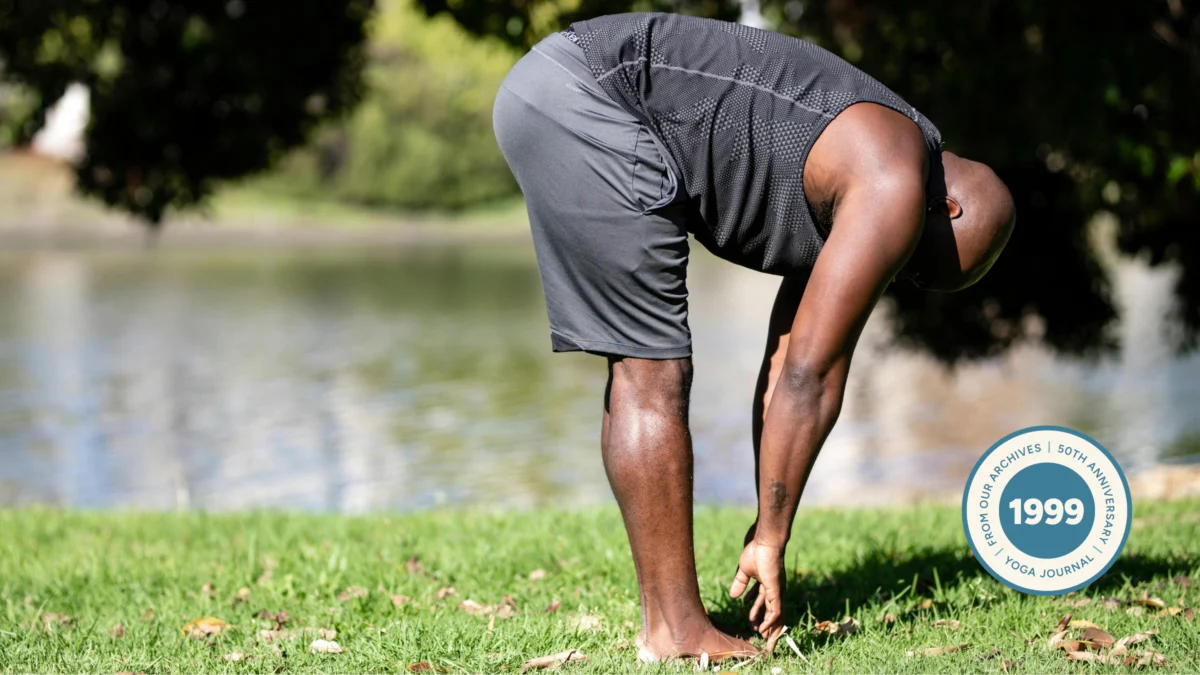
For many dedicated yoga practitioners, the path to a deeper forward bend is often paved with frustration. You attend classes religiously, maintain a consistent home practice, and see marked improvements in your strength and balance. Yet, when it comes to folding forward, you feel as though your hamstrings are made of reinforced steel. Despite years of effort, the needle on your flexibility seems stuck.
This plateau is a common experience, but it often stems from a fundamental misunderstanding of anatomy. Just like the famous Sufi tale of the philosopher-fool Nasrudin—who searched for his lost keys under a street light simply because it was easier to see there than in the dark—yoga students often focus exclusively on the hamstrings when they cannot fold forward. While the hamstrings are a factor, they are frequently not the root of the problem. To unlock the hips and finally achieve a deeper fold, one must look toward the "darker" corners of the anatomy: the external rotators.
The Anatomy of the Stagnant Fold
When we speak of hip tightness, we typically think of the hamstrings. However, the hip joint is a complex ball-and-socket structure governed by a sophisticated network of muscles. Among these are the deep external rotators: the obturator externus and internus, gemellus superior and inferior, the piriformis, and the quadratus femoris.
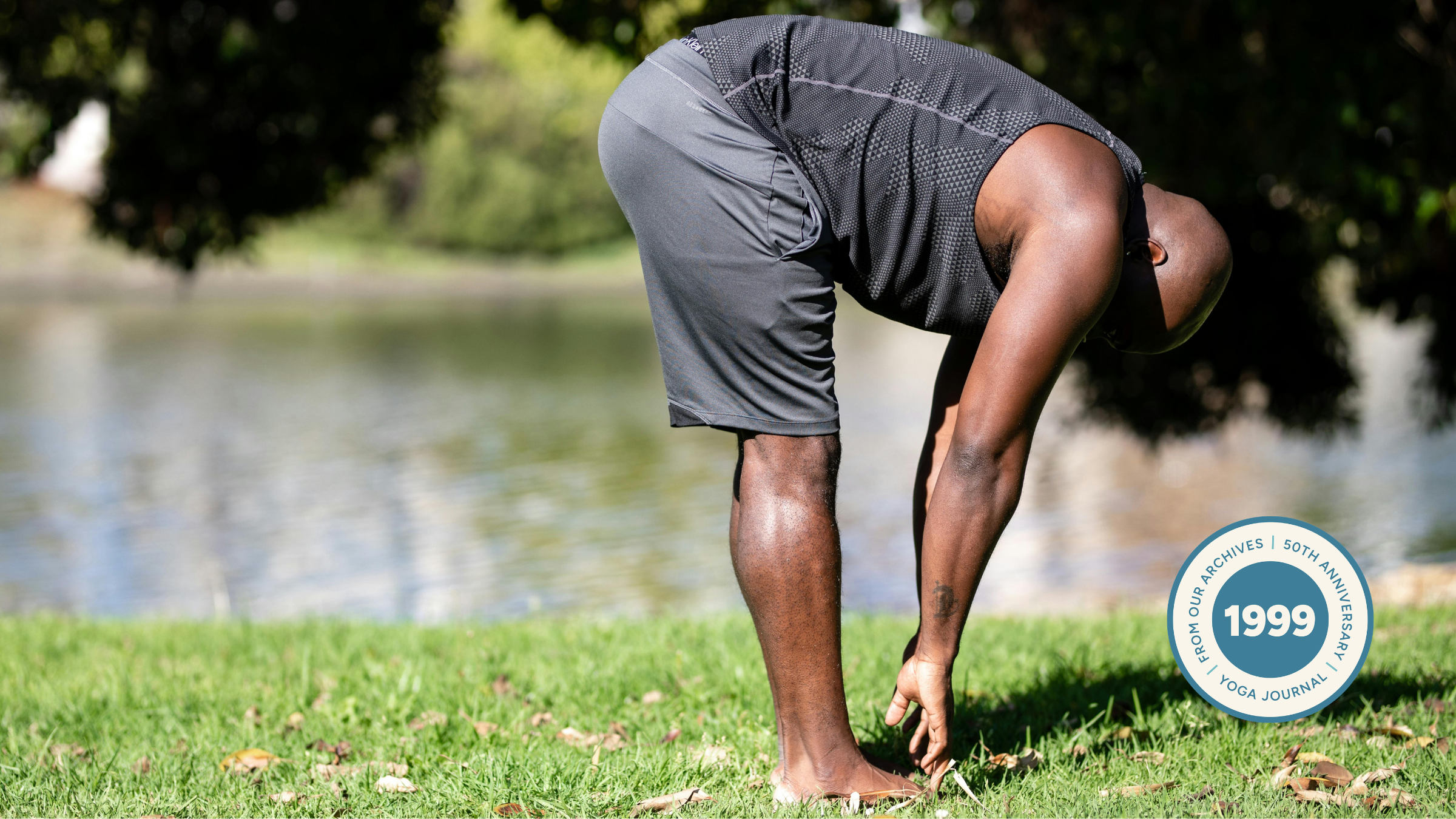
While these are anatomically separate structures, they function in concert as a single, potent unit. Their primary roles are to externally rotate the femur (thigh bone), stabilize the pelvis during the gait cycle, and provide critical support when standing on a single leg. When you execute a forward bend, you are asking the entire posterior chain of your body to lengthen. If your external rotators are chronically contracted or hyper-tonic, they act as a physical brake, preventing the pelvis from tilting forward over the femur. Without that pelvic rotation, you will never find the depth you seek in a fold, no matter how much you stretch your hamstrings.
The Piriformis Factor and "Piriformis Syndrome"
Perhaps the most infamous of these rotators is the piriformis. Because it attaches directly to the sacrum and the femur, and because the sciatic nerve runs in close proximity—often directly underneath or even through the muscle—its condition has systemic implications for your health.
When the piriformis becomes excessively tight, it can compress the sciatic nerve, leading to "piriformis syndrome." This manifests as radiating pain that begins in the buttocks and travels down the back of the thigh, sometimes reaching into the leg and foot. Furthermore, a hyper-tonic piriformis exerts a constant, uneven pull on the sacrum. This can disrupt the delicate mechanics of the sacroiliac (SI) joint, the crucial junction between the sacrum and the pelvis. Once the SI joint becomes dysfunctional, the lumbar spine often compensates, leading to lower back pain. Thus, the inability to perform a deep forward fold is often a symptom of a larger, systemic structural imbalance.
Chronology of the Discovery: A Shift in Perspective
The realization that the rotators, rather than the hamstrings, were the primary obstruction for many students began as an observation in the late 1990s. Instructors noted a recurring pattern: students with "stiff" bodies often had high-stress lifestyles or occupations that required constant stabilization of the hips.
The Role of Gait and Gravity
To understand why these muscles become tight, one must examine the mechanics of walking. During the "swing phase" of a stride, we are effectively standing on one leg. Gravity naturally pulls the pelvis downward. To maintain stability and prevent the body from collapsing, the rotators on the standing leg must fire constantly to hold the femur and pelvis in a rigid, stable alignment.
In our modern lives, we amplify this demand through activities like long-distance running or dance. A dancer, for example, requires immense stability to maintain an arabesque on one leg. Their rotators are in a state of near-constant, high-intensity contraction. Even if they possess extreme flexibility elsewhere, their rotators remain locked. Similarly, runners demand that these muscles hold the pelvis level against the constant momentum of the swinging leg.
Experimental Evidence: The Pelvic Test
You can observe this phenomenon yourself with a simple experiment. Place your fingertips on the front of your pelvis, near the bony landmarks known as the anterior superior iliac spine (ASIS). As you walk, notice how these landmarks remain level. This is the work of your rotators.
If you then stand on one leg and consciously allow the opposite hip to sway, you are essentially "turning off" the rotators on the standing side. Now, apply this to your yoga practice: stand with your feet hip-width apart and your toes turned outward, as in a ballet second position. In this stance, your rotators are fully contracted. Try to fold forward from this position; you will find it nearly impossible, regardless of your flexibility. Conversely, if you rotate the thighs inward—effectively stretching the rotators—you will find the forward fold becomes significantly more accessible.
Implications for Practice
The implications of this discovery are profound for the yoga community. It suggests that a "one-size-fits-all" approach to forward bends—which usually emphasizes hamstring lengthening—is insufficient for a significant portion of the population.
Professional Recommendations
If you are struggling with limited forward mobility or persistent sciatic-like pain, it is essential to adjust your routine. While hamstring work is still beneficial, it must be balanced with targeted rotator releases.
A Note of Caution: If you are experiencing intense, radiating leg pain that does not subside with gentle movement, this is not merely a "tightness" issue. It is imperative to consult a qualified health professional or a physical therapist. Structural nerve impingement or disc issues can mimic the symptoms of tight rotators, and self-diagnosing can lead to further injury.
Integrating Rotator Stretches into Your Routine
To move beyond the plateau, integrate the following five poses into your regular practice. These should be performed only after you are adequately warmed up. Because we often have significant imbalances between our right and left sides, pay close attention to your body’s signals and spend more time on the tighter side.
1. The Reclining Twist
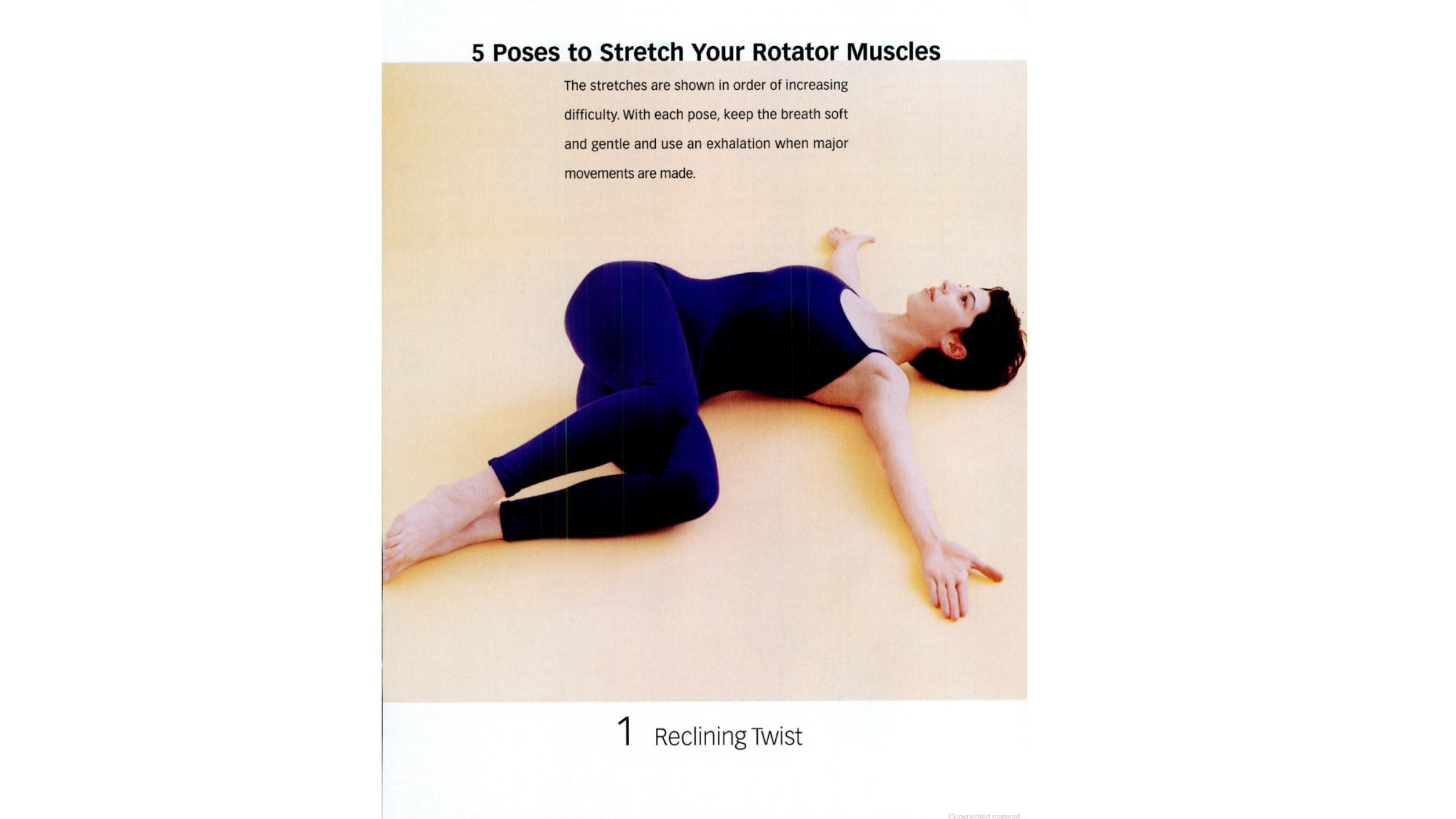
Begin by lying on your back with knees bent. On an exhale, draw the knees to the chest. Lower them to one side while keeping your shoulders pinned to the floor. By imagining the belly rotating away from the direction of the knees, you maximize the stretch in the outer hip.
2. Reclining Twist with Raised Knee
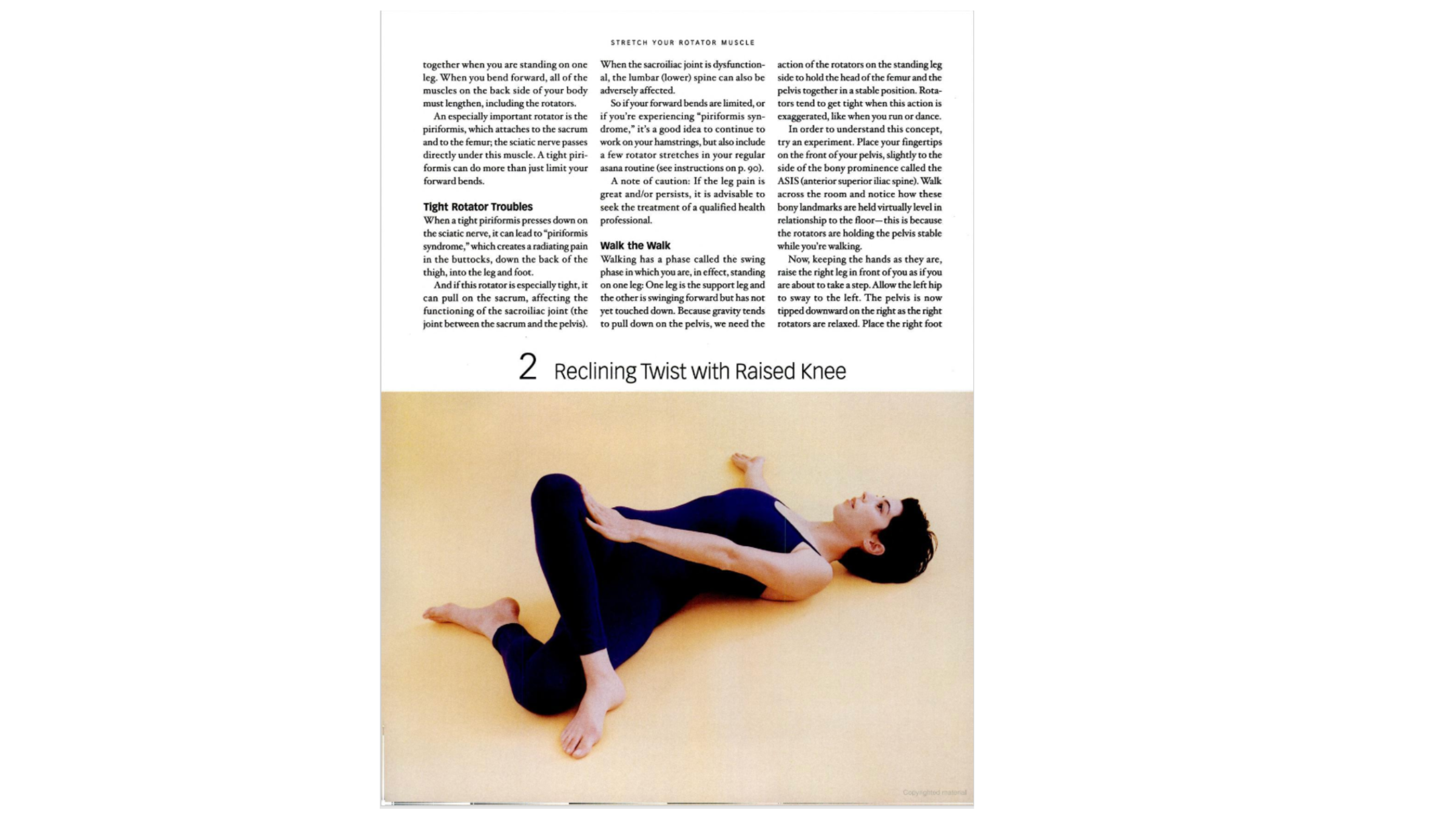
An evolution of the basic twist, cross your right ankle over your left knee. Drop the legs to the left. Use your left hand to gently press the right knee away from your torso. This deepens the stretch in the outer hip and provides more focused relief for the piriformis.
3. Standing Pigeon Pose
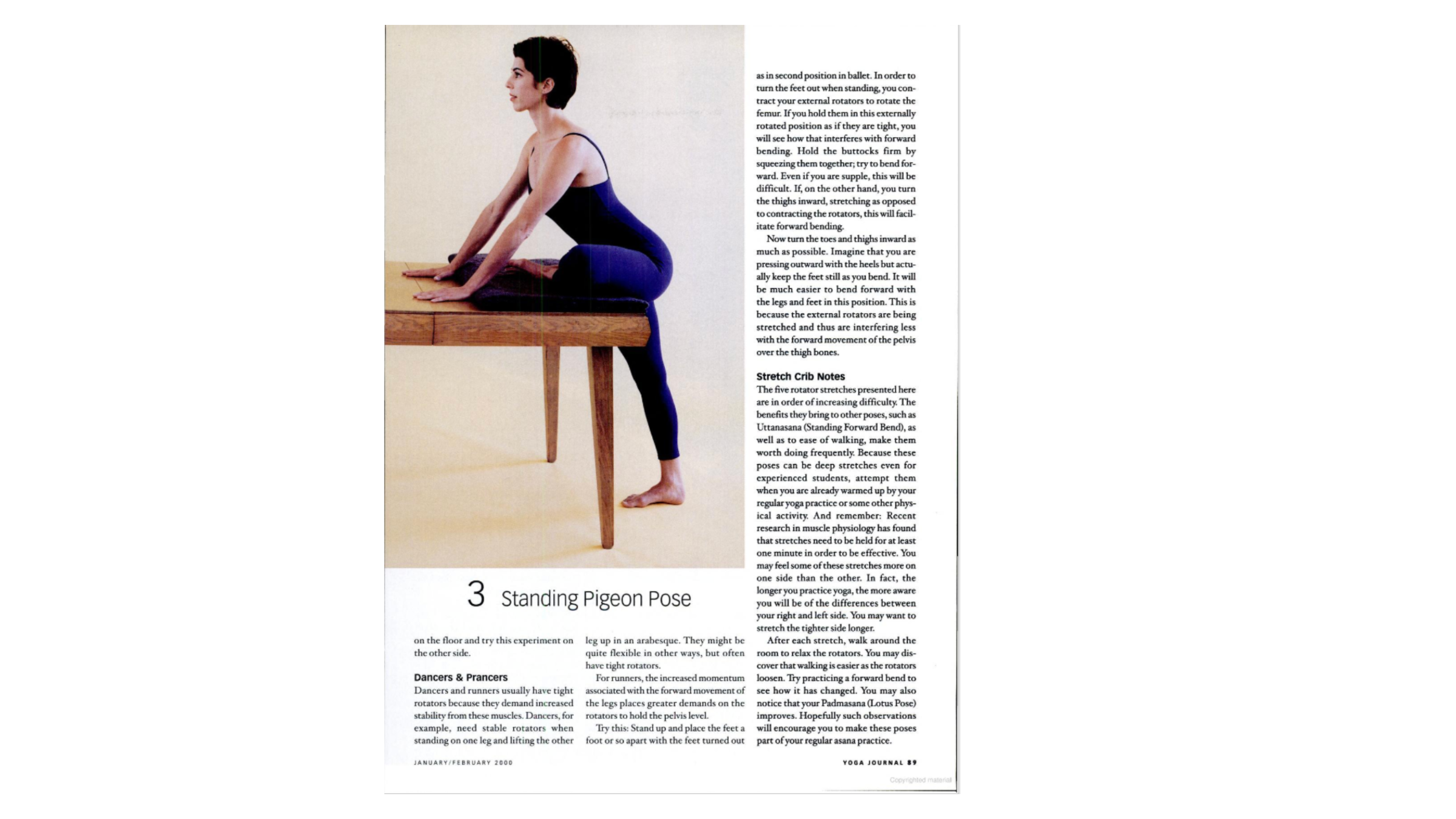
Using a waist-high table, place your lower leg across the surface so the shin is parallel to the table’s edge. The goal is a 90-degree angle. If you feel stable, fold forward from the hips, not the spine. This move is crucial for isolating the rotator group without straining the lower back.
4. Modified Pigeon Pose
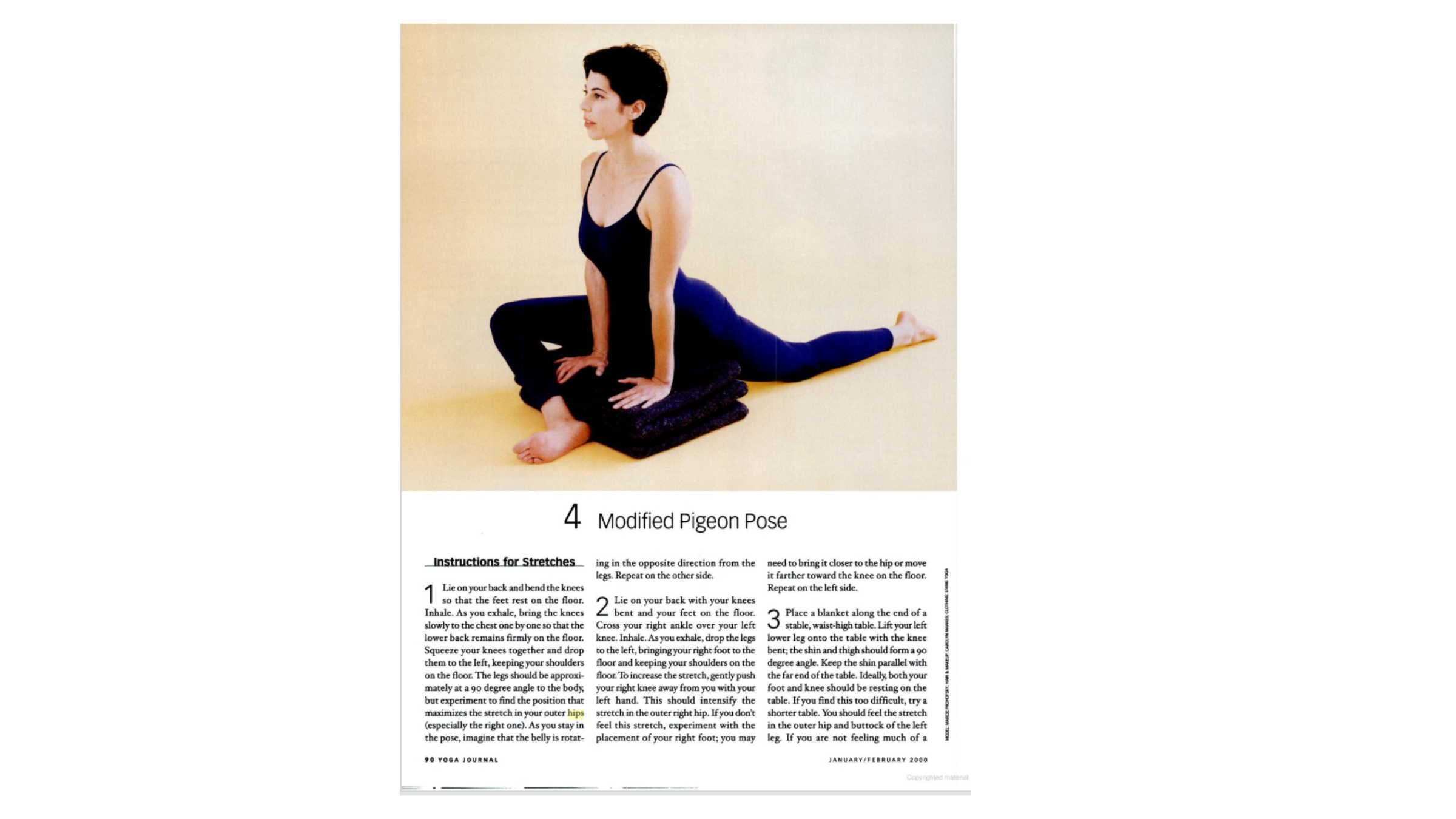
From a lunge, allow the front knee to drop outward. Keep the front foot slightly flexed to protect the ankle. This pose allows for a deep, passive release. If the floor is too far away, utilize bolsters to support your pelvis, ensuring that your hips remain square rather than shifting to the side.
5. The Twisting Lunge
Starting in a lunge, place the opposite forearm on the floor. Use your upper arm to gently hug the front thigh, turning your chest toward the inside of the leg. This provides a deep internal rotation stretch that is highly effective for loosening the structures surrounding the hip joint.
Conclusion: The Path Forward
The journey toward a deeper yoga practice is rarely about pushing harder; it is about knowing where to push. By shifting our focus from the obvious, accessible hamstrings to the deep, stabilizing rotators, we can bypass the "street light" mentality and address the root causes of our physical limitations. As you begin to release these deep-seated tensions, you will likely find that not only do your forward folds improve, but your daily gait becomes lighter and your seated postures, such as Padmasana (Lotus Pose), become significantly more accessible. Approach these stretches with patience, breath, and awareness, and the "keys" to your flexibility will surely be found.