










In the modern clinical landscape, chronic stress has long been categorized as a "silent epidemic." While its systemic damage—ranging from hypertension and metabolic dysfunction to heart disease and depression—is well-documented by the American Psychological Association, diagnosing and quantifying that stress has remained frustratingly subjective. Clinicians have traditionally relied on patient-reported questionnaires or cumbersome hormonal assays, which offer only a fleeting snapshot of a patient’s physiological state.
That paradigm is now shifting. Researchers at the Johns Hopkins University School of Medicine have developed a groundbreaking deep learning artificial intelligence model capable of identifying the first-ever biomarker of chronic stress visible on routine medical imagery. By analyzing adrenal gland volume through standard chest CT scans, this AI tool provides an objective, longitudinal measure of the body’s "stress load," offering a transformative approach to cardiovascular risk stratification and preventive medicine.
The Chronology of a Breakthrough
The genesis of this research lies in the convergence of two fields: artificial intelligence and the study of allostatic load—the cumulative "wear and tear" that chronic stress inflicts on the body’s physiological systems.
The research team, led by Dr. Elena Ghotbi, a postdoctoral research fellow at Johns Hopkins, began by addressing the limitations of existing stress markers. While cortisol levels (measured via saliva or blood) are the gold standard for stress assessment, they are notoriously volatile, fluctuating based on time of day, food intake, and immediate situational stressors. They represent a "point-in-time" measurement rather than a chronic, systemic history.
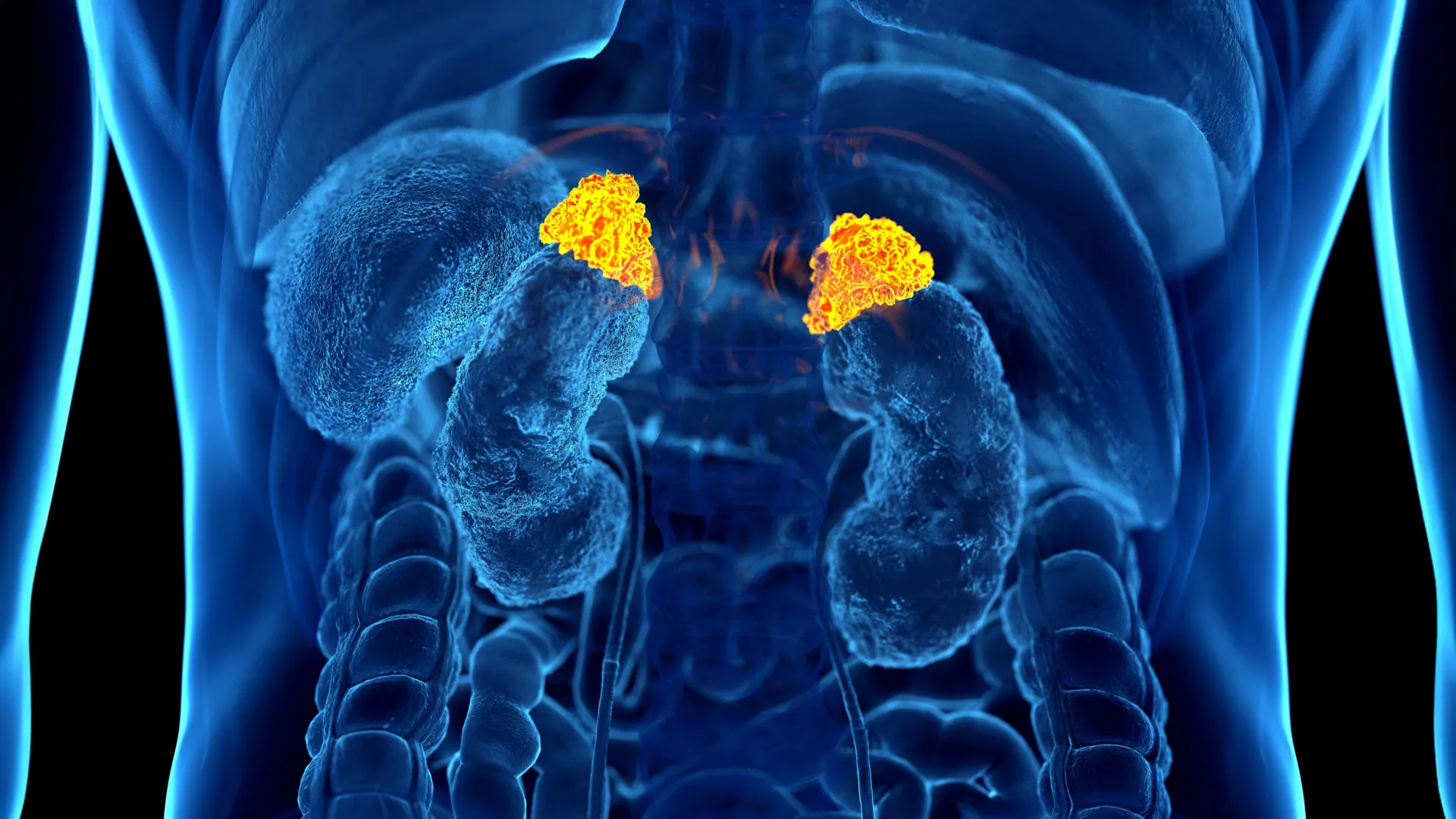
To overcome this, the team turned to the adrenal glands, the endocrine organs responsible for the "fight or flight" response. The researchers hypothesized that, much like a muscle grows with exercise, the adrenal glands may physically enlarge in response to the sustained hormonal demands of chronic stress.
Using a cohort of 2,842 participants from the landmark Multi-Ethnic Study of Atherosclerosis (MESA), the team applied a deep learning algorithm to analyze existing chest CT scans. The study design was rigorous, integrating imaging data with biological measurements—including cortisol levels—and psychosocial assessments collected over a decade. By training the AI to outline and calculate the volume of the adrenal glands, the researchers created the "Adrenal Volume Index" (AVI), a normalized metric that accounts for a patient’s physical stature.
Supporting Data: Validating the "Stress Gauge"
The strength of the Johns Hopkins study lies in its multi-layered validation process. The researchers did not simply look for a correlation; they cross-referenced the AVI against a battery of established health metrics to ensure its clinical reliability.
1. Hormonal and Psychosocial Alignment
The AI-derived AVI showed a clear, statistically significant alignment with established indicators of stress. Participants who reported higher levels of perceived stress on validated questionnaires consistently displayed larger adrenal volumes. Furthermore, these higher AVI values correlated with elevated salivary cortisol levels and increased "allostatic load"—a composite score measuring bodily stressors such as body mass index, glucose levels, heart rate, and blood pressure.
2. Cardiovascular Predictive Power
Perhaps the most compelling evidence for the AVI’s utility is its ability to predict long-term health outcomes. With up to 10 years of follow-up data on the MESA participants, the research team found that the AVI is an independent predictor of adverse cardiovascular events. Specifically, the data revealed that for every 1 cm³/m² increase in AVI, the risk of heart failure and subsequent mortality rose significantly. The index was also linked to a higher left ventricular mass index, a key structural marker of heart disease.
This finding suggests that the adrenal gland acts as a physiological "hard drive," recording the cumulative burden of stress that the patient has experienced over time. Unlike a blood test that captures the stress of today, the AVI captures the stress of the previous months and years.
Official Responses and Expert Perspective
The findings are scheduled for presentation at the annual meeting of the Radiological Society of North America (RSNA), where they are expected to spark significant debate regarding the future of diagnostic imaging.
Dr. Elena Ghotbi, the lead author, emphasized the efficiency of this new approach. "Our approach leverages widely available imaging data and opens the door to large-scale evaluations of the biological impact of chronic stress across a range of conditions using existing chest CT scans," she stated. "This AI-driven biomarker has the potential to enhance cardiovascular risk stratification and guide preventive care without additional testing or radiation."
Senior author Dr. Shadpour Demehri, a professor of radiology at Johns Hopkins, highlighted the historical struggle to quantify the intangible burden of stress. "For the first time, we can ‘see’ the long-term burden of stress inside the body, using a scan that patients already get every day in hospitals across the country," Dr. Demehri said. "Until now, we haven’t had a way to measure and quantify the cumulative effects of chronic stress, other than questionnaires, surrogate serum markers like chronic inflammation, and cortisol measurement, which is very cumbersome to obtain."
Dr. Teresa E. Seeman, a co-author and professor of epidemiology at UCLA, who has spent three decades researching the nexus of stress and health, heralded the discovery as a significant milestone. "What makes this work so exciting is that it links a routinely obtained imaging feature, adrenal volume, with validated biological and psychological measures of stress and shows that it independently predicts a major clinical outcome," she noted. "It’s a true step forward in operationalizing the cumulative impact of stress on health."
Implications for Future Clinical Practice
The implications of this research extend far beyond the research lab. In the United States alone, tens of millions of chest CT scans are performed annually for various reasons, ranging from lung cancer screenings to cardiac evaluations. Integrating an AI tool that automatically calculates the AVI during these routine procedures could turn every chest CT into a dual-purpose diagnostic, providing clinicians with vital data on a patient’s chronic stress levels without the need for extra time, cost, or radiation exposure.
A New Frontier in Preventive Cardiology
The ability to identify patients at higher risk for heart failure based on their adrenal volume could fundamentally change how doctors approach preventive care. Patients flagged with a high AVI could be prioritized for earlier interventions, such as intensive lifestyle counseling, stress-reduction programs, or more aggressive blood pressure management.
Moving Beyond "Self-Report"
By providing a biological marker for chronic stress, the medical community can move away from the current reliance on subjective reporting. This is particularly important for patients who may not realize the extent of the stress they are under or who struggle to articulate their psychological state. As Dr. Demehri noted, this creates a "physiologically sound measure" that is part of the established chronic stress cascade, lending medical credibility to the concept of stress-induced physical decay.
Scalability and Future Research
While the current study utilized the MESA cohort to establish the link, the next phase of research will likely focus on integrating this AI tool into clinical software suites. The researchers believe this imaging biomarker could eventually be applied to a wide range of stress-related diseases affecting middle-aged and older adults. By normalizing the "Adrenal Volume Index" across diverse populations, the medical field could create a universal standard for assessing how life’s pressures manifest physically within the body.
Ultimately, this study bridges the divide between psychosocial health and biological reality. By making the "burden of stress" visible, researchers have provided the medical community with a powerful new lens through which to view human health—one that acknowledges that the mind and the body are not separate entities, but are intrinsically linked through the physiological structures that sustain us. As AI continues to evolve, the Adrenal Volume Index stands as a beacon for a more proactive, data-driven approach to holistic medicine.