








Introduction
As the nation approaches the 25th anniversary of the September 11, 2001, terrorist attacks, the historical record remains anchored by the visceral, immediate imagery captured by those who ran toward the fire. While the world watched the plumes of smoke rising from Lower Manhattan in horror, a different, equally terrifying theater of war was unfolding in the backyard of the nation’s capital.
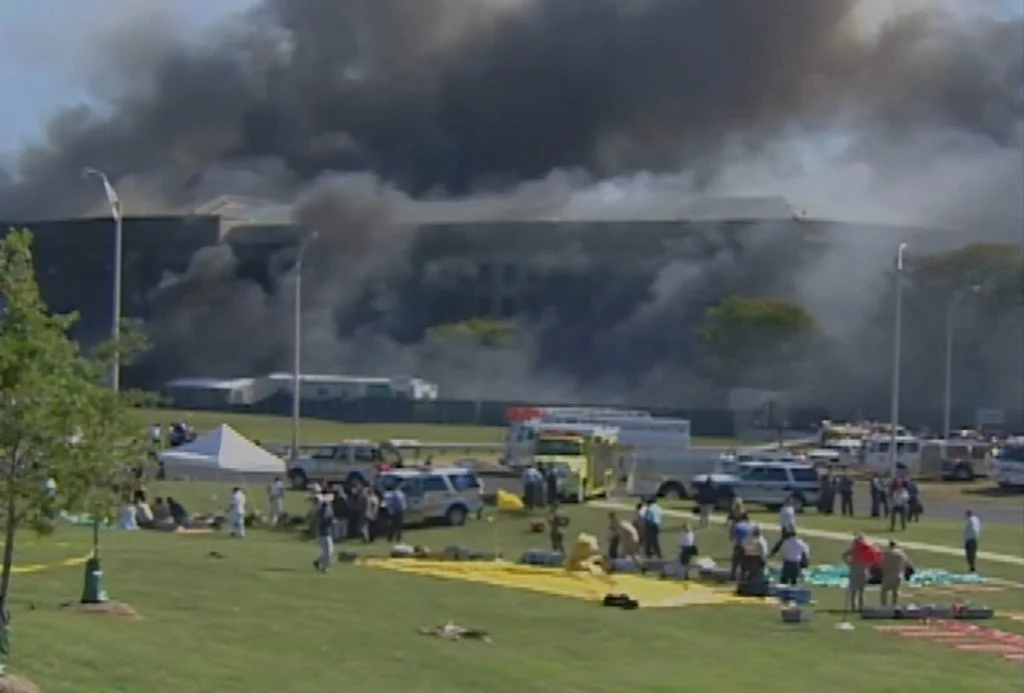
For the team at WETA—the Arlington, Virginia-based public media station just five minutes from the Pentagon—the morning of September 11 began as a routine news day. Within an hour of the first plane hitting the World Trade Center, two veteran cameramen and a young intern found themselves at the epicenter of the attack on the Pentagon. Their footage, captured under the duress of potential secondary strikes and the suffocating heat of jet fuel, became a definitive visual account of the day that changed the world.
Today, those men reflect on the chaos, the instinctual drive to document history, and the indelible marks that the day left upon their lives.
The Chronology of Chaos: A Morning of Transformation
The First Response
At 9:37 a.m. ET, American Airlines Flight 77 struck the western facade of the Pentagon. The impact, which killed all 64 people aboard and 125 people in the building, was felt almost immediately by those in the nearby WETA studios.
Jeff Rathner, a WETA cameraman, was on the road when the news broke. "When I heard on the radio smoke was coming from the Pentagon, I was right at the exit for Washington Boulevard," Rathner recalls. "About 10 seconds later, I came through. There was smoke coming from the Pentagon."
Simultaneously, the "NewsHour with Jim Lehrer" desk was mobilizing. Josh Gershenson, then a 24-year-old desk assistant, was tasked with a mission that would define his young career. "Our assignment desk person said: ‘I need a desk assistant to go with a cameraman to the Pentagon,’" Gershenson says. He was paired with veteran cameraman Ed Lee. Reflecting on their dynamic, Gershenson recalls, "Ed had been a WETA cameraman for a long time, and he’s got this 24-year-old doofus that he’s just taking along to what will become a very intense day."
The Scene at the Pentagon
The trio arrived at the Pentagon within minutes, following fire engines directly into the disaster zone. What they found was a landscape of devastation that defied traditional news coverage.
"It was like a big animal that had been wounded," Ed Lee noted of the smoldering structure.
Jeff Rathner, who arrived roughly nine minutes after the impact, described the surreal silence that preceded the full realization of the carnage. "There was no evidence of a plane anywhere. I had figured it had gone into the inner courtyard, but I didn’t have time really to think about that because I just started to grab my gear and shooting."
As the journalists navigated the perimeter, they encountered the grim reality of the site: a heliport littered with bodies, and debris—small nuts and bolts—that served as haunting physical evidence of the aircraft that had disintegrated into the building.
The Press and the Perimeter: A Line in the Sand
As emergency responders struggled to contain the inferno, the WETA team found themselves in a confrontation with security personnel. The military and police, fearing a second, follow-up attack, had established a hard perimeter.
Gershenson recalls the tension: "All these other people are going the other way, and we got to a certain point where the security personnel said: ‘You can’t go any further. This is the farthest you can go.’"
Ed Lee, acting on journalistic instinct, refused to retreat. "No, we’re going farther," Lee insisted. "We’re here to cover this story. You can’t stop us."
This friction was not merely about access; it was about the perceived blast radius. Authorities believed that if another aircraft were to strike, the current position of the press would be in the direct line of a secondary explosion. Yet, the team felt an overriding obligation to document the scene. "I felt an obligation to preserve the moment," Gershenson says. "We were really proud that we had the best, closest footage that anyone else would ever have."
Moments of Surrealism and Terror
The day was marked by a series of surreal, almost cinematic moments that punctuated the horror. Jeff Rathner remembers seeing a man in a gray suit amidst the recovery efforts, whom he later realized was Secretary of Defense Donald Rumsfeld, physically assisting in the scene.
The physical environment was described by Gershenson as an "oven" that never stopped burning. The sky was choked with thick, black smoke that drifted over the Capitol Dome, prompting the journalists to briefly grapple with the terrifying prospect that the seat of American government might be the next target.
The situation turned from grim to panicked when a warning of an "inbound plane" rippled through the scene. "Everybody, run," a voice shouted, sparking a frantic evacuation of the area. It was a moment of pure, unadulterated fear. "I’m pretty sure that was the plane that the people made sure crashed in Pennsylvania," Ed Lee notes, referring to the heroic efforts of the passengers on United Flight 93.
The Weight of History: Psychological Implications
For those who captured the events of 9/11, the experience was not merely professional—it was deeply personal.
Jeff Rathner describes the struggle to remain objective while witnessing the unimaginable. "I was running on adrenaline. You run on automatic pilot. You know what you have to do as a news photographer. One moment, I caught my breath and just sort of went like that. It briefly overcame me."
He reflects on the existential shift that occurred that day: "I thought about what this really meant, being attacked on our own soil. It’s just it never happened before, and things are never going to be the same again."
Twenty-five years later, the memories remain vivid. The smell of jet fuel, the sound of the wall collapsing, and the sight of the burning building are "details" that Rathner says will stay with him for the rest of his life.
Historical Context and Legacy
Supporting Data
The attack on the Pentagon resulted in the destruction of several offices on the first, second, and third floors, and caused a massive structural collapse. The fire burned for several days, fueled by the jet fuel of the hijacked Boeing 757. The recovery effort was a massive, multi-agency operation involving the FBI, FEMA, and various military branches.
The Role of Media
The footage captured by the WETA crew and their peers served several critical functions:
- Public Accountability: Providing an unfiltered view of the incident as it unfolded.
- Historical Preservation: Creating primary source documentation for future generations.
- National Resilience: Serving as a visual reminder of the vulnerability of the nation and the subsequent unity displayed by first responders and the public.
Conclusion: The Long Shadow of 9/11
As the United States prepares to mark the 25th anniversary of 9/11, the testimonies of individuals like Rathner, Gershenson, and Lee remind us that history is often recorded by those who choose not to look away. Their story is a testament to the essential role of journalism in times of crisis—a role that demands courage, resilience, and an unwavering commitment to the truth, even when the ground is shaking beneath one’s feet.
While the smoke has long cleared from the Pentagon, the images captured by the WETA team continue to serve as a stark reminder of the cost of that day. For these men, 9/11 is not just a chapter in a history book; it is a vivid, ever-present memory of a day when the world changed, and they were there to see it happen.
Notice: Transcripts are machine and human generated and lightly edited for accuracy. They may contain errors.