







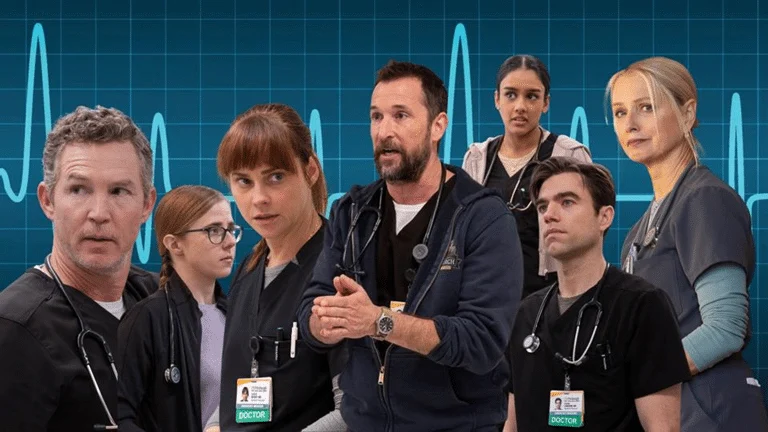
If you haven’t yet immersed yourself in the high-stakes, adrenaline-fueled corridors of HBO Max’s medical drama The Pitt, you are missing one of the most vital cultural touchstones in modern television. While the series is ostensibly a fast-paced look at a Pittsburgh emergency department, its true brilliance lies not in its clinical procedures—though they are famously accurate—but in its unflinching gaze at the systemic failures of the American healthcare landscape.
For those of us dedicated to the field of aging research, The Pitt is more than just entertainment; it is a mirror reflecting the precarious reality of our elderly population. As we move further into the 21st century, the series serves as a harrowing, necessary case study on the crises of caregiving, geriatric staffing, and the social determinants of health.
The Reality of the "Clamshell" and the Caregiver’s Burden
At its core, The Pitt distinguishes itself from the glossy, sanitized hospital dramas of the past by refusing to shy away from the visceral realities of medicine. Whether it is the technical precision of a "clamshell" thoracic surgery or the agonizing, quiet conversations surrounding end-of-life care, the show treats medical decision-making with the gravity it deserves.
However, the show’s most profound impact is found in its portrayal of the caregiver. Season 1 offers a particularly poignant storyline: a mother-daughter duo navigating a caregiving journey that has become unsustainable. We see the adult daughter, pushed to the absolute brink of exhaustion, suffering a moment of profound vulnerability—falling asleep in her car, completely overwhelmed by the prospect of her mother’s increasing dependency.
This is not "filler" drama. It is a raw depiction of the 63 million Americans currently acting as unpaid caregivers for spouses, elderly parents, or relatives. According to the Caregiver Action Network, one in five of these individuals is simultaneously balancing a full-time career. The physical and psychological toll is staggering: high rates of depression, anxiety, and a heightened risk of chronic disease as caregivers prioritize their loved ones’ health at the total expense of their own.
A Nation in Need: The Geriatrician Shortage
One of the most biting moments in the series occurs when a senior physician, Dr. Robby, suggests a geriatrics fellowship to a colleague, Dr. Mohan. The suggestion is framed as a "slight," an implication that the pace of geriatric care is slower—or perhaps "easier"—than the frenetic life of the ER.
While intended as a jab in the show’s universe, the dialogue highlights a systemic crisis: the dire, national shortage of geriatricians. As of 2030, every member of the Baby Boomer generation—representing one in five Americans—will be 65 or older. This demographic shift is unprecedented, yet the medical infrastructure remains stuck in the past.
The Numbers Behind the Shortage
- Current Supply: The U.S. currently hosts only roughly 7,000 board-certified geriatricians.
- The Comparison: For perspective, there are over 60,000 pediatricians in the United States.
- The Projected Gap: The U.S. Department of Health and Human Services has projected a shortfall of nearly 27,000 geriatric providers—a deadline that has effectively already passed.
- Educational Neglect: Despite the fact that the majority of a physician’s career will involve treating older adults, only one in ten U.S. medical schools mandates a clinical rotation in geriatrics.
The implication is clear: we are sending a generation of physicians into a system ill-equipped to handle the complex, multi-morbidity nature of aging patients.
The "Boomerang" Effect: Burnout and the Emergency Room
The pacing of The Pitt is intentionally chaotic. Waiting rooms are perpetually overflowing, and doctors are pulled in a dozen directions at once. In one sequence, Dr. Langdon admits to seeing 16 patients in a single morning, eventually losing the ability to recognize a woman he had treated just four hours earlier.
This level of burnout is the hallmark of modern emergency medicine, and it is a dangerous environment for older adults. The American Medical Association notes that emergency medicine leads all specialties in physician burnout, a trend that directly correlates with poor outcomes for the elderly. When a doctor is stretched to their breaking point, the nuances of geriatric care—such as identifying delirium versus dementia or managing complex medication interactions—are often missed.
This leads to the "boomerang" effect: older patients are discharged prematurely, only to face readmission within days. These adverse outcomes are not just statistical anomalies; they are the direct result of a system that prioritizes volume over value.
The Hidden Barriers: Transportation and Economic Despair
Perhaps the most humanizing aspect of The Pitt is its exploration of social determinants. When an older patient, Vera, is cleared for discharge, she is met with a wall of reality: she has no way to get home. Her neighbor cannot drive at night, and she cannot afford a taxi. The scene ends with a medical student, Dr. Whittaker, reaching into his own pocket to pay for a ride-share, physically walking her to the ambulance bay to ensure she reaches safety.
This is not a romanticized moment of heroism; it is a condemnation of the structural failures in our healthcare system. Transportation is consistently cited as one of the most significant, yet underreported, obstacles to healthcare access for older Americans. Data suggests that 3.6 million Americans skip or delay medical appointments due to transportation issues, with 50% of older adults fearing that they will be forced to miss future care for the same reason.
Furthermore, the show weaves in the pervasive theme of financial dread. We see patients calculating the costs of life-saving procedures against the potential for crushing family debt. In one gut-wrenching arc, a patient leaves the hospital early to avoid burdening his family, only to be returned in critical condition with no hope of recovery. His daughter’s subsequent resort to a crowdfunding platform for medical expenses is a hauntingly accurate representation of the "GoFundMe-ification" of American healthcare.
Implications: The Policy Path Forward
The Pitt is, at its heart, a work of fiction, but the crises it portrays are verified by every major health index in the country. The issues highlighted—caregiver burnout, the geriatrician deficit, and the rising costs of medical care—are not abstract problems; they are active, ongoing crises.
Key Takeaways for Policy Reform:
- Incentivizing Geriatric Specialization: Federal and state governments must increase funding for geriatric fellowship programs and loan forgiveness initiatives to attract the next generation of physicians.
- Expanding Caregiver Support: Policymakers must explore tax credits and expanded respite care services to alleviate the financial and emotional burden on the 63 million Americans currently acting as caregivers.
- Investing in Social Infrastructure: Healthcare access must be viewed holistically. Integrating non-medical services, such as subsidized transportation for patients, must become a standard part of hospital discharge planning.
- Curriculum Reform: The Liaison Committee on Medical Education should consider making geriatrics a mandatory, rather than elective, clinical rotation for all medical students.
Conclusion
The decisions being made today—in the halls of Congress, in the boardrooms of hospital systems, and in the lecture halls of our medical schools—will define the quality of life for the largest generation of older adults in American history.
The Pitt provides the drama, but the responsibility for the resolution lies with us. We have the data, we have the projections, and now, through the lens of popular media, we have a public understanding of the stakes. The question remains: will we act before the system collapses under the weight of its own neglect, or will we continue to force our medical staff and our aging population to navigate the cracks alone?
It is time to ensure that when our turn comes to enter the emergency department, we are met with a system that is as compassionate as it is capable.
Katrin Werner-Perez serves as the Director of Health Programs at the Alliance for Aging Research. Her work focuses on bridging the gap between clinical reality and federal policy to improve the lives of older Americans.