











The landscape of Central Nervous System (CNS) drug development is currently navigating a period of unprecedented complexity. As pharmaceutical companies push into the frontiers of Alzheimer’s, Parkinson’s, and rare neurological disorders, the demand for high-fidelity neurobiomarker data has surged. However, a persistent "data bottleneck"—caused by fragmented collection systems and manual integration errors—has historically plagued multi-site clinical trials.
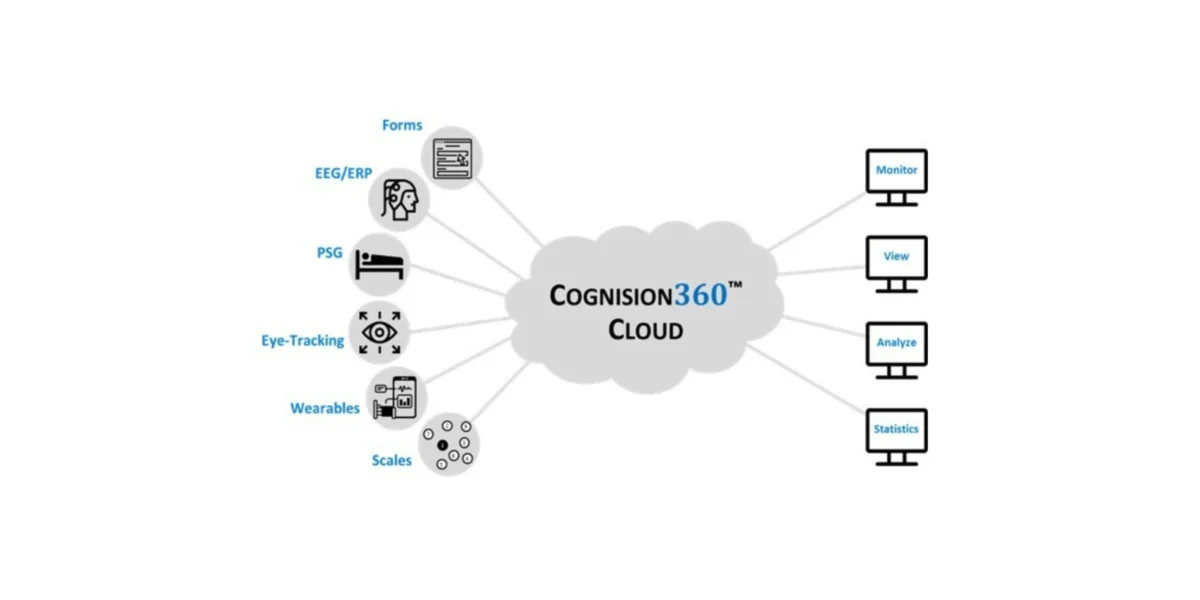
In a move to resolve these systemic inefficiencies, Cognision has officially unveiled Cognision360, a comprehensive, web-based platform engineered to synthesize disparate neurobiomarker data streams into a single, standardized, and audit-ready ecosystem. By automating the integration of complex data—ranging from polysomnography (PSG) and electroencephalography (EEG) to wearable sensor outputs and cognitive assessments—the platform seeks to fundamentally alter the speed and integrity of modern drug discovery.
The Core Problem: Fragmentation in Clinical Research
Modern CNS clinical trials are notorious for their data-handling challenges. A typical multi-site study might utilize one vendor for sleep studies, another for cognitive performance testing, and a third for EEG or eye-tracking metrics. This "siloed" approach forces researchers to manage a mosaic of proprietary formats, manual data transfers, and disparate software interfaces.
This fragmentation introduces significant operational risks. Every time a research assistant must manually transcribe a data point or convert a file format for upload into a central database, the risk of human error increases. Furthermore, the lack of standardized metadata—such as subject ID, site location, or visit timepoint—across these different systems can lead to "data drift," where the integrity of the clinical trial is compromised, potentially leading to costly delays or regulatory rejection.
Cognision360 addresses these pain points by serving as a unified "digital nervous system" for the trial. By capturing all data points directly into a single framework from the moment of collection, the platform eliminates the need for manual transcription, effectively accelerating the journey toward the coveted "database lock"—the milestone that marks the completion of data cleaning and the beginning of final analysis.
Chronology of Innovation: From Silos to Synthesis
The development of Cognision360 was not a sudden pivot but a calculated response to the evolving regulatory landscape of digital health.
- Early Phase Identification: Cognision’s engineering teams spent years observing the inefficiencies in multi-site trial workflows, noting that sponsors were investing millions in biomarker strategies only to lose months of time wrestling with incompatible software.
- Stakeholder Integration: The platform’s architecture was developed through iterative input from trial stakeholders, including clinical researchers, data scientists, and regulatory affairs professionals. This ensured that the software did not just "collect data" but actively enforced protocol-defined workflows.
- Regulatory Alignment: Recognizing the FDA and EMA’s increasing scrutiny on digital health technologies, Cognision prioritized a "regulatory-first" design. This led to the decision to utilize deterministic, rules-based analytical methods rather than black-box artificial intelligence, ensuring that every data outcome can be traced back to its origin.
- Deployment and Validation: Cognision360 was deployed within a validated Microsoft Azure environment, satisfying enterprise-level security requirements, and is now being offered as a scalable solution for global CNS studies.
Technical Foundations: The Logic of Transparency
One of the most critical aspects of the Cognision360 platform is its rejection of "black-box" analytics. In an era where artificial intelligence (AI) is often marketed as a panacea, Cognision has taken a more cautious, technically rigorous path.
KC Fadem, chief technology officer at Cognision, emphasizes that for the purposes of regulatory submission, the "how" is just as important as the "what."
"The platform employs deterministic, rules-based analytical methods with expert-defined data relationships rather than non-transparent artificial intelligence models," Fadem states. "For regulatory submissions, transparency, reproducibility, and traceability aren’t nice-to-haves—they’re requirements. Our approach is designed with that reality in mind."
By avoiding non-transparent AI, the platform ensures that auditors can verify how a specific neurobiomarker result was derived. This reproducibility is essential for satisfying the rigorous standards of the FDA and the European Medicines Agency (EMA), which increasingly require companies to prove that their digital health tools are reliable, consistent, and free from algorithmic bias.
Official Responses and Strategic Vision
The leadership at Cognision views the launch of Cognision360 as a strategic intervention in the pharmaceutical R&D lifecycle. Igor Korolev, DO, PhD, vice president of neuroscience and digital health at Cognision, highlights the immense financial and scientific cost of the current status quo.
"We’re seeing sponsors invest millions in sophisticated biomarker strategies, only to lose weeks or months wrestling with data integration issues," says Dr. Korolev. "Cognision360 provides an end-to-end framework that ensures multi-modal neurobiomarker data meets regulatory expectations for consistency and integrity from day one."
This vision is supported by the platform’s ability to facilitate Bayesian adaptive trial designs. Unlike traditional fixed-sample studies, Bayesian trials allow for ongoing adjustments based on accumulating data, potentially reducing the number of patients needed and shortening the trial duration. Because Cognision360 provides rapid data acquisition and quality monitoring, it is uniquely positioned to support these modern, flexible trial designs which are increasingly encouraged by new FDA guidance.
Implications for the Future of CNS Drug Development
The ripple effects of a tool like Cognision360 are likely to be felt across several dimensions of the pharmaceutical industry:
1. The Rise of Decentralized Clinical Trials (DCTs)
As the industry shifts toward decentralized or hybrid models, the ability to monitor data remotely becomes a prerequisite for success. Cognision360’s secure web interfaces allow authorized researchers to view data in real-time, regardless of their geographical location. This enables "remote monitoring," where investigators can identify issues with data quality or patient adherence as they occur, rather than waiting for an on-site monitor visit.
2. Streamlining Regulatory Filings
The transition from data collection to regulatory filing is often the most time-consuming phase of drug development. Because Cognision360 captures metadata (subject ID, visit timepoint, treatment arm) automatically, the data is essentially "filing-ready" from the start. This drastically reduces the time spent on data cleaning, which often accounts for a significant portion of the time between a trial’s last patient visit and the submission of the New Drug Application (NDA).
3. Enhancing Patient Safety and Data Integrity
By embedding protocol-defined workflows into the software, the platform ensures that users at different sites—whether in Tokyo, London, or New York—follow the exact same procedure for collecting EEG or PSG data. This consistency is vital for multi-site trials where site-to-site variability can often drown out the true biological signal of a drug’s efficacy.
4. Security and Scalability
By leveraging Microsoft Azure, Cognision360 offers enterprise-grade security, which is a non-negotiable requirement for handling sensitive patient health information (PHI). The inclusion of an extensive API also means that Cognision360 does not need to exist in a vacuum; it can be integrated into existing Clinical Trial Management Systems (CTMS), allowing companies to leverage their current software investments while upgrading their data processing capabilities.
Conclusion: A New Standard for Neuro-Research
The introduction of Cognision360 represents a maturation of the digital health sector in neurology. As the industry moves away from "pilot projects" and toward full-scale, evidence-based digital integration, platforms that prioritize transparency, traceability, and workflow automation will likely become the industry standard.
By removing the "manual labor" of data integration, Cognision is not merely providing a software tool; they are providing a framework that allows scientists to focus on the science rather than the logistics. In the race to develop effective treatments for the most challenging neurological conditions, the ability to move quickly—without sacrificing the integrity of the data—is perhaps the most valuable asset a pharmaceutical sponsor can possess. As Cognision360 gains traction, it will be closely watched by the industry to see if it can successfully translate its technological promises into a tangible acceleration of the CNS drug pipeline.