











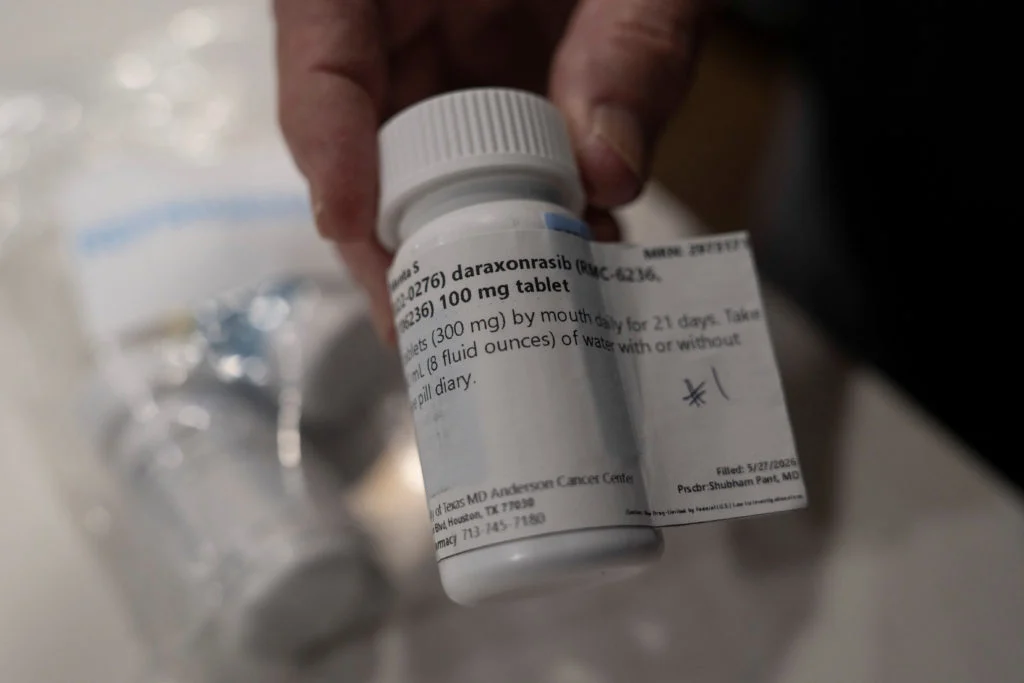
WASHINGTON — For decades, a diagnosis of advanced, metastatic pancreatic cancer has been met with a somber prognosis. Often described as one of the most formidable challenges in modern medicine, the disease has historically proven resistant to traditional therapies, leaving patients with few options and limited time. However, a significant clinical breakthrough unveiled this week at the American Society for Clinical Oncology (ASCO) meeting in Chicago has provided a long-awaited glimmer of hope.
Researchers have reported the results of a landmark study involving a novel daily pill, daraxonrasib, which has demonstrated an unprecedented ability to extend the lives of patients with advanced pancreatic cancer. By targeting the very proteins that fuel tumor growth—a feat previously thought to be impossible—this drug is poised to redefine the standard of care for one of the deadliest cancers in existence.
The Core Discovery: Unlocking the "Undruggable"
The fundamental challenge in treating pancreatic cancer lies in the biological profile of the disease. In more than 90% of cases, the cancer is driven by mutations in the RAS gene family—specifically the KRAS mutation. For years, scientists struggled to design a drug capable of binding to these mutated proteins because of their unique, smooth molecular structure. Consequently, the KRAS protein was long labeled "undruggable" by the medical community.
Daraxonrasib changes this narrative. Developed by Revolution Medicines, the drug functions through a mechanism often described as "molecular glue." It binds to multiple KRAS subtypes, effectively inhibiting the signal that tells the cancer cells to multiply. By neutralizing this biological engine, the drug halts the aggressive proliferation of tumors.
"While not curing the cancer, it is a very large step forward," said Dr. Zev Wainberg of the University of California, Los Angeles, who served as a lead investigator on the study. "It is the first drug to show a substantial, clear-cut advantage over traditional chemotherapy in this patient population."
Chronology of a Medical Milestone
The journey to this discovery has been marked by years of incremental laboratory research and the eventual transition into high-stakes clinical trials.
- Pre-Clinical Development: For over a decade, researchers worked to understand the geometry of the KRAS protein. The development of "molecular glue" compounds allowed for the first viable attempts at targeting these mutations.
- The Phase III Trial: The experimental drug was put to the test in a rigorous study of 500 patients. These were individuals with metastatic pancreatic cancer that had already ceased responding to standard-of-care chemotherapy—a group that typically faces a grim outlook.
- The ASCO Presentation: On Sunday, at the world’s largest oncology gathering in Chicago, Dr. Brian Wolpin of the Dana-Farber Cancer Institute presented the findings. The data revealed a stark contrast between those treated with the pill and those kept on chemotherapy.
- Regulatory Path: Following the presentation of these results in the New England Journal of Medicine, the Food and Drug Administration (FDA) has signaled its intent to expedite the review process. Currently, the FDA is facilitating "expanded access" to the drug, allowing eligible patients to seek the treatment while the final approval process moves forward.
Supporting Data: By the Numbers
The clinical data provides a compelling case for the efficacy of daraxonrasib. In the randomized trial, the median survival time for patients taking the pill reached 13.2 months, compared to just 6.7 months for those continuing with traditional chemotherapy.
While these figures represent a doubling of survival time, researchers emphasize that the benefit goes beyond mere longevity. Patients on daraxonrasib reported:
- Improved Quality of Life: Participants experienced less pain and were able to maintain better daily function compared to the chemotherapy cohort.
- Durable Benefits: Because the drug is a pill, it is easier to administer, and patients were able to remain on the treatment for significantly longer durations than those receiving infusion-based chemotherapy.
- Tumor Shrinkage: Imaging data confirmed that the drug successfully induced tumor regression in a large percentage of participants, providing a window of stability that had previously been unreachable.
Dr. Rachna Shroff of the University of Arizona Cancer Center, who was not involved in the study, was moved by the tangible impact of the drug. "Having treated pancreatic cancer for 16 years, I actually started crying when I saw the results," she said. "I was struck by how patients stayed on this treatment because it was providing a durable and meaningful benefit to them."
Official Responses and Clinical Implications
The medical community has reacted with a mixture of relief and tempered optimism. Dr. Andrew Coveler of the Fred Hutchinson Cancer Center noted that the mechanism of action is fundamentally distinct from anything previously available. "This thing works drastically differently," Coveler remarked, suggesting that the industry may be witnessing a sea change in how oncology approaches solid tumor mutations.
The Challenges Ahead
Despite the success, the drug is not without its limitations. The primary side effects identified in the trial include a potentially severe skin rash and painful mouth sores. Furthermore, researchers observed that the drug’s effectiveness can eventually wane as cancer cells develop secondary resistance, a common hurdle in targeted cancer therapy.
Dr. Wolpin, who presented the findings, noted that the goal is to integrate the drug into earlier stages of treatment. By administering it before the cancer becomes fully resistant to all other interventions, researchers hope to see even better outcomes. There is also an emerging interest in whether the drug’s ability to shrink tumors could allow more patients to become candidates for curative surgery—a possibility that is currently being explored.
The Broader Context: A Turning Point?
Pancreatic cancer remains a formidable foe. With roughly 67,000 new cases diagnosed annually in the United States and over 52,000 deaths, the five-year survival rate remains a sobering 13%. Unlike breast or lung cancer, which have seen a surge in immunotherapy and targeted treatment options, pancreatic cancer has remained largely stagnant for decades.
The public attention surrounding the drug has also been bolstered by high-profile testimonials. Former U.S. Senator Ben Sasse recently shared his personal experience with the drug on 60 Minutes, highlighting that the treatment helped manage his pain during a difficult battle. This public exposure has led to a surge of interest from patients and a high volume of inquiries reaching oncologists across the country.
Future Research Directions
The success of daraxonrasib has opened the door for a wave of follow-up research. Scientists are now investigating:
- Subtype Specificity: Determining if certain KRAS subtypes respond more favorably to the drug than others.
- Combination Therapies: Testing the drug in conjunction with other emerging treatments to prevent the eventual development of drug resistance.
- Vaccine Integration: Exploring experimental vaccines that teach the immune system to recognize mutated proteins, potentially preventing recurrence after surgery.
Conclusion
The introduction of daraxonrasib represents more than just a new pill on the market; it represents the first major crack in the armor of pancreatic cancer. For the thousands of families affected by this diagnosis every year, the ability to extend life, reduce pain, and improve daily functioning is a monumental shift.
As the medical community continues to refine the use of this "molecular glue," there is a growing consensus that the "undruggable" era of pancreatic cancer is coming to a close. While the road to a total cure remains long and complex, this breakthrough marks a definitive turning point in the quest to turn one of the world’s most aggressive diseases into a manageable condition.