








In the complex battlefield of oncology, few cancers are as adept at subverting the body’s natural defenses as melanoma. While immunotherapy has revolutionized the treatment landscape for many, a significant portion of patients remain resistant to these life-saving interventions. Now, a landmark study led by researchers at NYU Langone Health and its Perlmutter Cancer Center has identified a potential culprit: a transcription factor known as HOXD13.
According to research published in the journal Cancer Discovery, this protein serves a dual purpose for malignant tumors. It acts as both a logistical engineer—securing the blood supply necessary for rapid growth—and a security architect, constructing a chemical barrier that keeps the body’s immune cells at bay. This dual-threat mechanism offers a promising new target for precision medicine, potentially opening the door to innovative combination therapies for patients who have exhausted current options.
The Biological Architect: Understanding HOXD13
At the molecular level, transcription factors are the "master switches" of the cell. They dictate which genetic instructions are transcribed from DNA into functional proteins, thereby governing cellular behavior. HOXD13, typically involved in developmental processes, has been co-opted by melanoma cells to facilitate their survival and expansion.
The research team discovered that when HOXD13 is highly expressed, it activates a sophisticated network of biological pathways. Primary among these is angiogenesis—the process by which a tumor develops its own network of blood vessels. By hijacking this system, the tumor ensures a steady, prioritized flow of oxygen and nutrients, essentially "feeding" its rapid, uncontrolled expansion.
Chronology of Discovery: From Patient Samples to Molecular Mechanisms
The identification of HOXD13 as a pivotal driver of melanoma was not an overnight breakthrough, but the result of a rigorous, multi-year, international investigation.
Phase I: Clinical Correlation
The research began with a comprehensive analysis of tumor samples harvested from over 200 melanoma patients across the United States, Brazil, and Mexico. By mapping the genetic profiles of these samples, researchers identified a distinct correlation: patients exhibiting high levels of HOXD13 protein consistently demonstrated more aggressive tumor growth and significantly poorer clinical outcomes.
Phase II: Mechanistic Validation
Following the clinical observations, the team transitioned to the laboratory. Using mouse models and human melanoma cell lines, the researchers systematically inhibited the expression of HOXD13. The results were stark: as HOXD13 activity diminished, the tumors’ ability to form new blood vessels plummeted, and the physical size of the tumors decreased significantly.
Phase III: The Immune Evasion Hypothesis
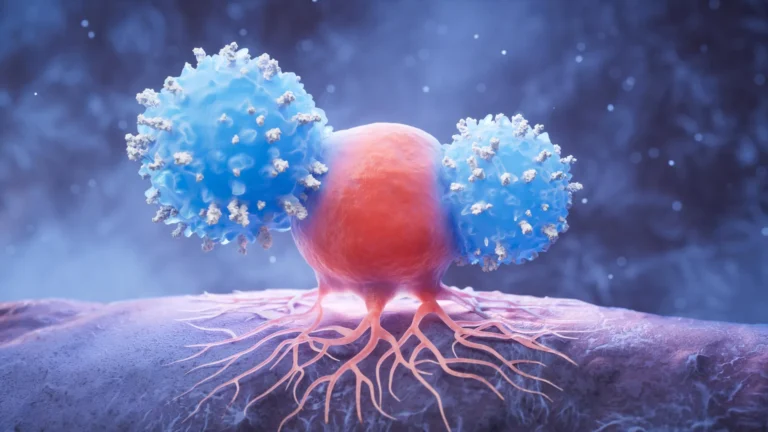
Beyond growth, the researchers noted a secondary phenomenon: patients with high HOXD13 levels had a marked deficit of cytotoxic T cells—the "soldiers" of the immune system tasked with identifying and destroying cancerous cells—within their bloodstream. Even when these cells were present, they seemed unable to infiltrate the tumor environment. This led to the discovery that HOXD13 was actively altering the tumor microenvironment to create an "immune desert."
Supporting Data: The Adenosine Barrier
The study provides a detailed look at how HOXD13 effectively builds an immune-suppressive "moat" around the tumor. The protein increases the expression of CD73, an enzyme that converts extracellular molecules into adenosine.
Adenosine is a potent immunosuppressive signaling molecule. In the context of a tumor, high levels of adenosine act as a chemical warning sign that slows down approaching T cells and prevents them from infiltrating the cancerous tissue. This finding explains why many immunotherapy treatments fail: even if a drug successfully "activates" the T cells, the physical and chemical barrier created by the HOXD13-CD73-adenosine axis prevents those cells from ever reaching their target.
When the researchers turned off the HOXD13 pathway in their experimental models, the levels of adenosine dropped, and the tumor microenvironment became more "accessible." Consequently, T cells were once again able to infiltrate the tumor and engage in their primary duty: tumor destruction.
Official Perspectives: Implications for Future Treatment
The study’s authors emphasize that this discovery is not merely academic; it points toward a clear path for therapeutic intervention.
"Our study provides new evidence that transcription factor HOXD13 is a potent driver of melanoma growth and that it suppresses the T cell activity needed to fight the disease," said study lead investigator Pietro Berico, PhD, a postdoctoral research fellow at the NYU Grossman School of Medicine.
The implications for clinical practice are significant. Current cancer therapies often target either angiogenesis (using VEGF inhibitors) or immune suppression (using checkpoint inhibitors). However, the NYU Langone study suggests that for patients with high HOXD13 levels, these treatments may be more effective when combined.
"This data supports the combined targeting of angiogenesis and adenosine-receptor pathways as a promising new treatment approach for HOXD13-driven melanoma," stated senior investigator Eva Hernando-Monge, PhD, a professor in the Department of Pathology at NYU Grossman School of Medicine.
Clinical Trials and Next Steps
The research team is already looking toward the future. Dr. Hernando-Monge noted that clinical trials are currently evaluating various drugs that block VEGF receptors or adenosine receptors. While many of these are in the early stages, the team hopes that by identifying the specific patient population characterized by high HOXD13 levels, clinicians can better select which patients will respond to these specific drug combinations.
Furthermore, the team plans to expand their research beyond melanoma. Given that HOXD13 is also found to be elevated in other malignancies—including specific types of glioblastomas, sarcomas, and osteosarcomas—the researchers believe their findings could have a broader impact on oncology, potentially creating a new "playbook" for treating solid tumors that have previously proven difficult to reach with standard immunotherapies.
Global Collaboration and Acknowledgments
The scale of this research reflects the global nature of modern medical science. The study was a highly collaborative effort involving investigators from the United States, Mexico, and Brazil.
- Principal Investigators and Core Team: Beyond Dr. Hernando-Monge and Dr. Berico, the project included contributions from a diverse team at NYU Langone, including Amanda Flores Yanke, Fatemeh Vand Rajabpour, Catherine Do, Ines Delclaux, Tara Muijlwijk, Robert Stagnitta, Theodore Sakellaropoulos, Michelle Krogsgaard, Ata Moshiri, Iman Osman, Jane Skok, Amanda Lund, and Markus Schober.
- International Partners: The project was bolstered by the work of Carla Daniela Robles-Espinoza at the National Autonomous University of Mexico and Patricia Possik at the Brazilian National Cancer Institute in Rio de Janeiro, along with their respective research teams.
Funding and Support
The research was supported by a robust network of international funding bodies, highlighting the critical importance of global investment in cancer research. Key contributors include:
- National Institutes of Health (NIH): Grants P30CA016087, R01CA274100, P50CA225450, and U54CA263001.
- Philanthropic and Research Organizations: The Melanoma Research Foundation and the Melanoma Research Alliance.
- International Research Councils: The United Kingdom Medical Research Council (MR/S01473X/1), the Brazilian National Council for Scientific and Technological Development (CNPQ), and the Wellcome Trust (Career Development Award 227228/Z/23/Z).
Conclusion: A Turning Point in Melanoma Research
The identification of HOXD13 as a master regulator of both tumor blood supply and immune evasion marks a significant milestone in our understanding of melanoma. By revealing the mechanism behind how tumors "hide" from the immune system, researchers have illuminated a new, actionable target.
While the transition from the laboratory bench to the bedside requires further clinical validation, the findings provide a glimmer of hope for patients who have not benefited from current immunotherapies. As researchers move to test combination therapies targeting both angiogenesis and the adenosine barrier, the goal remains clear: to strip the tumor of its protective armor and allow the body’s own immune system to finish the fight.