




In a breakthrough that could fundamentally alter the landscape of cardiovascular medicine, researchers at UT Southwestern Medical Center have identified a critical protein that functions as a molecular "control knob" for cholesterol production. The discovery of the protein, known as HELZ2, offers a revolutionary perspective on how the liver manages the export of lipids into the bloodstream, potentially providing a new therapeutic pathway for millions suffering from hypercholesterolemia and fatty liver disease.
The findings, published in the American Heart Association’s flagship journal Circulation, suggest that by manipulating HELZ2, scientists might be able to intercept the production of harmful lipoproteins before they are even synthesized. This shift from reactive treatment—targeting cholesterol after it has entered the blood—to preemptive genetic regulation represents a significant paradigm shift in metabolic research.
The Mechanics of Discovery: Uncovering the HELZ2 Protein
The journey to this discovery began not in a traditional lipid-focused lab, but within the sophisticated genetic screening infrastructure established by Nobel laureate Dr. Bruce Beutler at UT Southwestern’s Center for the Genetics of Host Defense. Dr. Beutler, who shared the 2011 Nobel Prize in Physiology or Medicine for his foundational work on immune receptors, has long championed large-scale forward genetics to uncover the mysteries of biological regulation.
While investigating anomalous fat accumulation in the livers of laboratory mice, the research team identified a spontaneous, gain-of-function mutation. This mutation caused a spike in HELZ2 activity, which in turn triggered a dramatic shift in how the liver handled fat particles.
"We were looking at an unusual phenotype—a significant reduction in circulating cholesterol accompanied by an unexpected buildup of fat in the liver," explained Dr. Zhao Zhang, the study’s senior author and Assistant Professor in the Center for the Genetics of Host Defense and Internal Medicine. The team realized that the mutation had inadvertently "turned the dial" on HELZ2, providing the first clues that this protein was a master regulator of the apolipoprotein B (APOB) gene.
Chronology of the Research: From Mutation to Mechanism
The timeline of the study reflects the rigorous, step-by-step nature of modern molecular genetics.
- Initial Identification (The Phenotype): Researchers observed that specific mouse models exhibited lower levels of LDL cholesterol and triglycerides in their blood, yet suffered from increased hepatic steatosis (fatty liver).
- Genetic Mapping: Utilizing Dr. Beutler’s high-throughput genetic screening, the team traced this phenotype to a gain-of-function mutation in the gene encoding HELZ2.
- The "Message" Breakdown (The Mechanism): The researchers discovered that HELZ2 does not act on the final cholesterol protein, but rather on the APOB messenger RNA (mRNA). APOB is the blueprint required to assemble the lipoproteins that transport cholesterol. HELZ2 was found to shorten the lifespan of this mRNA, causing the cell to "forget" the instructions to build cholesterol-carrying particles.
- Validation: Subsequent experiments confirmed that when HELZ2 activity was increased, the stability of APOB mRNA plummeted, leading to a direct decrease in the production of apoB-containing lipoproteins.
"Most previous research in this field focused on what happens to apoB proteins after they are already formed and circulating," noted Dr. Yiao Jiang, a postdoctoral researcher in the Zhang Lab and co-author of the study. "Finding that HELZ2 acts much earlier—at the instruction phase—was a genuine surprise. It shows us that the liver has an internal quality control system we are only beginning to map."
Supporting Data: The Balancing Act of Metabolism
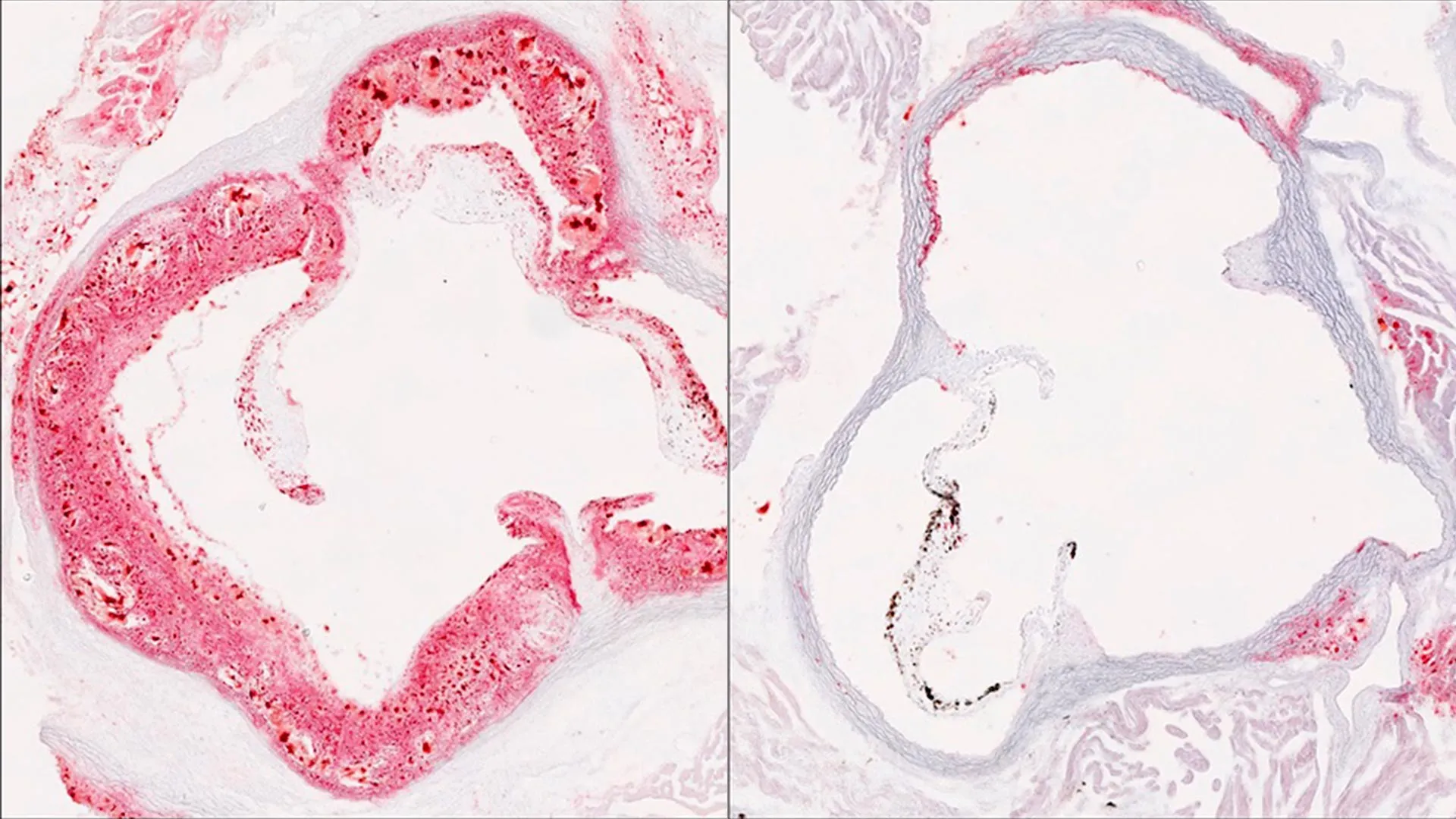
The data derived from the study paints a complex picture of hepatic metabolism. In mice, the HELZ2 mutation acted as a powerful protective agent against atherosclerosis, the dangerous accumulation of plaque in the arteries that serves as the primary precursor to heart attacks and strokes. By limiting the number of lipoproteins—specifically LDL cholesterol—leaving the liver, the mutation effectively starved the arteries of the fuel that feeds plaque buildup.
However, the findings also highlight a biological trade-off: "The Liver-Bloodstream Seesaw."
When HELZ2 is highly active, blood cholesterol levels drop, but liver fat increases. When HELZ2 activity is suppressed, the liver is better able to clear its internal fat stores, but blood cholesterol levels rise. This inverse relationship is not a failure of the mechanism, but rather a functional demonstration of how the liver acts as a gatekeeper for systemic lipid levels.
"We can think of HELZ2 as a kind of dial between the liver and the bloodstream," Dr. Zhang said. "Turning it up lowers cholesterol in the blood but increases liver fat. Turning it down does the reverse. That balance makes HELZ2 especially interesting as a potential therapeutic target, provided we can find the ‘sweet spot’ for intervention."
Official Perspectives and Scientific Implications
The implications of the study are far-reaching, particularly for the pharmaceutical industry. Current gold-standard treatments, such as statins, operate by inhibiting HMG-CoA reductase—an enzyme involved in cholesterol synthesis—or by increasing the uptake of LDL from the blood. While effective, these drugs can have side effects, and some patients remain refractory to treatment.
A New Frontier: RNA-Level Regulation
The discovery that HELZ2 controls cholesterol at the RNA level introduces a new molecular lever for intervention. Rather than blocking an enzyme, future therapies could potentially modulate the stability of mRNA, effectively "turning down the volume" on the genetic instructions that lead to high cholesterol.
"The idea that we can control apoB at the RNA level represents a major shift in how we think about cholesterol regulation," Dr. Zhang emphasized. "It gives us a new molecular lever—and potentially a new set of tools—for tackling these conditions."
Implications for Fatty Liver Disease
The study also opens a door to treating non-alcoholic fatty liver disease (NAFLD) and metabolic dysfunction-associated steatohepatitis (MASH). Currently, there are few pharmacological interventions for fatty liver. By understanding how to "tune" the HELZ2 dial, researchers hope to develop drugs that could encourage the liver to release fat more efficiently, potentially reversing liver damage while carefully managing systemic cholesterol levels.
Future Directions: Clinical Translation
While the findings in murine models are robust, the transition to human clinical trials remains a long-term goal. Researchers must now investigate whether human HELZ2 functions with the same precision and whether pharmacological agents can safely modulate this protein without triggering adverse side effects.
The collaborative environment at UT Southwestern, which integrates basic science with clinical application, is ideally suited for this next phase. The study received significant backing from the National Institute of Diabetes and Digestive and Kidney Diseases (NIDDK), underscoring the importance of this work to the national health agenda.
As the scientific community digests these findings, the focus will likely shift to high-throughput drug screening to identify small molecules or gene-silencing technologies that can interact with the HELZ2 pathway. If successful, this research could lead to a new generation of cardiovascular therapies that are more precise, more effective, and better suited to the individual metabolic profiles of patients.
For millions of people living with the twin threats of cardiovascular disease and fatty liver, the "genetic dial" uncovered by Dr. Zhang and his team offers a rare glimmer of hope: the possibility of a future where we do not just treat the symptoms of metabolic disease, but fundamentally rewrite the genetic instructions that drive them.
Key Research Highlights
- Target: HELZ2 protein identified as a primary regulator of APOB mRNA stability.
- Mechanism: Increased HELZ2 activity degrades APOB mRNA, reducing production of cholesterol-transporting lipoproteins.
- Outcome: Mice with high HELZ2 activity showed reduced atherosclerosis but increased liver fat.
- Innovation: Moves cholesterol management from protein-level inhibition to RNA-level genetic regulation.
- Funding: Supported by the National Institute of Diabetes and Digestive and Kidney Diseases (R00DK115766 and R01DK130959).