







In the landscape of modern medicine, the adage "early detection is the best protection" remains the gold standard for survival. Yet, for many of the world’s most lethal diseases—specifically cancer and chronic organ failure—diagnostic tools often arrive too late, surfacing only after symptoms manifest and the disease has progressed to an advanced, difficult-to-treat stage. A breakthrough from researchers at UCLA Health Jonsson Comprehensive Cancer Center, however, may be about to rewrite this narrative.
A team of scientists has developed a novel, cost-effective blood test known as MethylScan. By analyzing the "molecular echoes" of dying cells circulating in the bloodstream, this technology has demonstrated a remarkable ability to detect multiple types of cancer, complex liver diseases, and systemic organ stress simultaneously. The study, published in the Proceedings of the National Academy of Sciences (PNAS), suggests that the dream of a single, affordable "universal" health screen may soon be within reach.
The Science of Molecular Echoes: How MethylScan Works
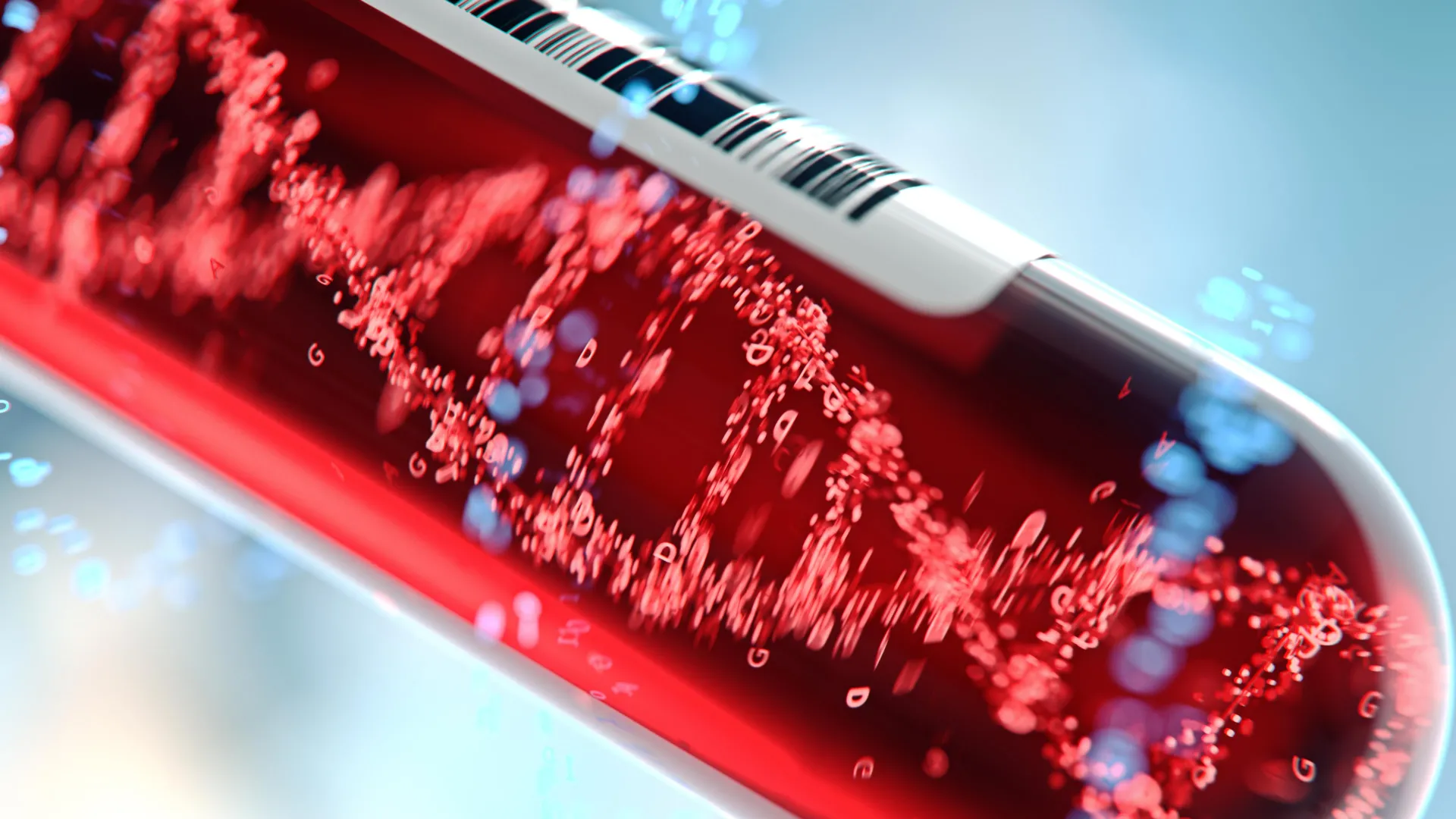
To understand the innovation behind MethylScan, one must first understand the biological reality of the human body. Every single day, approximately 50 to 70 billion cells in the average human body undergo programmed cell death, or apoptosis. As these cells perish, they do not simply vanish; they release their genetic contents—cell-free DNA (cfDNA)—into the bloodstream.
For years, the medical community has recognized that these cfDNA fragments contain vital information about the body’s internal health. However, identifying the "needle in the haystack"—the specific signals of a developing tumor among billions of healthy DNA fragments—has been a formidable challenge.
Moving Beyond Mutations
Traditional "liquid biopsies" have historically focused on identifying genetic mutations. While effective in certain contexts, these tests often require extensive and expensive deep-sequencing to identify rare cancer signals. MethylScan takes a fundamentally different approach. Instead of hunting for mutations, the UCLA team focused on DNA methylation.
DNA methylation refers to chemical tags—essentially "switches"—that sit atop the DNA molecule, dictating which genes are turned on or off. Each tissue type in the human body carries a unique "methylation signature." When a cell becomes cancerous or suffers from chronic disease, these signatures shift. By reading these shifts, the researchers can not only detect that something is wrong but also pinpoint which organ is under duress.
Filtering the Noise: A Breakthrough in Efficiency
A primary hurdle in blood-based diagnostics is the "background noise." Roughly 80% to 90% of all cell-free DNA circulating in human blood originates from normal blood cells. This overwhelming volume of healthy DNA acts as a veil, masking the faint signals emitted by diseased tissues.
To overcome this, the UCLA team, led by Dr. Jasmine Zhou and Dr. Wenyuan Li, developed a sophisticated filtering process. The methodology employs specialized enzymes that selectively "prune" away unmethylated DNA fragments—the kind predominantly produced by healthy blood cells.
Following this, the team utilizes a genome-wide hybridization panel to enrich the remaining sample for methylated DNA specifically derived from solid organs. This "cleaning" process serves a dual purpose:
- Sensitivity: It allows the test to detect rare disease signals without the need for massive, cost-prohibitive sequencing depth.
- Affordability: The researchers note that their method requires only 5 Gb of data to reach an effective sequencing depth of 300×. At current market rates for sequencing (approximately $4 per gigabase), the data acquisition cost for this test sits below $20, a price point that makes widespread clinical adoption theoretically feasible.
Chronology of the Study: Validating the "Health Radar"
The development of MethylScan did not happen in a vacuum. It represents the culmination of years of refinement in genomic analysis and machine learning.
- Initial Conceptualization: The researchers hypothesized that if they could isolate organ-specific methylation signatures, they could create a systemic health monitor.
- Methodological Design: The team spent years perfecting the enzymatic pruning process, ensuring that the "background" DNA was removed without destroying the integrity of the target disease signals.
- The Validation Cohort: To prove the efficacy of the test, the team analyzed blood samples from a massive cohort of 1,061 individuals. This group was intentionally diverse, including healthy participants, those with benign lung nodules, patients with various liver diseases (hepatitis B, C, alcohol-related, and metabolic-associated), and patients with confirmed lung, ovarian, liver, and stomach cancers.
- Algorithmic Interpretation: Once the samples were sequenced, machine learning algorithms were deployed to categorize the complex methylation patterns, effectively teaching the software to distinguish between "healthy," "stressed," and "diseased" signatures.
Supporting Data: Clinical Accuracy
The results of the 1,061-patient study have been highly encouraging, providing a strong foundation for future large-scale trials.
Cancer Detection
At a specificity level of 98%—meaning a very low rate of false positives, which is critical for preventing patient anxiety and unnecessary follow-up procedures—the test identified 63% of cancers across all stages. Perhaps most importantly, it caught 55% of early-stage cancers, where the potential for a cure is significantly higher.
High-Risk Liver Monitoring
The test performed with exceptional accuracy in the "high-risk" category. For individuals already suffering from liver cirrhosis or Hepatitis B, MethylScan detected nearly 80% of subsequent liver cancer cases with a false-positive rate of less than 10%.
Tissue Identification
Perhaps the most "futuristic" aspect of the study was the test’s ability to trace signals to their source. Because the methylation patterns are organ-specific, the researchers were able to tell, with a high degree of confidence, which organ was producing the abnormal signal. Furthermore, in cases of liver disease, the test could distinguish between viral hepatitis and metabolic-associated conditions with an 85% accuracy rate, potentially sparing patients from the risks associated with invasive liver biopsies.
Official Perspectives: The Path Forward
Dr. Jasmine Zhou, the study’s senior author and an investigator at the UCLA Health Jonsson Comprehensive Cancer Center, emphasizes the urgency of this research. "Survival rates are far higher when cancers are caught before they spread," Dr. Zhou stated. "If you detect cancer at stage one, outcomes are dramatically better than at stage four."
Dr. Wenyuan Li, co-corresponding author, reinforces the utility of the "tissue of origin" capability. "Being able to trace signals back to their source is important because a positive blood test needs to be followed by imaging or other diagnostic procedures directed at the right organ," Li noted.
The researchers are clear-eyed about the next steps. While the results are promising, they stress that MethylScan must now undergo rigorous, large-scale prospective clinical trials. The goal is to move from a laboratory-validated method to a real-world clinical tool that physicians can trust for routine screenings.
Implications: A New Era for Preventative Medicine
The implications of the MethylScan technology extend far beyond oncology. If a single, inexpensive blood test can act as a "health radar," the paradigm of annual check-ups could be transformed.
1. From Reactive to Proactive
Currently, most diagnostic tests are reactive—you feel sick, you see a doctor, and you get tested for a specific suspected condition. A universal methylation-based test shifts the paradigm toward a proactive model, where systemic "stress" in an organ can be identified and treated long before it manifests as a debilitating illness.
2. Reducing Invasive Procedures
The ability to distinguish between different types of liver disease using only a blood sample represents a significant improvement in patient care. Invasive biopsies carry risks of infection, bleeding, and physical discomfort. If MethylScan can provide similar diagnostic clarity with a simple venipuncture, it will significantly improve the quality of life for patients undergoing chronic disease management.
3. Economic Accessibility
One of the greatest barriers to medical innovation is the cost of implementation. By drastically reducing the need for deep sequencing, the UCLA team has addressed the primary economic hurdle of liquid biopsies. If the cost remains under $20 for the data, the test could be integrated into public health programs in both developed and developing nations, potentially democratizing access to high-end diagnostic technology.
4. The "Universal Assay"
Dr. Zhou’s vision of a "single assay for universal disease detection" is the "holy grail" of diagnostics. While MethylScan is currently focused on specific cancers and organ diseases, the underlying methodology is extensible. As the research continues, the team hopes to expand the panel to include a wider range of conditions, effectively creating a "dashboard" for human health that tracks the status of all major organ systems in real-time.
As the scientific community awaits the results of larger trials, the MethylScan technology stands as a testament to the power of interdisciplinary research. By combining the biological insights of pathology with the computational power of machine learning, the team at UCLA has provided a roadmap for a future where disease is no longer a surprise, but a manageable—and often preventable—condition.
Research for this study was supported in part by grants from the National Cancer Institute. Key contributors included co-first authors Weihua Zeng, Shuo Li, and Yonggang Zhou.