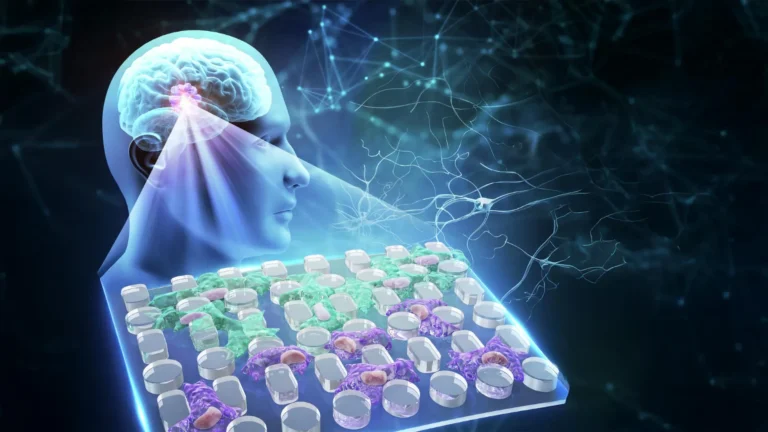
In a landmark development for neuropharmacology, researchers at the University of California, Davis, have synthesized a groundbreaking class of compounds that mimic the therapeutic potential of psychedelics without triggering the hallucinogenic experiences typically associated with them. By utilizing a novel, light-driven chemical process to transform common amino acids, the team has opened a new frontier in the treatment of depression, post-traumatic stress disorder (PTSD), and substance-use disorders.
The findings, published in the Journal of the American Chemical Society, represent a paradigm shift in how scientists approach drug discovery. By moving away from the traditional practice of "tweaking" existing molecular scaffolds—the foundational architecture of a drug molecule—the researchers have identified an entirely new chemical framework capable of activating the brain’s serotonin 5-HT2A receptors, the same biological "locks" targeted by substances like psilocybin and LSD.
The Genesis of a New Therapeutic Scaffold
For decades, the field of medicinal chemistry has relied on incremental modifications of known compounds. In the context of psychedelic research, this often meant exploring variants of tryptamines or phenethylamines, which share similar structural characteristics. The research team at the UC Davis Department of Chemistry, led by Professor Mark Mascal and his doctoral students Joseph Beckett and Trey Brasher, sought to break this cycle.
"The question that we were trying to answer was, ‘Is there a whole new class of drugs in this field that hasn’t been discovered?’" said Joseph Beckett, a Ph.D. student and affiliate of the UC Davis Institute for Psychedelics and Neurotherapeutics (IPN). "The answer in the end was, ‘Yes.’"
The discovery process was as innovative as the result. Instead of relying on conventional, often resource-intensive synthetic methods, the team employed a light-driven technique. They combined various amino acids—the fundamental building blocks of proteins—with tryptamine, a naturally occurring metabolite derived from the essential amino acid tryptophan. By exposing these hybrid molecules to ultraviolet (UV) light, the researchers induced a photochemical reaction, forcing the molecules to rearrange into entirely new, stable structures.
This "photochemical synthesis" not only allowed for the creation of unique scaffolds but also offers a more environmentally sustainable and efficient pathway for pharmaceutical production, potentially reducing the hazardous chemical waste often associated with drug manufacturing.
Chronology of Discovery: From Computer Modeling to Animal Testing
The journey from the lab bench to the identification of the lead compound, dubbed "D5," was a rigorous, multi-stage process that blended computational power with biological validation.
Phase 1: Computational Screening
The team initially generated a vast library of these newly created compounds. To narrow the field, they utilized sophisticated computer modeling to predict how 100 of these molecules would interact with the 5-HT2A serotonin receptor. This receptor is critical because it mediates neuroplasticity—the brain’s ability to reorganize itself by forming new neural connections—which is widely believed to be the mechanism behind the antidepressant effects of psychedelics.
Phase 2: Biological Validation
From the 100 modeled candidates, the researchers selected five for intensive laboratory testing. The results were striking: the selected compounds showed high affinity for the 5-HT2A receptor, with activity levels ranging from 61% to 93%. The most potent candidate, D5, acted as a "full agonist," meaning it fully activated the receptor, theoretically mirroring the maximal signal potential of traditional psychedelics.
Phase 3: The Behavioral Paradox
The most startling phase of the research occurred during animal testing. In the world of psychedelic research, a standard proxy for hallucinogenic activity in mice is the "head twitch response." Because D5 acted as a full agonist at the 5-HT2A receptor, the team expected to see this characteristic behavior.
However, the mice did not display the expected twitching or altered behavior. Despite the compound’s profound activity at the receptor site, the "hallucinogenic" signature was entirely absent. This result was not merely an anomaly; it was a profound scientific mystery that challenged existing assumptions about how receptor activation translates into subjective experience.
Supporting Data: Understanding the D5 Mechanism
The discrepancy between the high receptor activity of D5 and the lack of behavioral change in mice is the subject of ongoing analysis. The research team posits that the scaffold itself possesses a unique range of activity that does not follow the traditional "all-or-nothing" rule of psychedelic pharmacology.
"Laboratory and computational studies showed that these molecules can partially or fully activate serotonin signaling pathways linked to both brain plasticity and hallucinations," explained Beckett and Brasher. "Yet, experiments in mice demonstrated suppression of psychedelic-like responses rather than their induction."
The data suggests that the D5 molecule may be engaging with the 5-HT2A receptor in a way that prioritizes therapeutic signaling (neuroplasticity) while bypasses or actively inhibiting the pathways associated with sensory distortion. This "biased signaling" is the "holy grail" of modern psychiatry, as it promises to deliver the benefits of deep psychological healing—such as the resetting of depressive thought loops—without the vulnerability, loss of control, or psychological intensity inherent in the psychedelic experience.
Official Responses and Collaborative Effort
The project was a collaborative endeavor, bringing together experts from diverse institutions. In addition to the UC Davis team, the study included contributions from HepatoChem Inc., the Medical College of Wisconsin, and UC San Diego.
Professor Mark Mascal, a central figure in the Mascal Lab, has long emphasized the importance of high-risk, high-reward research. Trey Brasher underscored the rarity of their find: "In medicinal chemistry, it’s very typical to take an existing scaffold and make modifications that just tweak the pharmacology a little bit one way or another. But especially in the psychedelic field, completely new scaffolds are incredibly rare. And this is the discovery of a brand-new therapeutic scaffold."
The research was supported by grants from the National Institutes of Health (NIH) and the Source Research Foundation, highlighting the institutional importance of finding safer, more accessible mental health treatments.
Implications for Future Psychiatry
The implications of this discovery are vast. If D5 or its derivatives can be successfully translated into clinical practice, it could fundamentally alter the delivery of psychiatric care.
1. Removing the "Psychedelic Barrier"
Current psychedelic-assisted therapy requires significant clinical oversight. Patients must be monitored by therapists for several hours to navigate the intense hallucinogenic experience. A non-hallucinogenic, plasticity-promoting drug could potentially be administered in a traditional outpatient setting, making it significantly more scalable and accessible to a broader patient population.
2. Tailored Mental Health Solutions
The ability to separate the therapeutic "healing" effect from the "tripping" effect allows for a more personalized approach. Patients who are not suitable candidates for traditional psychedelics—such as those with a history of psychosis or severe anxiety—might find relief through these new scaffolds.
3. A New Era of Chemical Design
The use of UV light to create complex molecules suggests that the pharmaceutical industry may have been overlooking a vast library of potential medicines hidden within simple, readily available amino acids. This discovery encourages a return to basic chemistry to solve complex biological problems.
Looking Ahead: Solving the Mystery
The research team is not resting on its success. Their next objective is to determine exactly why D5 avoids inducing hallucinations. They plan to investigate whether other serotonin receptors or secondary signaling pathways are acting as "brakes" on the hallucinogenic effects. By mapping the full range of D5’s activity, the team hopes to optimize the compound for human trials.
"We determined that the scaffold itself possesses a range of activity," said Brasher. "But now it’s about elucidating that activity and understanding why D5 and similar molecules are non-hallucinogenic when they’re full agonists."
As the scientific community watches this work unfold, one thing is clear: the UC Davis team has provided more than just a new drug candidate. They have provided a new roadmap for psychiatric discovery, proving that with enough curiosity and innovative chemistry, it is possible to harvest the medical benefits of the brain’s most powerful receptors without the burden of the journey. Whether D5 becomes a frontline treatment for depression remains to be seen, but the door to a new class of non-hallucinogenic neurotherapeutics has been firmly kicked open.