
For months, 55-year-old Edward (Ed) Waldner lived in a state of persistent, unexplained exhaustion. Regardless of his activity level or the amount of rest he achieved, a deep, bone-weary fatigue clung to him. Initially, he suspected something common, perhaps sleep apnea. However, as subtle neurological symptoms began to manifest—most notably an irregular, dragging gait—it became clear that his condition was far more complex than simple exhaustion.
When a particularly severe episode prompted a visit to the emergency department, the trajectory of his life shifted in an instant. A series of diagnostic scans revealed a mass on his brain, an entry point into a world of neuro-oncology that would eventually lead him to the front lines of experimental medical research. The diagnosis was glioblastoma, an aggressive and notoriously recalcitrant form of brain cancer.
The Challenge of Glioblastoma
Glioblastoma (GBM) represents the most common and aggressive primary brain malignancy in adults. Standard of care has remained largely stagnant for two decades, typically involving maximal surgical resection followed by the rigorous “Stupp protocol”—a combination of radiation therapy and temozolomide chemotherapy. Despite these aggressive interventions, the prognosis remains grim; the tumor’s ability to recur is relentless, often rendering it incurable.
For patients like Waldner, the post-surgical prognosis can feel like a dead end. "When I left the hospital after surgery, I was told, ‘That’s it, that’s all we can do,’" Waldner recalls. This sense of clinical finality is a common struggle for GBM patients, yet it was precisely this lack of options that propelled a team at the University of Calgary to look toward an unlikely therapeutic candidate: Vitamin B3, or niacin.
Chronology of a Scientific Pursuit
The journey from the laboratory bench to the clinical trial began with a collaboration between two distinguished researchers at the University of Calgary’s Hotchkiss Brain Institute and the Arnie Charbonneau Cancer Institute: neuro-oncologist Dr. Gloria Roldan Urgoiti and neuroscientist Dr. Wee Yong.
Their research program was built on a foundational question: Could the metabolic and immune-modulating properties of niacin be harnessed to overcome the immunosuppressive environment of a glioblastoma tumor?
The Laboratory Phase
The project started in Dr. Yong’s laboratory, focusing on the intersection of metabolism and neuro-immunology. Researchers observed that glioblastomas are adept at "turning off" the immune system’s ability to recognize and destroy malignant cells. Through initial studies in murine models, the team discovered that high-dose niacin appeared to "rejuvenate" weakened immune cells, effectively re-arming them to infiltrate and target the tumor. These preliminary results were significant enough to warrant a transition to human clinical trials.
Launching the Clinical Trial
The research team initiated a Phase I and II clinical trial to determine if controlled-release niacin, when added to the standard chemotherapy and radiotherapy regimen, could improve patient outcomes. The trial was governed by a strict success metric: if progression-free survival (PFS) at six months did not improve by at least 20 percent compared to historical benchmarks, the trial would be deemed unsuccessful and terminated.
Data and Clinical Outcomes
The preliminary results, recently published in the Journal of Neuro-Oncology, have exceeded the researchers’ initial expectations. Analyzing data from the first 24 participants, the team found that 82 percent of patients showed no signs of disease progression at the six-month mark. This represents a 28 percent improvement over historical controls, a statistically significant shift in a disease space that has seen very little progress in twenty years.
"Glioblastoma is the most aggressive brain cancer in adults," says Dr. Roldan Urgoiti, a clinical associate professor at the Cumming School of Medicine (CSM). "Survival of patients with this condition hasn’t changed significantly for 20 years. Anything that may help should be explored, but it requires strict protocols and safety monitoring."
Understanding the Mechanism: The Battle for the Brain
To understand why a common vitamin might succeed where complex drugs have struggled, one must look at the tumor microenvironment. According to Dr. Wee Yong, a professor at the CSM, the tumor actively suppresses the immune system, creating a "safe haven" where cancer cells can proliferate unchecked.
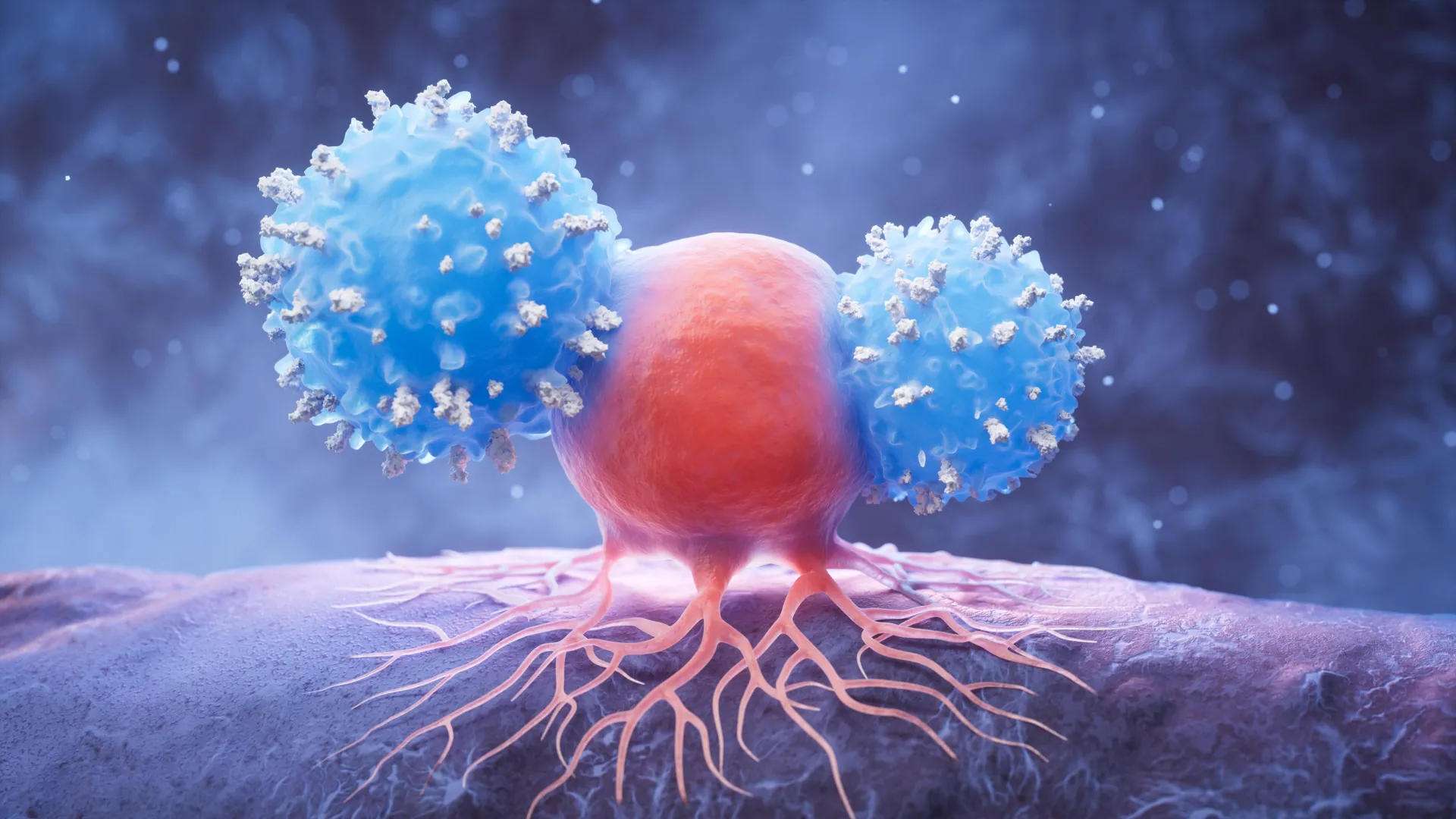
"Normally, the immune system will try to counter and prevent tumor growth; however, this brain cancer suppresses the immune system," explains Dr. Yong. "Niacin treatment rejuvenates immune cells so they can do what they are supposed to do: attack and kill the cancer cells. I see it as an ongoing ‘battle for the brain’."
By bolstering the metabolic function of T-cells and other immune components, niacin acts as a metabolic "reboot" button. It is a targeted approach that aims to utilize the patient’s own biological defenses rather than relying solely on the toxic systemic effects of chemotherapy.
Official Perspectives and Safety Cautions
While the results are undeniably promising, both Dr. Roldan Urgoiti and Dr. Yong emphasize the necessity of clinical oversight. There is a common misconception that because niacin is a vitamin, it is inherently safe in any quantity. The researchers warn that high doses—such as those used in this clinical trial—can be toxic and lead to significant health complications if not strictly monitored by medical professionals.
This trial is not a recommendation for patients to self-medicate with high-dose niacin supplements. Instead, the study utilizes a specific, controlled-release formulation administered under rigorous safety protocols to manage potential side effects and ensure therapeutic efficacy.
Implications for Future Care
The implications of this research extend far beyond a single clinical trial. If the final analysis—which aims to enroll 48 participants by the end of 2026 or early 2027—continues to show positive trends, it could lead to the first meaningful change in the standard of care for glioblastoma in decades.
For Ed Waldner, the trial has been more than just a medical intervention; it has been a psychological lifeline. "I have no problem trying to help anybody. I agreed. I want to help myself too," Waldner says. "I can tell you being part of this research helps me mentally because we’re trying."
Today, Waldner reports feeling remarkably well. During his routine follow-up examinations, the relief of hearing his medical team describe his condition as "stable" is a testament to the quiet progress being made in the lab.
Conclusion and Looking Ahead
The University of Calgary’s study, supported by the Canadian Institutes of Health Research and the Alberta Cancer Foundation, highlights the potential of repurposing well-known compounds to address some of the most difficult challenges in modern medicine. By shifting the focus from simply killing cancer cells to empowering the immune system to fight them, researchers are carving out a new path in neuro-oncology.
As the team moves toward the final phases of their analysis, the medical community remains cautiously optimistic. While glioblastoma remains a formidable adversary, the "battle for the brain" now has a new, potentially potent weapon. For patients like Ed Waldner, this research represents more than just data points in a journal—it represents a tangible, scientifically supported reason for hope.
As the study continues to unfold, the scientific community eagerly awaits the final data, which could cement niacin’s role as a cornerstone of future glioblastoma therapy, offering a glimmer of light in one of the darkest corners of cancer care.