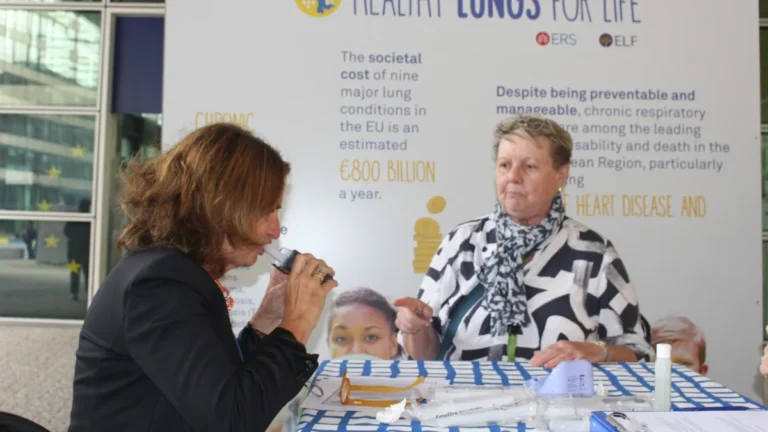







As the landscape of nicotine consumption shifts rapidly beneath the feet of regulators, a critical summit in Brussels has set the stage for a legislative showdown. The “Say No to Nicotine” event, organized by the European Respiratory Society (ERS) on behalf of the European Chronic Disease Alliance, recently brought together Members of the European Parliament (MEPs), World Health Organization (WHO) officials, and leading public health experts. Their mission: to ensure that the forthcoming revision of the EU Tobacco Products Directive (TPD) does not merely tinker at the edges of policy, but effectively shields the next generation from the rising tide of nicotine addiction.
Main Facts: The Urgent Need for Regulatory Evolution
The central tension of the debate lies in the widening chasm between existing legislation and the realities of the modern nicotine market. The current TPD, while a milestone in public health, was drafted in an era before the mass proliferation of high-tech e-cigarettes, flavored nicotine pouches, and disposable vapes.
The event established three primary pillars of concern:
- Regulatory Fragmentation: Currently, a patchwork of national rules across EU member states creates an environment where manufacturers can exploit loopholes regarding marketing, flavoring, and product classification.
- The Youth Epidemic: Despite industry rhetoric positioning new nicotine products as "harm-reduction" tools for adult smokers, data presented at the summit indicates an alarming uptake among adolescents and young adults.
- The Obsolescence of Policy: The current directive lacks the agility to keep pace with rapid innovation. Products are frequently brought to market that evade the strict oversight applied to traditional cigarettes, yet they carry significant, albeit different, health risks.
Chronology of the Debate: From Traditional Tobacco to Digital Nicotine
The evolution of the "nicotine crisis" has been rapid. To understand the gravity of the current legislative moment, one must look at the timeline of the shifting market:
- Pre-2014: The tobacco market was dominated by combustible cigarettes. Regulation focused heavily on taxation, smoking bans in public spaces, and mandatory health warnings.
- 2014–2018: The rise of first-generation e-cigarettes prompted the last major update to the TPD. At the time, these products were viewed primarily as smoking cessation aids.
- 2019–2023: The market exploded with "disposable" vapes and synthetic nicotine pouches, often marketed with youth-oriented flavors (e.g., fruit, candy, and dessert profiles) and sleek, tech-centric designs.
- 2024–Present: The current period is defined by a growing public health consensus that the "cessation aid" narrative is being leveraged as a Trojan horse to hook a new generation on nicotine. The "Say No to Nicotine" event marks the beginning of the formal advocacy push to integrate these concerns into the next TPD revision.
Supporting Data: The Hidden Cost of "Innovation"
Public health experts at the summit provided a sobering look at the data. While tobacco industry lobbyists often emphasize the potential for harm reduction compared to combustible cigarettes, the experts focused on the population-level impact of non-combustible products.
The data suggests that the availability of these products does not merely replace smoking; it creates an entirely new demographic of nicotine-dependent individuals. Surveys presented at the event indicated that in countries with lax regulations on flavored nicotine products, youth usage rates are climbing, effectively undoing decades of progress in reducing teen smoking.
Furthermore, the "gateway effect"—whereby youth begin with nicotine pouches or vapes and eventually move toward traditional tobacco products—remains a major point of contention. The ERS emphasized that the health impact is not limited to lung cancer; it encompasses the systemic effects of nicotine on adolescent brain development, cardiovascular health, and the unknown long-term consequences of inhaling the chemicals used in vaping aerosolization.
Official Responses: The Call for a Hard Line
The event served as a platform for a unified call to action. The speakers were clear: the time for incremental change has passed.
Dr. Filippos Filippidis, Chair of the ERS Tobacco Control Committee, delivered a stinging critique of the industry: "Young people are being targeted by the powerful tobacco industry, which continues to promote its harmful and addictive tobacco and nicotine products. We are at a crucial time for public health in Europe. We know what works; implementing evidence-based policies can prevent nicotine addiction and millions of deaths."

Dr. Angela Ciobanu of WHO Europe expanded on this, shifting the focus from individual choice to systemic protection. "The question is no longer whether nicotine and tobacco products are evolving," she stated. "The question is whether public health policies can keep pace. Europe has an opportunity to take the lead in preventing a new generation from becoming addicted to nicotine."
Perhaps most compelling was the contribution from the European Lung Foundation (ELF). Zena Powell, an ELF Council member, brought the human element to the legislative table. Reflecting on the potential for a "generational ban"—a policy that would make it illegal to sell tobacco products to anyone born after a certain date—Powell noted that such bold, innovative approaches are exactly what is needed to "future-proof" European health.
Implications: A New Era for European Public Health
The implications of the upcoming TPD revision extend far beyond the nicotine industry; they touch upon the fundamental role of the European Union in safeguarding public health against corporate interests.
1. Harmonization vs. National Sovereignty
One of the key debates moving forward will be how the EU balances its desire for a unified "single market" for goods with the right of individual nations to implement stricter, health-first regulations. The summit participants argued that a high-water mark of regulation should be the baseline for all member states, preventing a "race to the bottom" where companies flock to countries with the most lenient rules.
2. The Patient Perspective
The inclusion of the ELF and its youth representatives signals a shift in advocacy. Traditionally, tobacco control was a top-down affair between regulators and lobbyists. By bringing patient voices into the room, the ERS and ELF have forced a discussion on the lived experience of respiratory conditions. This creates a moral imperative that is harder for policymakers to ignore.
3. Future-Proofing Legislation
The most significant takeaway from the "Say No to Nicotine" event is the demand for "dynamic legislation." Rather than defining products by their current form—which changes every six months—experts are calling for a regulatory framework that defines products by their function and their nicotine content. This would effectively close the loopholes that allow companies to circumvent bans by simply changing the color, flavor, or delivery mechanism of a device.
Conclusion: The Choice Before Europe
The revision of the EU Tobacco Products Directive is not merely an administrative exercise; it is a moral decision. The evidence presented by the ERS, WHO, and patient advocates paints a clear picture: the tobacco industry is relying on the inertia of bureaucracy to keep their markets open and their profits growing at the expense of public health.
As the European Parliament prepares to debate the new directive, the message from the Brussels summit is clear: the status quo is a failure. By choosing to prioritize the health of the next generation over the convenience of a rapidly evolving industry, the EU has the opportunity to set a global standard. The path forward involves rigorous, evidence-based restrictions on flavorings, strict marketing bans that prevent targeting the youth, and a commitment to closing the regulatory loopholes that have allowed nicotine addiction to persist in the 21st century.
For more information on the ongoing efforts to protect public health and the role of patient advocacy in these critical policy decisions, readers are encouraged to consult the resources provided by the European Respiratory Society and the European Lung Foundation. The future of European respiratory health depends on the actions taken today.