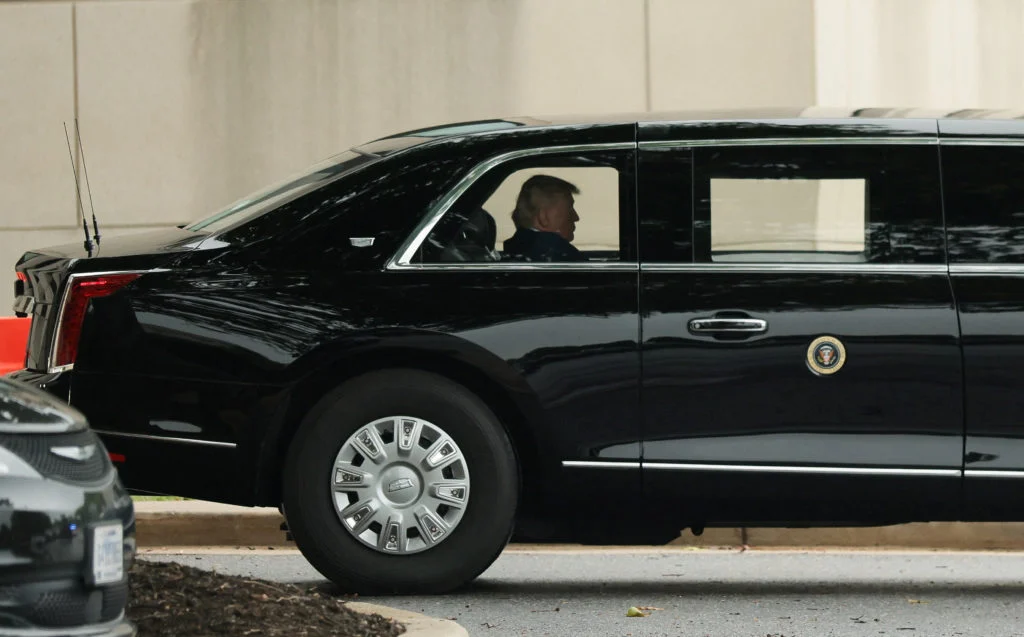
WASHINGTON — President Donald Trump returned to the Walter Reed National Military Medical Center this past Tuesday for what the White House described as a routine, preventive medical and dental checkup. The three-hour visit, which marks the president’s fourth publicly disclosed medical exam since reclaiming the Oval Office for his second term, has reignited a fierce national debate regarding the physical and cognitive demands of the American presidency.
As the nation approaches midterm elections that serve as a critical referendum on his leadership, the 79-year-old president finds himself navigating a political landscape where his stamina and age are as much a subject of inquiry as his policy agenda. With Trump set to turn 80 next month, the intersection of executive power, personal health, and public transparency has moved to the forefront of the American political discourse.
The Chronology of Transparency: A Pattern of Selective Disclosure
For decades, the standard for presidential health reporting has been one of controlled narrative. Administrations across the political spectrum have historically released curated summaries of physical examinations, a practice that leaves the ultimate determination of what the public sees—and what remains private—at the discretion of the president and his inner circle.
Following his Tuesday visit, President Trump took to social media to characterize the event as a successful "6-month physical." "Everything checked out PERFECTLY," the president wrote, a sentiment echoed by his administration’s communication team. However, this brevity stands in contrast to the rigorous standards many medical experts argue should apply to the leader of the free world.
The visit is part of a broader, ongoing narrative concerning the health of the executive branch. Historically, the medical reports provided by the White House have been criticized for their lack of granularity. When compared to the standards of clinical diagnostics, these reports often omit the raw data—such as specific lab results or detailed imaging—that would allow independent experts to form a comprehensive view of the president’s condition.
The Aging Executive: A Shifting Political Landscape
The conversation surrounding Trump’s health is deeply colored by the recent history of his predecessor. President Joe Biden, who departed office at 82, faced intense public scrutiny regarding his age and perceived decline, ultimately leading to his withdrawal from the 2024 presidential race. This precedent has left an indelible mark on the electorate, who are now more sensitive than ever to the physical realities of their leaders.
According to a joint Washington Post/ABC News/Ipsos poll conducted in April, the public’s confidence is divided. Less than half of U.S. adults reported believing that President Trump possesses the necessary mental sharpness or physical vigor to serve effectively.
Dr. Jeffrey Kuhlman, who served as White House physician for more than a decade across the Obama, Bush, and Clinton administrations, notes that the concern is not merely partisan. "I think concern for the president’s physical health is probably at an all-time high, and I think advanced physical age is the No. 1 concern," Kuhlman said.
Clinical Expectations vs. Political Messaging
From a clinical perspective, a comprehensive physical for an individual of the President’s age should be extensive. Dr. Kuhlman suggests that a thorough assessment would include advanced cardiovascular stress testing, comprehensive screening for age-related malignancies, and a robust cognitive battery to assess executive function. These, he argues, should accompany the standard metrics of blood pressure, metabolic panels, and weight.
However, the White House has remained tight-lipped regarding the specifics of the recent diagnostic procedures. Instead, they have focused on a message of strength and relentless productivity. "President Trump is the sharpest and most accessible President in American history who is working nonstop to solve problems and deliver on his promises, and he remains in excellent health," stated White House spokesperson Davis Ingle.
The contrast between the administration’s messaging and the clinical silence is a source of tension. The President himself has, at various times, acknowledged his own lifestyle choices—joking about his affinity for fast food and admitting to a minimal exercise regimen—while simultaneously asserting that he feels as physically capable as he did fifty years ago.
The Cognitive Debate: Testing and Rhetoric
One of the most contentious aspects of the President’s health profile is the "cognitive assessment." Trump has frequently boasted about "acing" cognitive tests, including the Montreal Cognitive Assessment (MoCA), a tool designed to screen for dementia and mild cognitive impairment. His physicians have consistently reported a perfect score of 30 out of 30 during his 2018 and 2025 examinations.
Yet, these test results have not silenced his critics. Many observers point to his meandering rally speeches, shifts in focus, and bellicose rhetoric as evidence of what they describe as cognitive decline. Last month, an open letter signed by a group of over 30 neurologists and psychiatrists—who have never examined the President—warned of an "increasingly dangerous decline" in his behavior.
The administration has dismissed these claims as politically motivated malpractice. "Any so-called medical professionals engaging in armchair diagnosis or false speculation for political purposes are clearly breaking the Hippocratic Oath they’ve sworn to," Ingle said in response to the group’s statement.
The Ethics of Disclosure: Is the System Broken?
The core issue remains the lack of a legal requirement for transparency. There is no statute mandating that a President disclose medical records, and the extent of transparency is entirely dependent on the individual in office. Sara Rosenthal, a bioethicist at the University of Kentucky, argues that the current "choose-your-own-disclosure" model is insufficient for the modern era.
"I think we can expect very little disclosure about the true health status of any president unless they’re in perfect health," Rosenthal said. She has advocated for the creation of an independent medical review board, comprised of non-partisan experts, to evaluate the health of the President and those in the presidential line of succession. Such a body, she suggests, could provide the public with an objective, verified summary that removes the "editorial discretion" of the White House.
This view is supported by S. Jay Olshansky of the University of Illinois-Chicago, a researcher specializing in the longevity and health of past presidents. Olshansky argues that the frequency of these checkups is appropriate, but the reporting is not. "Nothing should be hidden," he stated, arguing that the public has a right to know the full medical reality of the person with their finger on the nuclear button.
Chronic Conditions and the Road Ahead
Transparency efforts are further complicated by known conditions. In July of last year, the White House confirmed that President Trump had been diagnosed with chronic venous insufficiency. This condition, common among the elderly, results in poor circulation, which can cause blood to pool in the legs and lead to significant swelling.
Photographs of the President, often showing visible swelling in his lower extremities, have fueled speculation about his mobility and long-term health. While the White House describes these as minor symptoms, medical experts suggest that such conditions require ongoing management to prevent complications.
The President is also noted for his sensitivity to public perceptions of his physical stability. He has been observed taking extra care when descending the stairs of Air Force One, clearly aware of how a stumble could dominate the news cycle and raise questions about his physical frailty.
Conclusion: The Public Trust
As the 2025 midterm elections loom, the President’s health is no longer just a private matter; it is a central pillar of his campaign’s projection of strength. Whether the current strategy of selective disclosure and aggressive dismissal of critics will satisfy an increasingly skeptical electorate remains to be seen.
Ultimately, the debate reflects a broader evolution in the American political psyche. As the nation adjusts to an era where the presidency is held by individuals of increasingly advanced age, the demand for accountability is likely to grow. The question remains whether the office will modernize its approach to medical transparency, or if the veil of the "White House summary" will remain the standard for the foreseeable future. For now, the President continues his schedule, while the public watches, waits, and interprets every step, speech, and medical report for signs of the future.