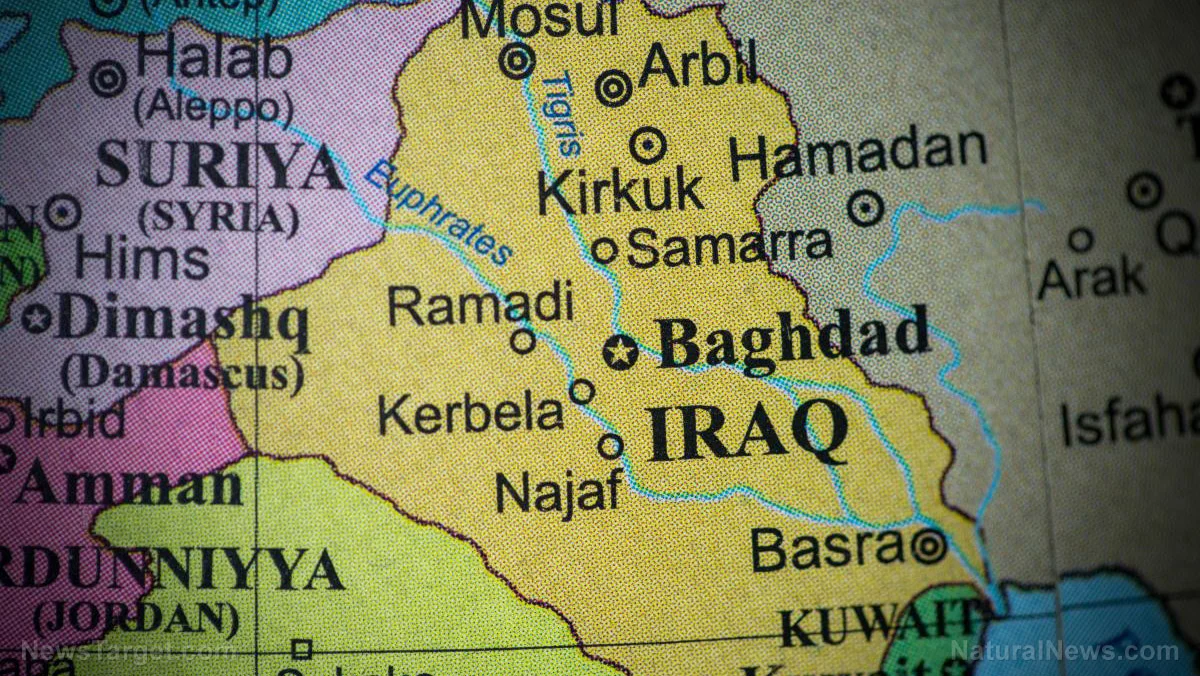
For over two millennia, the sands of southern Iraq held a secret of monumental historical significance. While the name "Alexandria" is inextricably linked to the legendary Mediterranean capital in Egypt, historians have long sought the definitive remains of another, equally ambitious city founded by Alexander the Great during his relentless march toward the East. Today, that search has concluded. Through the convergence of cutting-edge geophysical technology and the return of stability to the region, archaeologists have confirmed the identity and mapped the sprawling infrastructure of Alexandria on the Tigris—a site that challenges our perception of the conqueror’s legacy, shifting the narrative from a series of transient military outposts to a vision of deliberate, sophisticated urban globalization.
The Main Facts: A City Unearthed by Technology
The site of Jebel Khayyaber, located in southern Iraq near the Iranian border, has long been a focal point for researchers suspecting the presence of a Hellenistic city. Recent collaborative efforts by the University of Konstanz and various international archaeological institutions have utilized high-resolution drone imaging and advanced geophysical surveys to peer beneath the parched landscape.
The results are nothing short of transformative. The mapping data reveals a complex, highly planned urban center, far removed from the rudimentary forts often associated with early conquest. Instead, the team discovered a structured grid of temples, expansive road networks, interconnected canals, and distinct industrial zones. These findings confirm that Alexandria on the Tigris—later known as Charax Spasinou—was a master-planned metropolis. It was designed not merely for defense, but to serve as a pivotal node in the burgeoning trade networks that connected the Mediterranean world with the riches of the Persian Gulf, India, and the Far East.
Chronology: From Conquest to Silt
To understand the trajectory of this city, one must look back to the late fourth century BC, a period defined by the unprecedented expansion of the Macedonian Empire.
- 324 BC: Following his campaign into the heart of Persia, Alexander the Great, recognizing the strategic potential of the confluence of the Tigris and the sea, allegedly ordered the construction of a settlement to serve as a gateway for his empire’s eastern trade.
- 323 BC: The death of Alexander at the age of 32 cast a shadow of uncertainty over his far-flung foundations. However, the city continued to evolve under his successors.
- The Seleucid and Parthian Periods: Historical records from the Roman era refer to the city as Charax Spasinou. During these centuries, it flourished as a primary commercial hub, benefiting from the maritime trade flowing through the Persian Gulf.
- The Decline (Post-1st Century AD): The city’s demise was not a result of warfare, but of the relentless shifting of the natural world. Sedimentary analysis indicates that the course of the Tigris River drifted, causing the coastline to recede and the vital harbor to silt up. Cut off from the lifeblood of waterborne commerce, the city slowly lost its economic viability, leading to a gradual abandonment and eventual erasure from the landscape by the shifting desert sands.
- The Modern Era (2014–2020): During the rise of the Islamic State in Iraq and Syria, research at the site ground to a halt. Archaeologists were restricted to surface-level observations and forced to operate under heavy security, unable to conduct the deep-trench excavations or comprehensive aerial surveys required for a definitive study.
- 2024–2025: With the return of regional stability, the scientific team resumed full-scale investigations, culminating in the comprehensive digital mapping that has finally brought the city back to the forefront of historical discourse.
Supporting Data: The Anatomy of a Metropolis
The data collected by the University of Konstanz team provides a granular look at the city’s urban design. Unlike the organic, haphazard growth of many ancient towns, Alexandria on the Tigris reflects the rigid, philosophical approach to urbanism favored by the Greeks.
Infrastructure and Urban Planning
The drone imagery highlights a dense, grid-like layout, consistent with the Hippodamian planning principles favored by Alexander’s engineers. This included:
- Canal Systems: A sophisticated hydraulic network designed to manage water from the Tigris, essential for both irrigation and the operation of the port.
- Industrial Zones: Evidence of specialized craft production areas, suggesting a city that produced goods for export rather than simply consuming local resources.
- Temple Foundations: Massive stone and brick structures indicative of the religious and administrative prominence of the city, serving as both a center of worship and a symbol of Hellenistic cultural projection.
The sheer scale of these remains suggests a population that would have numbered in the tens of thousands at its peak, firmly debunking the theory that Alexander’s eastern foundations were minor, temporary garrisons.
Official Responses and Scientific Perspective
The academic community has received these findings with a mix of excitement and cautious professional analysis. Lead researchers emphasize that this project was a Herculean task, hampered not only by the physical environment but by the volatile geopolitical climate of the last decade.
"The project has provided a tremendous amount of information about this very important town," remarked members of the research team in recent correspondence. By synthesizing the archaeological data with the sparse Roman-era accounts, historians are now beginning to reconstruct the daily life of Charax Spasinou. Experts from Ancient Origins note that the findings align perfectly with historical descriptions of a "meticulously planned" port, echoing the grandeur of the Egyptian Alexandria.
Furthermore, the integration of environmental science—specifically the study of sediment layers—has allowed researchers to explain why such a successful city disappeared. The "geographical betrayal" by the Tigris serves as a sobering reminder of how even the most robust economic engines of the ancient world were at the mercy of environmental flux.
Implications: A New Chapter in Hellenistic Studies
The discovery of the Tigris Alexandria is more than a win for archaeology; it is a fundamental shift in our understanding of Alexander the Great’s legacy.
Rethinking Globalism
For decades, the "globalization" of the Hellenistic period was viewed primarily through the lens of the Mediterranean. This discovery forces a reorientation toward the East. It demonstrates that Alexander’s vision was truly transcontinental, aimed at creating an integrated economic zone that bridged the gap between the Aegean and the Indian Ocean.
The Blueprint of Empire
This city serves as a "control group" for the study of Alexander’s urban design. By comparing the layout of the Tigris city with those in Egypt and Central Asia, scholars can now identify the specific "blueprints" used by the Macedonian administration. It reveals that the conqueror was not just a military strategist but a visionary urban planner who intended to create a permanent, unified cultural and economic fabric across his vast domains.
Preservation and Future Research
The successful mapping of Jebel Khayyaber also serves as a model for future archaeological work in conflict-affected zones. It proves that despite years of stagnation, modern technology—when paired with the eventual return of stability—can recover what was thought to be lost to history.
As the site continues to be studied, the focus will likely shift to excavation. While drone surveys provide the "map," physical artifacts remain the "voice" of the city. Scholars hope that future seasons will yield inscriptions, pottery, and coins that will clarify the city’s political status under the various dynasties that claimed it after Alexander’s death.
In conclusion, the emergence of Alexandria on the Tigris from the sands of Iraq is a testament to the resilience of history. It invites us to view the past not as a series of isolated events, but as a continuous, interconnected narrative of human ambition, trade, and environmental adaptation. The "forgotten" city has finally reclaimed its place, standing as a silent, sun-drenched witness to the reach and the limits of one of history’s greatest empires.