



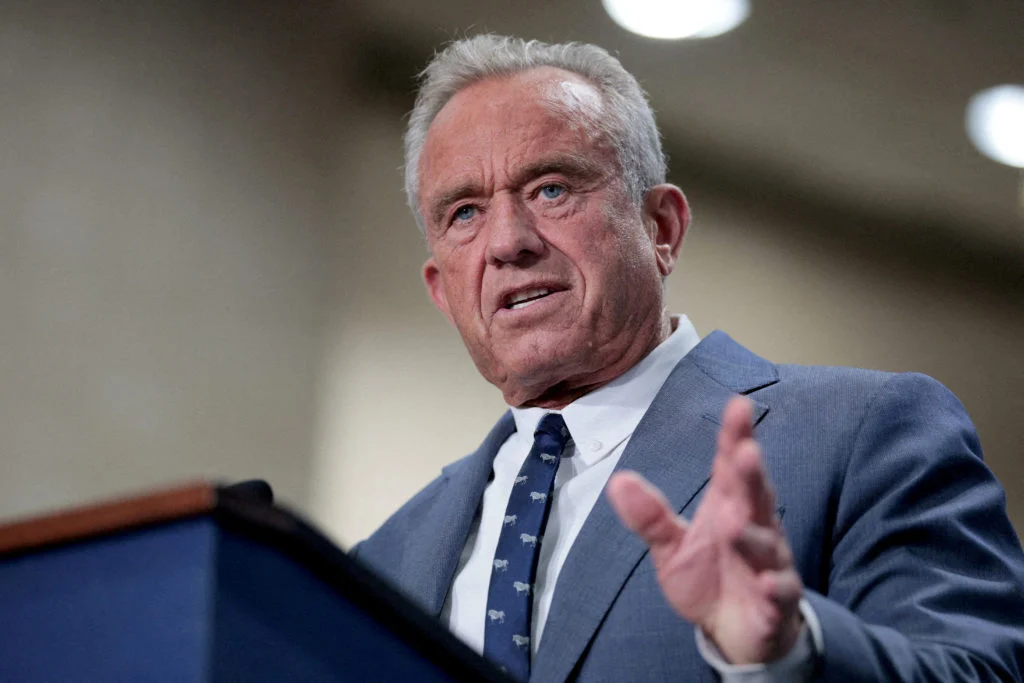
WASHINGTON — In a move that signals a profound transformation of American public health policy, Health and Human Services (HHS) Secretary Robert F. Kennedy Jr. delivered a high-profile keynote address Thursday at the annual conference of Children’s Health Defense (CHD). The organization, which Kennedy once chaired and helped build into a powerhouse of the anti-vaccine movement, hosted the Secretary for a speech that functioned less as a policy briefing and more as a defiant homecoming.
The appearance, which was actively promoted on official HHS social media channels, underscores the extent to which fringe, skepticism-driven views on immunology have been integrated into the highest echelons of the federal government under the Trump administration.
A "Homecoming" for the Anti-Vaccine Movement
For the hundreds of attendees gathered in Washington, Kennedy’s presence was a validation of years of activism. Kennedy, who took a leave of absence from his role at CHD when he launched his presidential bid in 2023, has since ascended to the cabinet level, where he has utilized his office to challenge decades of scientific consensus regarding childhood immunization.
"Let me be clear: You have a strong and steadfast friend in the White House," Kennedy told the crowd, drawing raucous applause. "We’ve accomplished in 19 months things that would have seemed unthinkable two years ago."
His rhetoric was marked by a pivot toward a more aggressive stance on vaccine policy. While the administration had previously attempted to steer toward a "healthier food" agenda to appeal to a broader swath of the electorate ahead of the midterm elections, Kennedy’s appearance signaled a return to the administration’s core ideological battles.
Chronology: From Activism to Executive Power
The path to this moment has been defined by a rapid, often litigious, overhaul of federal public health guidelines.
- Pre-2023: Kennedy serves as the chief legal counsel and chairman of Children’s Health Defense, establishing himself as the primary public face of the modern anti-vaccine movement.
- 2023: Kennedy pauses his leadership at CHD to pursue the presidency. Following his appointment as HHS Secretary, he begins a tenure characterized by a "blistering pace" of policy disruption.
- Early 2024: The HHS, under Kennedy’s direction, moves to downsize the childhood vaccination schedule and attempts to restructure the vaccine advisory boards that traditionally determine federal guidance.
- Mid-2024: A federal judge intervenes, halting the administration’s efforts to alter the advisory boards and downsizing measures, citing concerns over regulatory overreach and potential harm to public safety.
- Last Month: President Trump issues an executive order calling for the "spacing out" of the Measles, Mumps, and Rubella (MMR) vaccine—a strategy that contradicts the uniform recommendations of every major medical body in the United States.
- Thursday: Kennedy delivers his keynote at the CHD conference, explicitly framing his departmental efforts as a service to the activists in the room.
Supporting Data: The Rising Toll of Measles
Kennedy’s address coincides with a period of significant epidemiological instability. According to recent public health data, the United States is experiencing its most severe outbreak of measles since 1991.
The human cost of this trend has been alarming. Over the last two years, the nation has recorded seven measles-associated deaths—a figure that surpasses the total number of deaths recorded over the previous three decades combined. Pennsylvania has emerged as a particular flashpoint, with four of those deaths occurring within the state this year alone. According to the Pennsylvania Department of Health, none of the individuals who succumbed to the disease were vaccinated.
Despite this data, Kennedy utilized his platform to continue questioning the safety and necessity of established vaccine protocols. He argued that his department’s actions were not about "taking vaccines away" but rather about "asking the questions that you and millions of American parents have been asking for years."
Official Responses and Political Friction
The Secretary’s alignment with the anti-vaccine movement has sparked an unprecedented level of public conflict between the federal government and state-level leaders.
Pennsylvania Governor Josh Shapiro, who has been managing the fallout of the measles surge in his state, offered a scathing rebuke of Kennedy’s appearance. Writing on the social media platform X, Shapiro stated: "The HHS Secretary chose to spend his time today addressing the premier vaccine-denial conference in America. He should have used his position to encourage people to get vaccinated for measles, yet he couldn’t bring himself to do it. Instead, he pushed a narrative that continues to stoke fear and mistrust."
Medical associations, including the American Academy of Pediatrics and various infectious disease research groups, have expressed deep alarm. Critics argue that by using his official office to elevate the voices of those who hold non-scientific views, Kennedy is actively eroding the public’s trust in health institutions—a trust that was already fragile following the stresses of the COVID-19 pandemic.
Furthermore, the optics of the conference were exacerbated by the speaker who followed Kennedy: Andrew Wakefield. Wakefield is the author of a 1998 study—since retracted and thoroughly discredited—that falsely linked the MMR vaccine to autism. Widespread scientific consensus, backed by decades of rigorous research, has consistently found no link between the two. His inclusion on the program served to highlight the ideological alignment between the current HHS leadership and those whose work has been marginalized by the global medical community.
Implications: A Crisis of Confidence
The broader implications of this shift are profound. When an HHS Secretary—an office traditionally occupied by figures who serve as the nation’s primary advocates for public health—actively aligns with a group that rejects foundational medical science, the ripple effects are felt across all levels of the healthcare system.
Shaughnessy Naughton, founder of 314 Action, a group dedicated to electing scientists to office, argued that the speech is proof of the "lack of seriousness" brought to the HHS by the current administration. "With a deadly measles outbreak killing people in Pennsylvania, the best thing Kennedy can do for Americans is step aside," Naughton said.
The silence from the White House regarding the event is equally telling. Despite requests for comment from major news organizations, no spokesperson has stepped forward to clarify whether the President endorses the specific rhetoric used by his Secretary or the mission of Children’s Health Defense.
For now, the divide between the federal government and the medical establishment appears to be widening. As measles cases continue to climb and public health agencies struggle to maintain their messaging, the country finds itself in an uncertain position. The "homecoming" of Robert F. Kennedy Jr. at the CHD conference may have been a moment of celebration for his supporters, but for public health officials and many American families, it served as a stark indicator that the nation’s approach to disease prevention has entered an entirely new, and highly contentious, era.