





For generations, our ancestors navigated the world through a direct, visceral dialogue with their bodies. They gauged their exertion by the heaviness of their breath, their recovery by the clarity of their morning wakefulness, and their nutritional needs by the simple, ancient signal of hunger. Today, however, the landscape of personal health has shifted from internal intuition to external observation. We live in the era of the "Quantified Self," where a sleek device strapped to the wrist provides a granular, second-by-second readout of our heart rate, sleep architecture, and caloric expenditure.
While this digital revolution offers an unprecedented bridge between subjective feeling and objective measurement, it also brings a new set of psychological and physiological challenges. As we increasingly outsource our self-awareness to algorithms, we must ask: Are we becoming healthier, or are we simply becoming more dependent on the glow of a screen?
The Evolution of Self-Monitoring
The history of self-tracking is a movement from the manual to the automated. In the early 20th century, if an athlete wanted to track performance, they relied on a coach with a stopwatch and a paper logbook. The level of precision was often limited by human reaction time. By the late 1980s and early 1990s, elite performers began to bridge this gap.
Ben Johnson, the infamous Canadian sprinter, famously claimed he could call out his 100-meter dash time within a tenth of a second of the official stopwatch readout. This was not a superpower, but a result of hyper-specialized training and extreme sensory calibration. Today, that same precision is available to the average consumer. Modern smartwatches and rings utilize photoplethysmography (PPG) and accelerometry to provide data that once required a laboratory setting. Yet, as accessibility has skyrocketed, the ability of the average user to interpret this data has remained stagnant, leading to a disconnect between the metrics we collect and the decisions we make.
The Accuracy Paradox: Not All Data is Equal
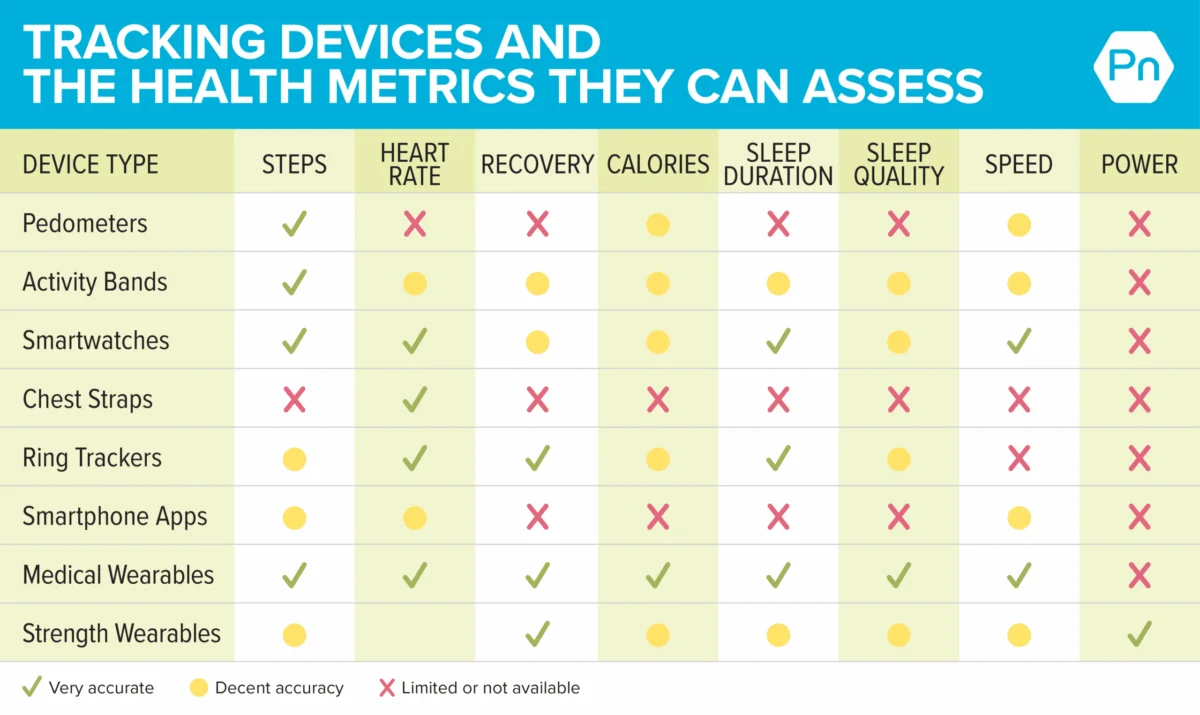
A common misconception among tech-reliant users is that all digital data is created equal. In reality, the reliability of wearable technology exists on a spectrum. Heart rate monitoring and step counts have achieved high levels of clinical reliability, making them trustworthy indicators for most users. However, metrics such as "calories burned," "sleep quality," and "movement velocity" remain estimations based on proprietary algorithms.
These companies are not just selling hardware; they are selling black-box software. A device might report an error margin of 10% for heart rate but deviate by as much as 30% when estimating metabolic burn. Users often treat these numbers as immutable facts, failing to account for the substantial margins of error inherent in current sensor technology. When we base our dietary choices or training intensity on flawed data, we aren’t just miscalculating—we are potentially undermining our own progress.
The Inverted U: When Too Much Information Becomes a Burden
In the field of decision science, researchers have identified an "inverted U" curve regarding information intake. At one end, too little data leads to poor decision-making due to ignorance. At the other end, too much data leads to "analysis paralysis"—a state where the sheer volume of metrics obscures the path forward.

Computer scientist Samantha Kleinberg, an expert in the decision-making process, notes that even small amounts of surplus information can have a significant negative impact on our ability to act decisively. In the health and fitness space, this is rampant. A user might check their resting heart rate, heart rate variability (HRV), blood oxygen, and sleep stages before they have even brushed their teeth. When these numbers fluctuate—as they naturally do—the user experiences unnecessary anxiety. This is the paradox of tracking: the tools intended to empower us can, if left unchecked, diminish our autonomy.
Three Indicators: Is Your Tech Serving You?
To determine if your reliance on technology is constructive or counterproductive, consider these three signs.
1. The Validation of Method
Tracking is most effective when it serves to calibrate your internal perceptions. If you are an athlete who struggles to trust "easy" training, data can act as a vital mirror. By tracking your resting heart rate over time, you can prove to yourself that lower-intensity, "Zone 2" work is actually improving your physiological recovery. In this case, the device is not a master, but a mentor—a tool that builds confidence rather than anxiety.
2. The Prompt for Behavioral Change
Human behavior change requires three pillars: motivation, ability, and a prompt. Technology excels as a prompt. For many, seeing a concrete sleep score that correlates with evening alcohol consumption is the "lightbulb moment" needed to change a habit. Once you see the data, the choice becomes intuitive. If the data is providing a clear, actionable prompt that leads to positive lifestyle modification, it is working as intended.
3. The Cultivation of Self-Understanding
Advanced users use technology to understand their own physiological ceilings. For instance, heart rate data can reveal when a user is pushing into "junk volume"—a state of fatigue where the body is accumulating stress without generating fitness adaptations. By using objective metrics to identify these plateaus, you can adjust your output to ensure you are training efficiently.
The Danger of Data Dependency
The primary "bad omen" of the wearable movement is the erosion of interoception—the body’s ability to sense its own internal state. When we rely on an app to tell us how much to eat, how hard to run, or how well we slept, we effectively atrophy our natural sensory network.
The "Great MyFitnessPal Blackout" of 2019 serves as a cautionary tale. Millions of users found themselves in a state of mild panic when they could not track their caloric intake, as they had lost the ability to gauge their own hunger and satiety signals. If a technological failure leaves you feeling "adrift," you have allowed the tool to supersede your own biological intelligence.

Reclaiming the Senses: Three Strategies for Mindful Tracking
If you wish to maintain the benefits of modern technology without losing your internal compass, follow these three protocols:
1. The "Internal First" Check-In
Before looking at your phone or watch, pause and ask yourself: How do I feel? Do you feel recovered? Are you hungry? Does your body feel ready for a heavy load? Once you have formed an internal hypothesis, look at the data. If the data matches your feelings, your internal calibration is strong. If it doesn’t, investigate why. This habit builds a feedback loop between your nervous system and your device.
2. Develop Mental Shortcuts (RPE)
In professional strength and conditioning, coaches often use the Rate of Perceived Exertion (RPE). Instead of relying on a sensor to tell you how hard you are working, practice estimating your effort on a scale of 1 to 10. By testing this estimation against objective measurements occasionally, you sharpen your ability to gauge your own limits. Over time, you may find you no longer need the sensor to maintain high performance.
3. Respect the Biological Network
Your body possesses an incredibly sophisticated array of sensors—proprioception (the sense of body position), interoception (internal state), and chemoreception (sensing chemical changes). Technology, no matter how advanced, is a pale imitation of these millions of years of evolution. Treat your fitness tracker as a secondary advisor, not the primary source of truth.
Implications for the Future
The future of wearable technology is undoubtedly moving toward deeper, more pervasive integration. From continuous glucose monitors (CGMs) to advanced metabolic sensors, the amount of data we can collect is set to grow exponentially. However, the most successful individuals of the future will not be those with the most data, but those with the best ability to filter it.
We must learn to view our health data through a lens of "critical detachment." Objective metrics are meant to serve our wellbeing, not dictate our self-worth. By using technology to calibrate our senses rather than replace them, we ensure that we remain the architects of our own health, capable of navigating our lives with both the cold precision of a machine and the warm, intuitive wisdom of the human spirit.
Ultimately, the goal of any health practice is sustainability. If your tracking leads to stress, burnout, or a disconnect from your own body, it has failed its purpose. True mastery lies in the ability to listen to the whisper of your own senses, even when the loudest gadget is screaming for your attention.