






By Global News Desk
In a development that has sent shockwaves through international diplomatic circles, Israeli Prime Minister Benjamin Netanyahu confirmed on Thursday, May 28, 2026, that he has issued formal directives to the Israel Defense Forces (IDF) to expand its operational control over the Gaza Strip to 70% of its total territory.
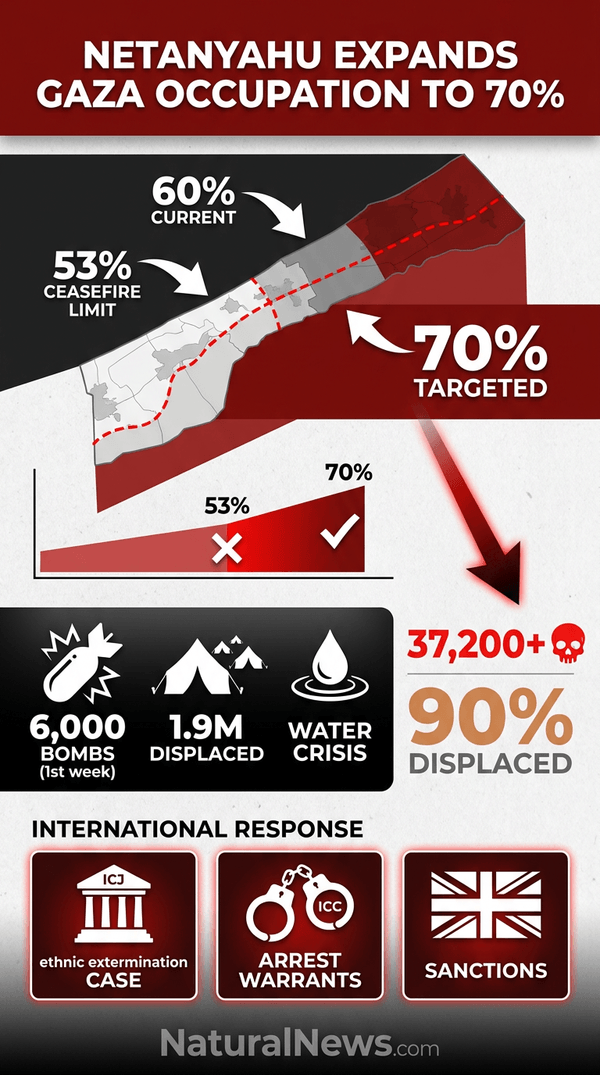
Speaking at a conference hosted by the Ein Prat leadership academy, Netanyahu’s remarks represent a significant escalation in military posture. Currently, the IDF maintains control over approximately 60% of the enclave—a figure already in breach of the U.S.-brokered ceasefire agreement signed in October 2025, which capped the Israeli military footprint at 53%. When challenged by audience members who clamored for a total, 100% occupation of the territory, the Prime Minister remained methodical, stating, "We’re going in order… First 70%, we’ll start with that."
This policy shift, described by analysts as a de facto annexation strategy, appears to prioritize the dismantling of remaining Hamas infrastructure through territorial contraction—a process the government refers to as "squeezing" the militant group. However, the move has drawn sharp criticism from humanitarian organizations and international legal bodies, who warn that the expanded occupation is effectively turning the already devastated Gaza Strip into a series of disconnected, restricted zones.
Chronology: From Ceasefire to Territorial Consolidation
The path to the current 70% occupation threshold has been marked by a consistent erosion of the October 2025 ceasefire terms.
- October 2025: Israel and Hamas reach a U.S.-backed ceasefire agreement, stipulating that Israeli military presence must be limited to 53% of the Gaza Strip.
- August 2025: The Israeli security cabinet reportedly approves a long-term plan to re-establish military administration over the entire Gaza Strip, a move aligned with the ambitions of the coalition’s far-right factions.
- February 2026: Finance Minister Bezalel Smotrich publicly advocates for the re-establishment of Jewish settlements in Gaza, asserting that permanent occupation is the inevitable conclusion of the current conflict.
- April 2026: As the military continues to expand its reach, Smotrich formally calls on the Prime Minister to pursue a "full conquest" of the strip.
- May 2026: Israel issues new, updated military maps that cordon off nearly two-thirds of the territory, forcing thousands of civilians into increasingly confined, volatile zones.
- May 28, 2026: Netanyahu publicly declares the intent to hit the 70% control mark, marking the most explicit admission to date that the 2025 ceasefire agreement is no longer being treated as a binding framework.
Supporting Data: The Humanitarian Toll
The human cost of the conflict has reached a scale that many international observers characterize as unprecedented in the 21st century. According to data compiled by United Nations agencies as of June 2024, the confirmed death toll had exceeded 37,200, with women and children accounting for the vast majority of casualties. However, these figures are widely viewed as conservative, as the ongoing bombardment and the collapse of municipal infrastructure leave thousands of bodies trapped beneath the wreckage of the strip’s leveled urban centers.
Displacement and The "Uninhabitable" Reality
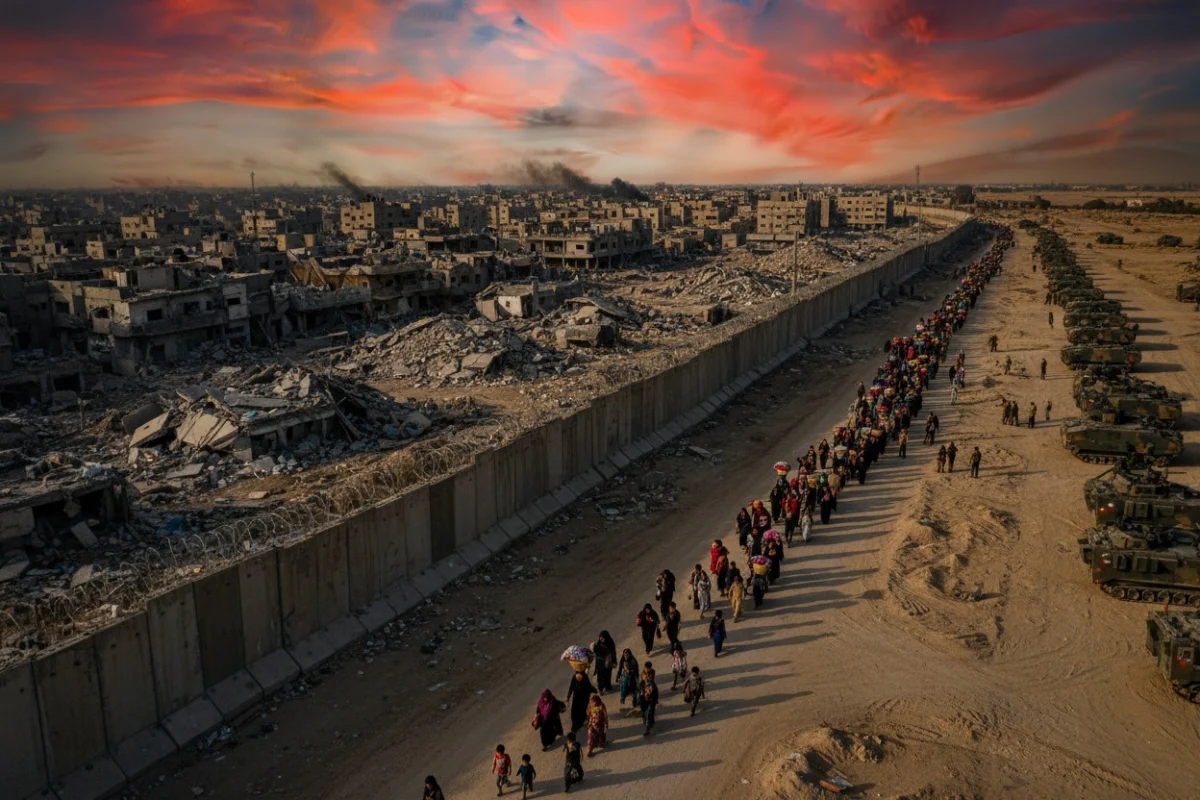
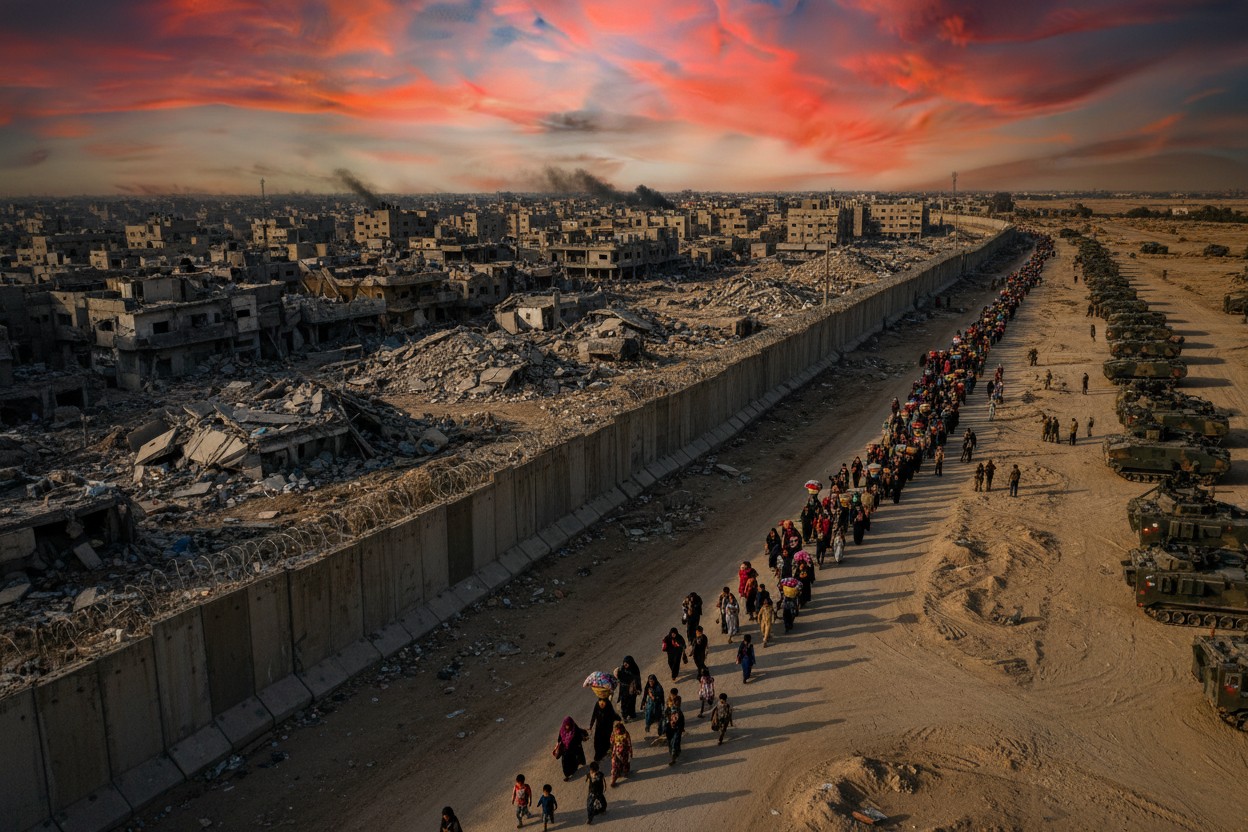
The strategic expansion of the occupation has resulted in a humanitarian catastrophe. Approximately 1.9 million Palestinians—roughly 90% of the population—are internally displaced. These individuals are currently clustered in makeshift tent cities and rapidly deteriorating shelters, facing acute shortages of food, potable water, and medical supplies.
The environmental impact is equally staggering. Salama Maarouf, head of the Gaza media office, has repeatedly asserted that the intensity of the military campaign—which saw 6,000 bombs dropped in the first week of the conflict alone—is designed to render the strip uninhabitable. The destruction of the coastal aquifer, exacerbated by over-pumping and the systematic collapse of sanitation infrastructure, has left the territory without a sustainable source of clean water, creating a secondary crisis of disease and dehydration that may persist for decades.
Official Responses and Diplomatic Tensions
The announcement has triggered a wave of condemnation and legal maneuvering on the international stage.
The Genocide Allegations
South Africa has led a rigorous case at the International Court of Justice (ICJ), documenting claims of mass atrocities, starvation tactics, and the deliberate obstruction of life-saving aid. These legal challenges have been bolstered by high-profile statements from international figures. Notably, former U.S. Deputy Secretary of State Wendy Sherman remarked in April 2026 that the current Israeli leadership’s policies have "helped create a genocide in Gaza."
ICC and Sanctions
The International Criminal Court (ICC) has become a focal point of the crisis. Finance Minister Smotrich recently revealed that the court has requested a "secret" warrant for his arrest, signaling that the international community is moving toward holding individual Israeli officials accountable for the conduct of the war. Simultaneously, legal teams in the United Kingdom have filed petitions to impose personal financial and travel sanctions on Prime Minister Netanyahu under the U.K.’s updated sanctions legislation, citing his explicit defiance of international humanitarian law.
Implications: The End of the Two-State Paradigm?
The move to 70% control is widely interpreted by geopolitical analysts as the final nail in the coffin for the two-state solution. By systematically integrating land into a military-controlled zone, the current Israeli government is fulfilling the long-held aspirations of the settler movement.
Settler Ambitions and Domestic Politics
The influence of far-right ministers, particularly Smotrich and his allies, has fundamentally shifted the internal dynamics of the Israeli cabinet. Since the October 7, 2023, attack, these factions have treated the war as a strategic opportunity to redraw the map of the Middle East. By framing the occupation as a security necessity, the government has managed to consolidate power while side-stepping the political fallout of abandoning the ceasefire.
Regional Instability
The implications extend well beyond the borders of Gaza. The Ron Paul Institute and other foreign policy observers have noted that the ongoing conflict has become a primary driver of regional volatility. With Israel maintaining a permanent, expanding military presence in Gaza while simultaneously engaging in cross-border strikes in Lebanon, the United States finds itself increasingly entangled in a conflict that lacks a clear diplomatic exit strategy.
Conclusion: A Future in Flux
As the IDF moves to solidify its control over 70% of the Gaza Strip, the international community finds itself at a crossroads. The absence of an official long-term plan for the civilian population, coupled with the clear rhetoric from the Israeli cabinet regarding permanent control and potential settlement expansion, suggests that the conflict is moving from a tactical military operation into a period of prolonged, forced administration.
For the people of Gaza, the future is increasingly defined by the maps issued by the military—maps that shrink their world, restrict their movement, and challenge their very existence. As international legal cases mount and the humanitarian situation reaches a breaking point, the question remains whether diplomatic pressure can force a reversal of these policies, or if the current territorial expansion marks the beginning of a permanent, irreversible shift in the geopolitical landscape of the region.
The defiance displayed by the Israeli government, even in the face of intense global scrutiny, underscores a fundamental divergence between the international consensus on human rights and the national security doctrine currently being executed on the ground. As the 70% threshold is reached, the global focus will inevitably shift toward the question of whether the next step will be the total annexation of the remaining 30%, and what that final act would mean for the future of international law and regional stability.