









It has been over three years since the catastrophic wildfires decimated the historic town of Lahaina, Maui, marking the deadliest U.S. natural disaster of its kind in more than a century. While the immediate images of charred ruins and the heart-wrenching loss of life dominated the global news cycle in the days following the inferno, a profound and quiet crisis has persisted in the aftermath.
New, comprehensive research suggests that the true toll of the Maui wildfires extends far beyond the initial destruction of property and the tragic loss of life. As survivors struggle to piece their lives back together amidst an escalating cost-of-living crisis and a decimated local infrastructure, a landmark scientific initiative—the Maui Wildfire Exposure Study (MauiWES)—is revealing that the physical and psychological wounds of the disaster are not merely memories; they are ongoing health realities.
A Legacy of Trauma: The Human Cost
For residents like Mario Acosta, who has called Lahaina home for over a decade, the events of August 7, 2023, remain a visceral, daily presence. "The houses in front of us were burning already," Acosta recalls, describing the harrowing escape he and his wife made as the fire encroached on their neighborhood. Their home, once a sanctuary, was reduced to ash, and the couple now resides in a single, cramped room without a kitchen, struggling to navigate the prohibitive costs of island life that have surged in the disaster’s wake.
Acosta’s story is emblematic of a broader struggle. The mental health toll is pervasive, with one in five survivors exhibiting symptoms of Post-Traumatic Stress Disorder (PTSD). For many, the "crisis stage" has yet to yield to a "recovery stage." The daily anxieties of housing insecurity, food instability, and the struggle to afford basic necessities have created a state of chronic stress that exacerbates the trauma of the fire itself.
Chronology of a Disaster and Its Aftermath
The trajectory of the Maui wildfires and the subsequent community response can be categorized into three distinct phases:
The Immediate Crisis (August 2023)
The fires ignited with unprecedented speed, fueled by high winds and arid conditions. The inferno tore through Lahaina, leaving thousands displaced and over 100 individuals dead. Residents were forced to flee, often leaving behind everything they owned, while many—like local historian Ke’eaumoku Kapu—risked their safety in the weeks that followed to sift through the wreckage in search of cultural artifacts and personal mementos.
The Cleanup and Exposure Period (Late 2023–2024)
As the debris-clearing process began, a secondary, invisible danger emerged. Residents returning to the burn zone were exposed to toxic materials released by the destruction of urban structures, including asbestos, lead, and arsenic. Many reported a distinct, chemical stench lingering in the air, raising alarms about long-term respiratory and systemic health risks. State officials declared the zone safe by September 2024, yet the health consequences of that initial exposure remain a focal point of ongoing medical surveillance.
The Chronic Recovery Phase (2025–Present)
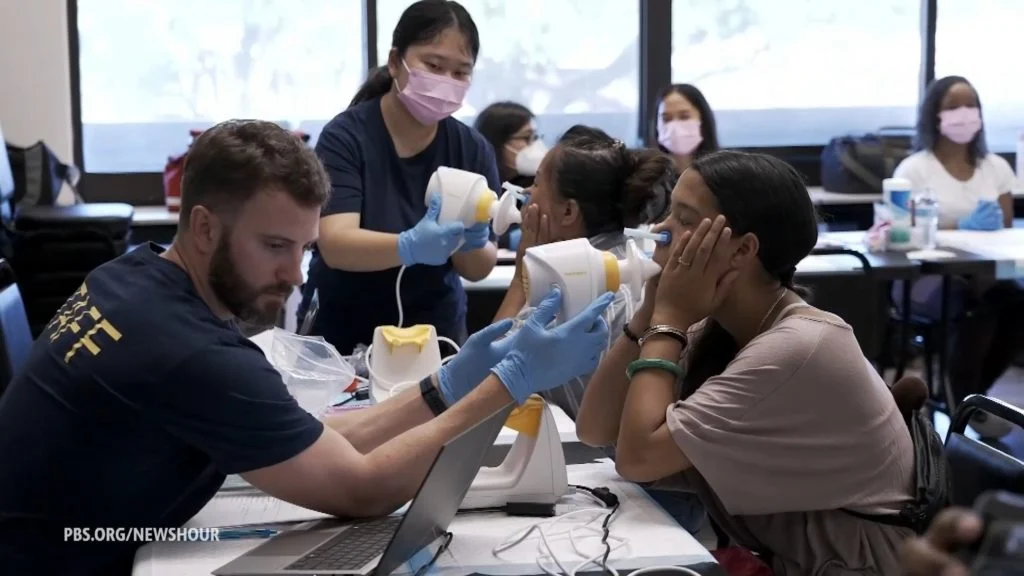
Today, the focus has shifted to long-term health monitoring. The MauiWES study, initiated six months post-fire, has conducted extensive screenings on over 2,000 participants, assessing lung function, cardiovascular health, and mental well-being. The findings suggest that the community is trapped in a cycle of instability, where the lack of basic resources—housing, income, and medical access—is directly impeding the physical and emotional healing process.
Supporting Data: The MauiWES Findings
The Maui Wildfire Exposure Study stands as one of the largest and most diverse investigations into post-disaster health in American history. Conducted by researchers from the University of Hawaii, including Ruben Juarez and Alika Maunakea, the study provides empirical evidence of the uneven recovery process.
Key data points from the study include:
- Respiratory Impact: Initially, more than 40% of survivors reported weekly respiratory issues. Three years later, one in five adults continue to experience lung function levels significantly below expected benchmarks.
- Mental Health Prevalence: Approximately 20% of the study population suffers from PTSD, with depression and anxiety levels tracking closely with the participants’ level of financial and housing security.
- The Insurance Gap: At the time of recruitment, 40% of the study’s participants lacked health insurance. Through active intervention, the research team was able to cut this uninsured rate in half by connecting survivors with charitable programs.
- Physician Flight: The disaster caused a massive exodus of medical professionals. Current data indicates that Maui County requires 41% more physicians to adequately serve the needs of its current population.
Official Responses and Medical Intervention
The medical community in Hawaii has faced the dual challenge of providing acute care while simultaneously managing the long-term, systemic fallout of the disaster. Mental health professionals, such as Christopher Knightsbridge, have noted that the most pressing issues in therapy sessions are rarely the fire itself, but rather the crushing weight of current economic survival.
"We not only measure; we intervene," notes Ruben Juarez. This proactive approach has been vital. By integrating health screenings with social service referrals, the MauiWES project has transitioned from a data-gathering exercise to a critical community lifeline. For survivors like artist Krista Woodward, who lost her home and studio, this intervention provided a path to stability. After being connected with professional mental health support, she was able to navigate the PTSD that had previously left her feeling as though she were "moving underwater."
State health authorities continue to monitor the long-term environmental impacts, maintaining that the removal of hazardous debris has mitigated the risk of ongoing toxic exposure. However, for the survivors, the psychological and physical scars remain, and the reliance on community food banks and mental health initiatives continues to be a staple of daily life.
Broader Implications for Disaster Recovery
The situation in Lahaina offers a sobering case study for national disaster preparedness and recovery policy. It highlights several critical realities:
- The "Slow-Motion" Disaster: Recovery is not a finite event. When a disaster occurs in a region with existing economic fragility—such as high costs of living and housing shortages—the disaster itself acts as a force multiplier, deepening pre-existing inequities.
- The Intersection of Health and Policy: Access to healthcare is not just a medical issue; it is a critical infrastructure issue. The "physician flight" experienced in Maui suggests that disaster recovery plans must include strategies for medical retention and the rapid deployment of health resources.
- The Necessity of Longitudinal Research: By tracking survivors over years rather than weeks, the MauiWES study proves that environmental and trauma-related illnesses often have long latency periods. Without long-term investment in such studies, public health systems risk missing the onset of chronic conditions related to disaster exposure.
- Community-Led Resilience: The reliance on local food banks and community-based mental health initiatives underscores that in the absence of robust state or federal long-term support, survivors often turn to one another. The success of these informal networks is a testament to the resilience of the Lahaina community, even as it highlights the gaps in the formal safety net.
Conclusion: A Long Road Ahead
As Maui continues to navigate the aftermath of the most devastating wildfire in modern U.S. history, the data provided by the MauiWES study serves as both a warning and a guide. The "hellish" day in August 2023 was only the beginning of a struggle that continues for thousands of individuals.
For survivors like Mario Acosta, the fear of fire remains triggered by the simple smell of smoke, a reminder that trauma is often woven into the environment itself. The path forward for Lahaina is complex, requiring not only the physical rebuilding of homes and businesses but also a sustained commitment to the health, economic security, and psychological well-being of the people who call the island home. The research is clear: the fire may have been extinguished, but the recovery is a marathon, and for many in Maui, the finish line remains far out of sight.