










In a landmark decision that signals a shift in the landscape of cancer immunotherapy, the U.S. Food and Drug Administration (FDA) has granted accelerated approval to Tudriqev (vusolimogene oderparepvec-wtpg), formerly known as RP1. This milestone, reached on August 6, 2026, marks the first time in over a decade that the FDA has authorized a new oncolytic virus therapy. By combining this innovative viral treatment with the established immune checkpoint inhibitor nivolumab (Opdivo®), clinicians now have a potent new weapon against unresectable or metastatic cutaneous melanoma that has proven resistant to previous PD-1-blocking therapies.
Main Facts: The Science of "Infecting" Cancer
At its core, the approval of Tudriqev challenges the traditional perception of viruses as agents of disease. Oncolytic virus therapy involves the sophisticated genetic modification of viruses to transform them into precise, anti-tumor instruments.
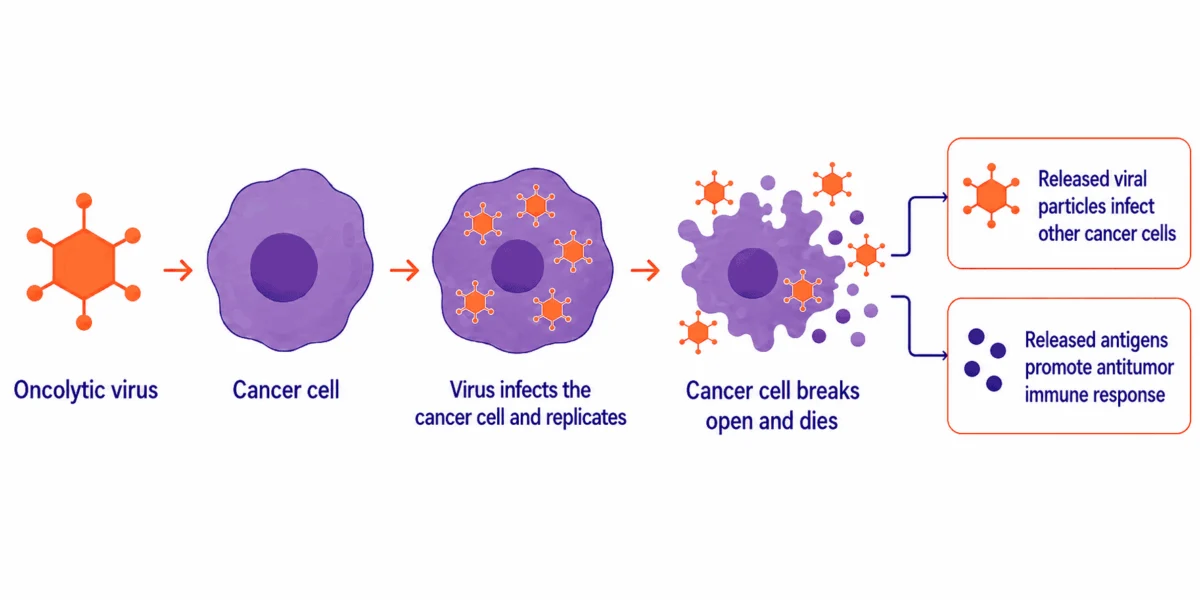
Unlike conventional chemotherapy, which often acts systemically and indiscriminately, Tudriqev—a modified herpes simplex virus (HSV)—is injected directly into the tumor site. The mechanism of action is twofold:
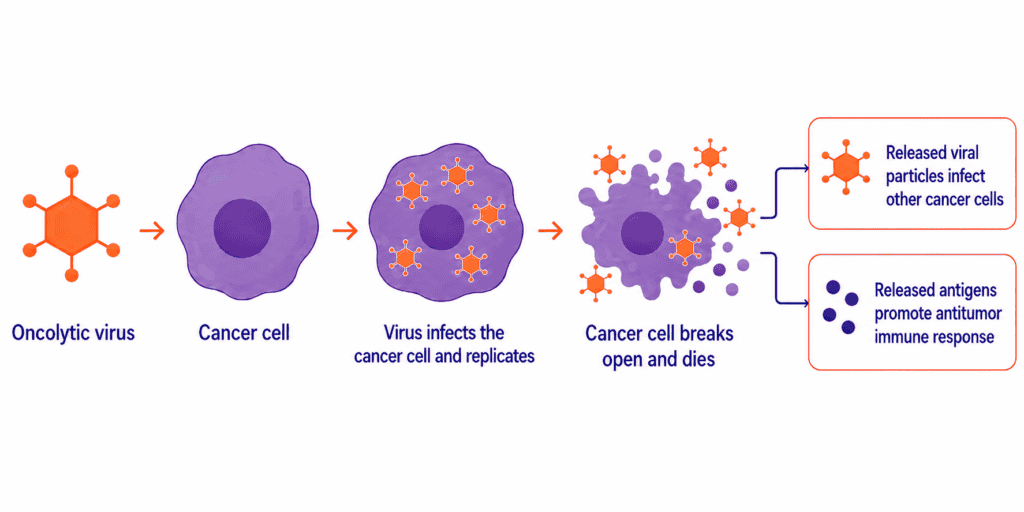
- Direct Oncolysis: The virus enters cancer cells, hijacking their machinery to replicate itself until the cell membrane ruptures, causing the tumor cell to die. As these cells disintegrate, they release viral progeny that can infect and destroy neighboring malignant cells.
- Immune Priming: This is perhaps the most significant aspect of the therapy. The death of the cancer cell releases tumor-associated antigens and inflammatory signals into the microenvironment. This acts as a "flare," signaling the immune system to recognize the presence of the cancer. By "unmasking" the tumor, the therapy allows T-cells to identify and attack cancer cells that were previously "invisible" to the immune system.
When paired with nivolumab, which acts as a molecular "brake release" for the immune system, the therapy effectively creates a two-pronged offensive: the virus destabilizes the tumor’s defenses, and the checkpoint inhibitor prevents the immune system from being turned off prematurely, allowing for a sustained, aggressive anti-cancer response.
Chronology: A Century of Viral Research
The journey to the approval of Tudriqev is the culmination of over a century of medical inquiry. The concept that viruses could influence tumor progression was first noted in medical literature as early as 1904, when physicians observed unexpected tumor regression in patients following a systemic viral infection.
- 1950s–1960s: Researchers began to intentionally use naturally occurring viruses in clinical settings. However, these early trials were fraught with safety concerns. Without the ability to precisely engineer the viruses, doctors struggled to contain the infections, often resulting in systemic toxicity that outweighed the potential anti-tumor benefits.
- 1990s: The field experienced a paradigm shift with the advent of advanced genetic engineering. For the first time, scientists could delete specific viral genes that allowed for replication in healthy tissue, effectively "taming" the viruses to selectively infect only tumor cells.
- 2015: The FDA approved T-VEC (talimogene laherparepvec, Imlygic®), the first oncolytic virus therapy in the United States, providing a proof-of-concept for the field.
- August 2026: The approval of Tudriqev signifies the maturation of this modality, adding a critical second tool to the limited arsenal of approved oncolytic immunotherapies.
Despite these successes, oncolytic viruses remain a rare category. According to data tracked by the Cancer Research Institute (CRI), of the 156 FDA-approved cancer immunotherapies, only a small fraction utilizes the oncolytic virus platform.
Supporting Data: The IGNYTE Clinical Trial
The FDA’s approval of the Tudriqev-nivolumab combination was largely driven by the results of the IGNYTE clinical trial. This study was specifically designed for a difficult-to-treat patient population: individuals with advanced melanoma who had already failed to respond to—or whose cancer had progressed despite—treatment with PD-1 inhibitors.
The trial enrolled 140 participants. In the primary efficacy analysis, which focused on a subset of 91 patients who had at least one non-injected tumor lesion (to assess the "abscopal effect," where treating one site triggers a response in distant, untreated sites), the results were promising:
- Objective Response Rate (ORR): 24.2% of patients experienced an objective response, meaning their tumors showed significant shrinkage.
- Durability: The median duration of response was 14.1 months, a crucial metric in oncology, suggesting that the immune-priming effect of the virus can provide long-term disease control.
While these results provide a strong signal for clinical benefit, the "accelerated approval" status mandates that Replimune, the manufacturer, continue to conduct comprehensive follow-up studies. These confirmatory trials are intended to solidify the evidence of clinical benefit; should these follow-up studies fail to demonstrate success, the FDA retains the right to withdraw the approval.
Official Responses and Clinical Implications
The medical community has received the approval with a mix of optimism and cautious deliberation. For oncologists, the primary implication of Tudriqev is the expansion of the "immunotherapy-resistant" treatment space.
"The integration of oncolytic viruses into the standard of care for melanoma represents a maturation of our approach to tumor microenvironments," says Dr. John Bell, a leading researcher at the Ottawa Hospital Research Institute. "We are moving beyond simply trying to force the immune system to recognize cancer; we are now actively modifying the tumor environment to make it susceptible to immune-mediated destruction."
However, clinical teams are also emphasizing the importance of patient education. Side effects of the Tudriqev-nivolumab combination are non-trivial. Patients commonly report:
- Systemic Symptoms: Fatigue, fever, and chills.
- Localized Reactions: Significant inflammation at the site of injection.
- Viral-Specific Risks: Because the therapy utilizes a modified herpes virus, there are inherent warnings regarding the risk of herpes infection and the necessity of preventing accidental exposure to the virus among caregivers and family members.
Clinicians are advised to hold in-depth consultations with patients regarding the balance of risks and benefits, particularly for those with comorbidities that might be exacerbated by the inflammatory response triggered by the virus.
The Path Forward: Beyond Melanoma
While the current FDA approval is restricted to advanced cutaneous melanoma, the scientific implications are far broader. Researchers are currently investigating the utility of oncolytic viruses in a wide spectrum of solid tumors, including breast, pancreatic, and lung cancers.
The current research landscape is focused on several key questions:
- Combinatorial Efficacy: Which other therapies (beyond PD-1 inhibitors) can be "supercharged" by the addition of an oncolytic virus?
- Delivery Mechanisms: While direct injection is standard for accessible tumors, how can we improve the delivery of these viruses to metastatic sites located deep within the body?
- Patient Selection: Can we identify biomarkers that predict which patients will have a robust immune response to the virus, thereby avoiding unnecessary treatment for those unlikely to benefit?
Hundreds of clinical trials are currently active, testing various iterations of viral vectors. For patients, this represents a significant shift. Where once a diagnosis of advanced, treatment-resistant melanoma meant the end of standard therapeutic options, the emergence of the "viral-immune" approach provides a bridge to new possibilities.
As researchers continue to decode the dialogue between viruses and the human immune system, the hope is that Tudriqev is not an isolated success, but rather the harbinger of a new generation of biological therapies. For those currently navigating the complexities of advanced cancer, the message is clear: while oncolytic virus therapy is still in its relative infancy, the tools to "turn the tide against tumors" are becoming increasingly sophisticated, precise, and effective.
For more information on current clinical trials or to discuss eligibility for new immunotherapies, patients are encouraged to consult with their oncology care teams and review resources provided by organizations such as the Cancer Research Institute (CRI).