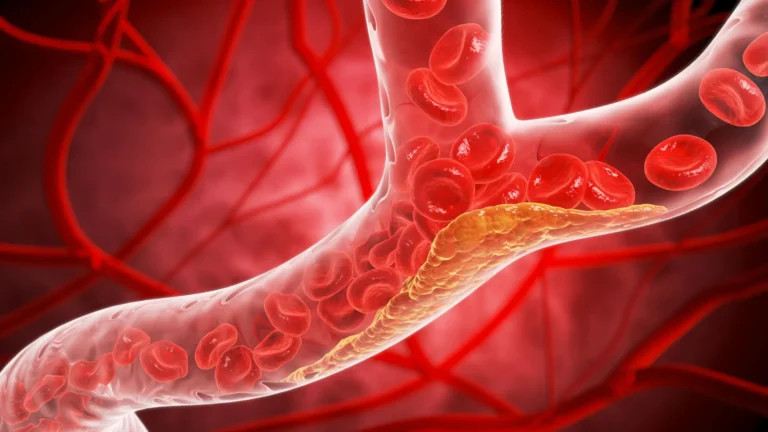









As cardiovascular disease remains the leading cause of death in the United States, medical professionals have long sought the "gold standard" for predicting who will suffer a heart attack or stroke. In recent years, coronary artery calcium (CAC) scans—a quick, non-invasive CT test—have surged in popularity as a diagnostic tool. By measuring the buildup of calcified plaque in the arteries supplying the heart, these scans provide a tangible look at the "hidden" biology of heart disease.
However, a landmark study published August 26 in the journal JAMA suggests that the medical community may be over-utilizing these tests. Research from Northwestern Medicine indicates that for the vast majority of the population, these scans offer only a marginal benefit when weighed against existing, highly effective risk-assessment tools. The findings suggest a shift in clinical practice: instead of universal application, calcium scans should be reserved for a specific, "middle-ground" group of patients whose risk profile is otherwise ambiguous.
The PREVENT Calculator vs. The Calcium Scan: A Study in Contrast
To understand the weight of these findings, one must distinguish between the two primary ways doctors estimate risk. The American Heart Association’s primary cardiovascular risk calculator, known as PREVENT, serves as the cornerstone of preventative cardiology. PREVENT utilizes objective, readily available patient data—age, sex, blood pressure, and cholesterol levels—to project the likelihood of a cardiovascular event occurring over the next 10 or 30 years.
Conversely, a coronary artery calcium scan operates on a structural level. It does not measure blood markers; it takes a literal picture. By identifying calcium-containing plaque within the coronary arteries, the scan assigns a "calcium score." In theory, a higher score correlates with a higher burden of atherosclerosis—the hardening and narrowing of arteries that leads to heart attacks.
For years, the medical community has debated whether adding the structural data of a scan to the clinical data of a calculator like PREVENT would significantly improve predictive accuracy. The Northwestern study, led by Dr. Nilay Shah, an assistant professor of medicine in the division of cardiology at Northwestern University Feinberg School of Medicine, sought to finally answer that question.
Chronology of the Investigation
The research team set out to evaluate the "predictive utility" of adding calcium scores to the PREVENT equations by analyzing a decade’s worth of data from the Multi-Ethnic Study of Atherosclerosis (MESA).
Phase I: Baseline Assessment
The study cohort consisted of more than 6,000 adults, ranging in age from 45 to 79. At the onset of the study, each participant underwent a two-pronged evaluation: they received a calculated PREVENT risk estimate and a coronary artery calcium score.
Phase II: The Ten-Year Tracking Period
Researchers tracked the health outcomes of these 6,000 participants over the next ten years. During this period, approximately 6% of the study population experienced a major cardiovascular event, such as a heart attack or a stroke.
Phase III: Data Synthesis
The researchers compared the accuracy of two predictive models: one that relied solely on the PREVENT calculator and another that integrated the coronary artery calcium score. The goal was to measure "discrimination"—the statistical ability of a model to accurately distinguish between individuals who will experience a cardiovascular event and those who will remain healthy.
Supporting Data: Modest Gains, Targeted Success
The results of the comparison were statistically revealing. When the researchers analyzed the study population as a whole, the improvement provided by the calcium scan was remarkably modest. The model’s discrimination index rose from 0.73 (using PREVENT alone) to 0.75 (when adding the calcium score).
For a diagnostic tool that carries costs, radiation exposure, and logistical hurdles, an improvement of just 0.02 is clinically insignificant for the general population.
However, the data told a different story when the researchers isolated a specific subgroup: those categorized as "borderline" or "intermediate" risk (those deemed to have a 3% to 9% risk of a cardiovascular event within 10 years). For these patients, the calcium scan acted as a "tie-breaker." By providing a visual snapshot of arterial health, the scan helped doctors determine whether a patient’s risk was significantly higher or lower than the PREVENT calculator suggested. This allows for more precise clinical decision-making, such as whether to initiate statin therapy—a class of drugs that lowers cholesterol and prevents heart disease.
Official Responses and Clinical Perspectives
Dr. Nilay Shah, the study’s senior author, emphasizes that the findings are not a condemnation of the calcium scan, but rather a call for clinical discipline.
"Coronary artery calcium scans are becoming more widely available and less expensive," Dr. Shah noted. "However, our findings suggest that not everyone necessarily needs or would benefit from a coronary artery calcium scan for the purpose of predicting risk of heart attack and stroke."
Dr. Shah further highlighted the "hidden" costs of testing. "Routinely using a calcium scan in people who are at low risk may result in unnecessary radiation exposure, testing and costs with unclear clinical benefits," he explained.
The perspective is equally critical regarding high-risk patients. For individuals who already fall into high-risk categories based on blood pressure and cholesterol, the scan is largely redundant. These patients are already candidates for aggressive preventative treatment, such as statins, regardless of what the calcium scan reveals. If the treatment plan remains unchanged by the test result, the test is, by definition, clinically unnecessary.
Implications for Future Patient Care
The implications of this research are significant for both primary care physicians and patients.
1. The Power of the PREVENT Calculator
The study reinforces that the PREVENT calculator is a highly robust tool on its own. For many patients, clinical data—blood pressure, cholesterol, and age—is sufficient to guide long-term heart health management. The study provides validation for clinicians to trust these existing models before jumping to advanced imaging.
2. Streamlining Resource Allocation
With cardiovascular disease affecting roughly 10% of U.S. adults between the ages of 30 and 79, the healthcare system is constantly looking for ways to maximize efficiency. By narrowing the use of calcium scans to the "borderline/intermediate" risk group, doctors can avoid the "cascade effect"—a chain of follow-up tests, anxieties, and treatments triggered by an unnecessary initial scan.
3. Precision Medicine
The move toward more precise risk stratification is a hallmark of modern medicine. Identifying the patients who sit in the "grey zone" allows for a more personalized approach. If a patient is at intermediate risk but has a high calcium score, their treatment plan can be accelerated. Conversely, a patient with a low calcium score might be able to avoid long-term medication, focusing instead on lifestyle interventions.
Questions That Still Need Answers: The Road Ahead
While the Northwestern study is comprehensive, the researchers acknowledge that the field is still evolving. There are significant populations that remain under-studied.
For instance, the current cohort focused on individuals aged 45 to 79. The predictive utility of these scans in younger adults—where early detection could theoretically lead to lifelong lifestyle changes—remains an area for future investigation. Additionally, the researchers noted that specific ethnic groups, including South Asian and Filipino adults, may have different risk trajectories that require further validation.
"The findings help us understand how best to use the available tools to estimate someone’s risk of a heart attack or stroke," Dr. Shah said. "That provides more precise guidance for who is most likely to benefit from using a statin to help prevent heart disease."
As the medical community digests these results, the standard of care is likely to shift. Instead of a "test for everyone" approach, the future of cardiovascular screening points toward a more nuanced, evidence-based model: use the calculator first, trust the data, and save the scan for when it truly changes the course of treatment.
Study Details and Credits
The research, titled "Predictive Utility of Coronary Artery Calcium Added to the PREVENT Atherosclerotic Cardiovascular Disease Equations," was published in JAMA on August 26. Co-authors include Xiaoning Huang, Lucia Petito, Norrina Allen, Dr. Philip Greenland, and Dr. Sadiya Khan. The study was supported by the American Heart Association (grant 24CDA1266732) and the National Heart, Lung, and Blood Institute.