






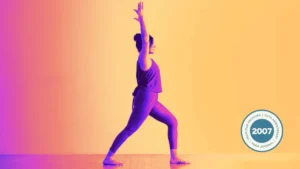


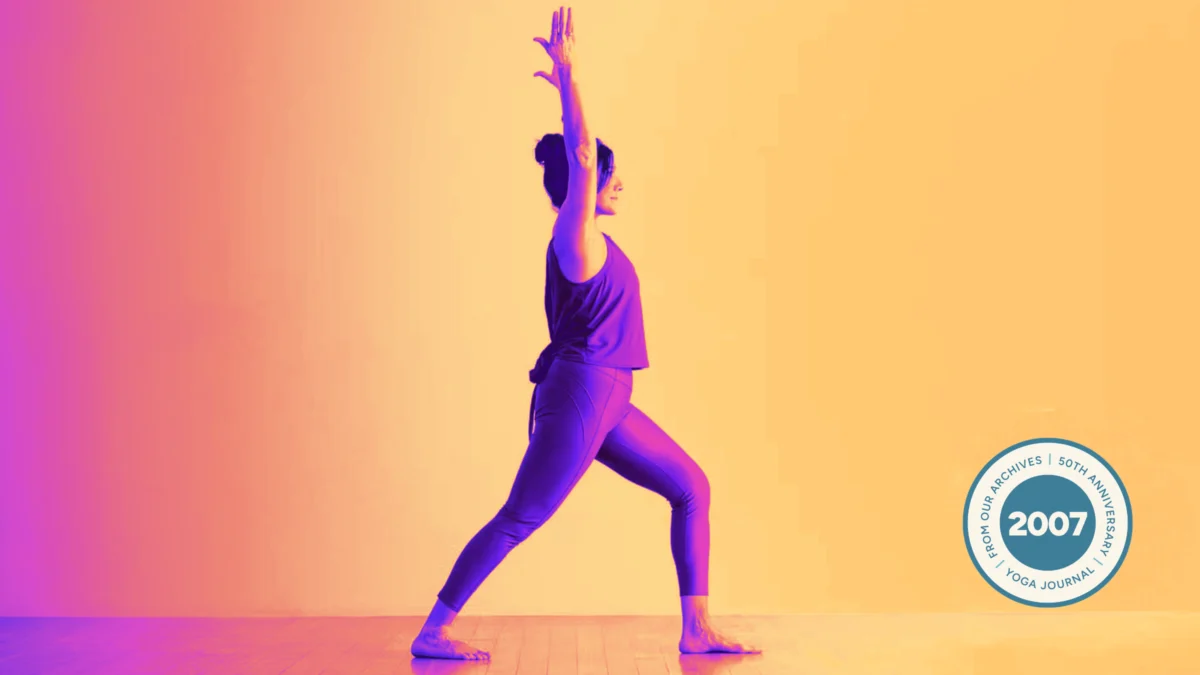
Originally published in the June 2007 issue of Yoga Journal, this deep dive into the mechanics of Virabhadrasana I remains a cornerstone for modern practitioners and physical therapists alike. In an era of increasing sedentary habits, understanding the relationship between our hips and our spine is more critical than ever.
The Hidden Cost of Modern Living
In the rhythm of a fast-paced life, time is a luxury. When minutes are scarce, the yoga practitioner must curate their practice with precision. While many gravitate toward the restorative embrace of child’s pose or the invigorating flow of Downward-Facing Dog, there is one pose that acts as a vital, functional bridge between health and chronic dysfunction: Virabhadrasana I (Warrior I).
To the uninitiated, Warrior I can feel like an exercise in frustration—a static hold that demands significant effort without immediate, obvious rewards. However, beneath the surface of this "challenging pose" lies a sophisticated remedy for the modern epidemic of lower back pain. As a physical therapist and seasoned yoga instructor, I have observed that our sedentary culture—defined by long hours at desks, hours behind the wheel, and the fetal position of sleep—is structurally shortening our hip flexors. This shortening is not merely a localized issue; it is a primary driver of the chronic lumbar distress that plagues the Western population.
Chronology of a Structural Imbalance
To understand why Warrior I is essential, we must look at the anatomy of the "sitting lifestyle." When we remain in a flexed hip position for the majority of our day, our hip flexor muscles—the iliacus, psoas, rectus femoris, and others—adapt by shortening. Like any muscle group left in a constant state of contraction, they lose their elasticity and structural length.
The Anatomy of the Iliopsoas
The hip flexors are a powerhouse group. The primary actors, the iliacus and the psoas (collectively known as the iliopsoas), are massive, wrist-thick muscles that wield significant mechanical influence. The psoas originates on the lumbar spine, while the iliacus anchors to the inner ilium. Together, they cross the pelvis and attach to the inner femur.
Because of their proximity to the hip joint, they possess immense leverage. When they become chronically tight, they act like a pair of tight reins on a horse, pulling the pelvis into an anterior (forward) tilt. In this state, the top rim of the pelvis tips forward, the tailbone lifts, and the lumbar spine is forced into hyperextension—a condition commonly referred to as "swayback."
The Path to Chronic Discomfort
This postural shift is a silent antagonist to spinal health. Hyperextension forces the lower back muscles into a shortened, pressurized state. Furthermore, it shifts the weight of the upper body away from the robust vertebral bodies and discs, dumping it onto the delicate facet joints of the spine. If you find relief only by lying down and pulling your knees to your chest—a move that flattens the lumbar curve—you are likely suffering from the consequences of a tight iliopsoas.
Supporting Data: The Mechanics of the Tilt
The battle for pelvic alignment is often lost even before we step onto the mat. Even practitioners with strong abdominals often find that a powerful, tight iliopsoas "wins" the struggle, forcing the pelvis forward despite efforts to engage the core.
To reverse this, we must train the body to engage a posterior pelvic tilt. This movement involves lifting the frontal hip points (the ASIS) away from the thighs, tucking the tailbone down, and lengthening the lower back.
Developing the Posterior Tilt: A Wall-Based Protocol
Before integrating this into Warrior I, it is vital to master the sensation of the tilt.
- The Wall Test: Stand with your back to a wall, heels about a foot away.
- Finding the Anterior Tilt: Move your frontal hip points down toward your thighs. Feel your coccyx move up the wall and your lower back pull away from it. This is the "sedentary" position.
- Finding the Posterior Tilt: Reverse the action. Lift your ASIS away from your thighs, press your tailbone down the wall, and feel your lower back flatten against the surface. This is the "therapeutic" position.
Integrating the Hero: Warrior I Execution
Once the action is mastered, bring it into the pose.
- The Strap Assist: Set up Warrior I with your back to a wall, right foot forward, left heel pressing into the wall. Place a yoga strap across the crease of the right hip, holding it with your hands.
- The Correction: If you fall into an anterior tilt, your hip points will drop into the strap. To correct this, bend your knees and lift the hip points up off the strap. As you gradually straighten the left knee, maintain that lift. This creates the optimal stretch for the iliopsoas.
Note for Practitioners: For many, a full 90-degree bend in the front knee makes maintaining a posterior tilt nearly impossible. It is better to practice a shallower lunge with perfect form than a deep lunge that sacrifices the spine to gravity.
Refinement: The Internal Rotation Nuance
To further isolate the iliopsoas, we must address the external rotation of the hip. Because the iliopsoas is an external rotator, it will naturally try to "cheat" the stretch by rotating the hip outward.
To counter this, turn your back foot only 60 degrees away from the wall—unlike the wider, flatter stance of Warrior II. By squaring the pelvis toward the front and pressing the inner heel down, you not only deepen the stretch but protect the knee from the torque that leads to injury.
Implications for Longevity
The implications of consistent Warrior I practice extend far beyond the yoga studio. By lengthening the iliopsoas, you are effectively decompressing the lower back, providing the vertebrae with the space they need to function without pain.
Implications for Advanced Practice
This pose serves as a gateway to safer backbending. Whether you are practicing Setu Bandha Sarvangasana (Bridge Pose), Ustrasana (Camel Pose), or Urdhva Dhanurasana (Upward Bow), your starting pelvic position is paramount. If you enter these backbends with an anteriorly tilted pelvis, you are essentially "crunching" your lumbar spine into the compression you have been trying to avoid all day. By opening the hip flexors first, you provide the structural foundation for safe, deep, and sustainable spinal extension.
A Long-Term Vision for Health
We are living in an era where our physical structures are under constant threat from the chairs we sit in and the screens we hover over. Integrating Virabhadrasana I into your daily routine is a prophylactic measure. It is a commitment to reversing the structural shortening of the muscles that hold us upright.
As your iliopsoas regains its natural length, you will notice not only a relief in lower back discomfort but a profound shift in your daily posture. Walking will feel more fluid, standing will feel more effortless, and you will be actively preventing the development of lower back arthritis.
In the archives of yoga, few poses offer such a direct correlation between anatomical precision and daily quality of life. The next time you find yourself with only a few moments for practice, choose the Warrior. It is, quite simply, the best investment you can make in your long-term mobility and spinal health. By choosing to stretch the hip flexors today, you are ensuring that your body remains a flexible, pain-free vessel for all the years to come.