







The American food landscape has reached a pivotal, albeit contentious, inflection point. The American Journal of Public Health (AJPH) has officially unveiled a comprehensive series of papers dedicated to the science and policy of ultraprocessed foods (UPFs). This scholarly launch coincides with the introduction of "Fed UP!," a new public health initiative aimed at bridging the gap between nutritional science and government regulation. At the heart of this movement is a clarion call: it is time to move beyond the narrow focus on individual nutrients and address the systemic impact of industrial food processing on the American diet.
Marion Nestle, PhD, MPH, a leading voice in food policy and a contributor to this AJPH series, notes that this movement arrives at a moment of significant flux in federal guidance. For decades, the debate over how to categorize the modern American diet has pitted public health advocates against the commercial interests of the global food industry. As new data confirms the correlation between ultraprocessed consumption and chronic disease, the push for policy-level intervention has never been more urgent.
The Chronology: A Shift in Federal Guidance
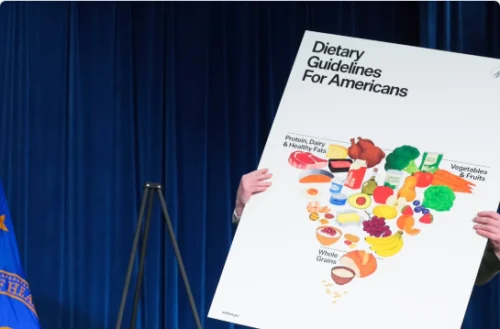
To understand the gravity of the current moment, one must look at the evolution of the Dietary Guidelines for Americans. On January 7, 2026, the U.S. Departments of Health and Human Services (HHS) and Agriculture (USDA) released their 2025–2030 guidelines. In a move that surprised many observers, the document included a formal recommendation to "limit highly processed foods, added sugars, & refined carbohydrates."
This marked the first time in the 46-year history of the guidelines that the government formally addressed the state of food processing as a public health concern. While the term "ultraprocessed" was avoided in favor of the euphemism "highly processed," the intent was clear. The scientific foundation report accompanying the guidelines cited extensive research on the health impacts of industrial food manufacturing, effectively reversing the cautious stance of the Biden-era Dietary Guidelines Advisory Committee (DGAC), which had previously deemed the evidence on ultraprocessing too ambiguous for a formal recommendation.
The transition from a neutral stance to an explicit "eat less" directive represents a significant departure from established norms, reflecting both a shift in the political climate and an undeniable accumulation of scientific evidence.
Supporting Data: The Science of Consumption
The debate over ultraprocessed foods often centers on the validity of the Nova classification system, which divides food into four categories based on the extent of industrial processing. Critics—often aligned with industry interests—frequently argue that the lack of a universal, airtight definition for "ultraprocessed" makes policy-making premature.
However, the scientific case for restriction is supported by a growing body of evidence that transcends mere observational studies. A landmark randomized clinical trial, conducted within the strict confines of a metabolic ward, remains the "gold standard" of this research. When participants were offered nutritionally comparable minimally processed and ultraprocessed diets, those on the ultraprocessed regimen consumed, on average, 500 calories more per day—without conscious intent. This suggests that the composition of ultraprocessed foods overrides the body’s natural satiety signals.
Furthermore, the commissioned research review for the 2026 guidelines found "robust and consistent adverse associations" between highly processed food consumption and a wide array of chronic health outcomes, demonstrating a dose-response relationship that is difficult to ignore. Despite these findings, the industry continues to argue that focusing on "processing" is a distraction from the "real" issue: nutrient content. By keeping the focus on sugar, salt, and fat, industry advocates successfully lobby to keep many "nutrient-dense" ultraprocessed products—such as fortified power bars and plant-based substitutes—outside the scope of restrictive recommendations.
The Politics of Capture: Conflicts of Interest
The 2026 Dietary Guidelines have drawn intense scrutiny not just for what they include, but for the potential influence of corporate interests. A glaring concern is the composition of the research teams. Of the nine authors tasked with the research reviews, four disclosed financial ties to the meat and dairy industries, while three others reported ties to broader food sectors.
This has led to a peculiar internal inconsistency within the guidelines. While the document warns against ultraprocessed foods, it simultaneously advocates for a doubling of protein intake—widely interpreted as a directive to consume more meat—and promotes full-fat dairy, butter, and beef tallow. This prioritization of animal-based commodities, coupled with a deliberate downplaying of plant-forward dietary shifts, suggests a degree of regulatory capture.
As Nestle observes, the "Fed UP!" initiative highlights the inherent tension between public health goals and profit maximization. The business model of ultraprocessed food manufacturers relies on using low-cost, mass-produced ingredients to create high-margin, shelf-stable, and highly palatable products. By lobbying against the classification of "ultraprocessed," the industry protects its most profitable product lines.
Official Responses and the "Personal Responsibility" Narrative
The U.S. government’s approach to these guidelines is explicitly framed through the lens of individual agency. Official fact sheets accompanying the guidelines lean heavily into the concept of "personal responsibility," suggesting that the government’s role is primarily to provide information rather than to structure the food environment.
This philosophy represents a rejection of the "social determinants of health" model. By framing diet as a purely individual choice, the current guidelines effectively sidestep the need for structural policy interventions. In contrast, Brazil’s 2015 dietary guidelines—widely considered the global benchmark for progressive food policy—emphasize that healthy eating is an outcome of sustainable food systems, not just individual willpower.
Industry leaders prefer the "education-only" model because it places the burden of health entirely on the consumer. As long as the solution is framed as "better choices" rather than "better regulations," the status quo remains profitable. Public health advocates, however, argue that education is insufficient in an environment where ultraprocessed options are systematically cheaper, more accessible, and more aggressively marketed than fresh, whole foods.
Implications: The Path Toward Reform
The inclusion of "highly processed" foods in the 2026 guidelines is a tactical victory for public health, but it is merely the opening salvo in a much larger policy battle. For the "Fed UP!" initiative and its allies, the goal is to shift the discourse from nutritional education to systemic regulation.
True reform, they argue, will require a multi-pronged approach that includes:
- Fiscal Policy: Implementing taxes on ultraprocessed goods while subsidizing fresh, minimally processed alternatives.
- Marketing Restrictions: Limiting the advertising of ultraprocessed products, particularly those targeted at children and vulnerable populations.
- Institutional Procurement: Mandating that schools, hospitals, and government agencies prioritize minimally processed, whole-food sourcing.
- Product Placement and Labeling: Implementing clear, standardized front-of-package warnings that allow consumers to identify ultraprocessed products at a glance.
The implications for the American public are profound. If the government continues to prioritize the profitability of the meat, dairy, and ultraprocessed food sectors, the epidemic of diet-related chronic disease will likely continue unabated. Conversely, if the guidelines serve as a catalyst for actual policy reform, it could lead to a fundamental transformation of the American food system.
As the American Journal of Public Health series makes clear, the debate over ultraprocessed food is not merely a scientific disagreement; it is a political conflict over the priorities of the state. While the 2026 guidelines are a step forward, they remain a "euphemistic" compromise. The true test of the "Fed UP!" movement will be its ability to translate these guidelines into concrete, structural changes that make the healthy choice not just an individual option, but the default reality for all Americans.
For further reading, the full series of papers and the "Fed UP!" briefing materials are available via the AJPH website, providing a comprehensive roadmap for those interested in the future of food policy in the United States.