





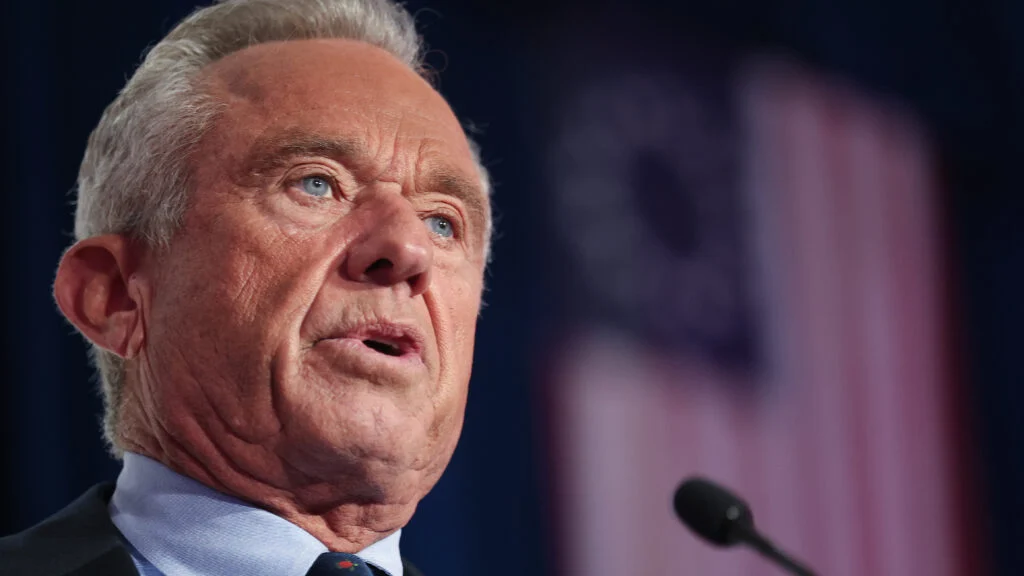
WASHINGTON — In a move that signals a profound shift in the federal government’s approach to public health, Health and Human Services (HHS) Secretary Robert F. Kennedy Jr. announced on Thursday the appointment of eight new members to the U.S. Preventive Services Task Force (USPSTF). The announcement marks the first major staffing update to the influential body in over a year, following a period of administrative stagnation that has left the future of federal preventive health guidelines in a state of uncertainty.
The USPSTF holds immense sway over the American healthcare landscape. Its recommendations effectively dictate which preventive screenings and services—from colonoscopies to HIV-prevention drugs—private insurers are legally required to cover without cost-sharing. By reshaping the panel’s composition, Kennedy is asserting executive control over an entity that has historically prided itself on clinical independence.
A Fundamental Shift in Expertise
The most striking aspect of the new appointments is the transition from a panel traditionally dominated by primary care clinicians to one heavily weighted toward medical specialists. Of the eight new appointees, five are specialists in fields such as oncology and gastroenterology. Additionally, the inclusion of a finance professor with deep expertise in health insurance markets suggests that the administration intends to pivot the task force toward a focus on cost-effectiveness and economic impact, moving away from the purely clinical, patient-centered focus that defined the panel for decades.
In an opinion piece published in Fox News concurrent with the announcement, Secretary Kennedy defended the decision to pivot toward specialized clinical knowledge.
“Preventive medicine does not stop at the boundaries of any one discipline,” Kennedy wrote. “It encompasses cancer detection, cardiovascular disease, medical imaging, pediatric care, diagnostic technologies, chronic disease, and other areas where specialized clinical knowledge can sharpen the evaluation of evidence.”
Kennedy emphasized that the panel, which maintains a 16-person roster, will retain eight members appointed during the Biden administration, framing the new appointments as a "rebalancing" rather than a total purge.
Chronology: From Stagnation to Transformation
The transformation of the USPSTF did not happen in a vacuum; it is the culmination of an aggressive administrative effort to consolidate power over federal health agencies.
- June 2025: The Supreme Court issues its landmark ruling in Kennedy v. Braidwood Management. The decision fundamentally altered the legal standing of the USPSTF, affirming that the panel operates under the direct authority of the health secretary, effectively ending its status as an autonomous entity.
- July 2025: Secretary Kennedy publicly expresses his intention to purge members of the task force, labeling the existing roster as ideologically "woke" and out of step with his vision for public health.
- August 2025: The final meeting of the USPSTF occurs. Shortly thereafter, all subsequent meetings are canceled, effectively rendering the panel defunct for more than 16 months.
- May 2026: In a decisive move, Kennedy formally terminates the employment of two of the panel’s most senior leaders, Vice Chairs John Wong and Esa Davis, citing a broad "review of current appointments."
- January 2027: The announcement of the eight new members breaks the long-standing silence, setting the stage for the task force to resume operations under a new, more specialized mandate.
The Shrinking Infrastructure: The AHRQ Crisis
While the appointment of new members suggests a return to activity, experts warn that the task force’s ability to function is severely compromised by a collapse in its underlying support structure. The USPSTF is traditionally supported by the Agency for Healthcare Research and Quality (AHRQ), a division within HHS tasked with reviewing medical literature to provide evidence-based recommendations.
Under the current administration’s "U.S. DOGE" (Department of Government Efficiency) service-driven budget cuts, the AHRQ has been hollowed out. Workforce data from the Office of Personnel Management indicates a staggering decline: the agency plummeted from nearly 300 employees in 2024 to just 84 by 2026.
Katherine Hempstead, a senior policy adviser at the Robert Wood Johnson Foundation, expressed grave concerns regarding this loss of institutional capacity. “The infrastructure that provides them their reviews to provide evidence-based recommendations is not as secure as it once was,” Hempstead told STAT. “Without the analytical engine that the AHRQ provided, it is unclear how the new panel will generate the rigorous, peer-reviewed data the public has come to expect.”
Official Responses and Professional Pushback
The medical community has reacted to the appointments with a mixture of skepticism and outright alarm. The American Medical Association (AMA) issued a sharp statement following the announcement, describing the new roster as a “significant departure from the Task Force’s traditional membership.”
“We believe maintaining a strong primary care voice must remain central to its work,” the AMA stated. “The USPSTF’s legitimacy has always rested on its ability to provide recommendations that represent the perspective of those on the front lines of patient care—the generalists who see the patient as a whole person, not just a specific disease.”
This concern was echoed by Aaron Carroll, president and CEO of AcademyHealth. Carroll argued that the inclusion of specialists creates an inherent conflict of interest.
“The task force is built around people who deliver preventive care, not people who deliver care after a positive test,” Carroll explained. “Historically, specialists were invited to meetings as consultants to explain why their specific procedures should be covered, but they never sat on the panel. Now that they are the panel, the potential for bias—and the pressure to promote specific screenings or technologies—is significant.”
The conflict-of-interest concerns are further exacerbated by the fact that the task force’s internal policy page regarding disclosures is currently listed as "under review," leaving the public and the medical community without clear guidelines on how these new members will recuse themselves from decisions that could financially benefit their respective fields.
The Path Forward: Implications for Policy
The task force’s immediate agenda remains murky, though it faces a backlog of pending recommendations. Prior to the 2025 shutdown, the group was in the midst of finalizing critical guidance on breast cancer genetic screening, pediatric autism disorder diagnostic protocols, and cervical cancer screening updates.
It remains to be seen whether the new panel will adopt the previous work or start from scratch. Furthermore, the ideological shift within the panel suggests that future guidelines may move away from universal screening protocols—which have been criticized by some conservatives as inefficient—and toward more targeted, perhaps more privatized, approaches to medical intervention.
For millions of Americans, the stakes are high. The USPSTF recommendations are the bedrock of the Affordable Care Act’s preventive services mandate. Any alteration to these guidelines could have immediate effects on insurance premiums and out-of-pocket costs. As the panel prepares to resume its work in a drastically altered political environment, the question remains: will the new, specialized USPSTF maintain the clinical rigor of its predecessor, or will it become a tool for the administration’s broader agenda to restructure the American medical establishment?
For now, the medical establishment is watching closely. With the agency’s staff depleted, its leadership purged, and its mandate under scrutiny, the USPSTF enters a new, untested era of federal oversight. The outcome of this experiment will likely determine the quality and accessibility of preventive medicine in the United States for years to come.