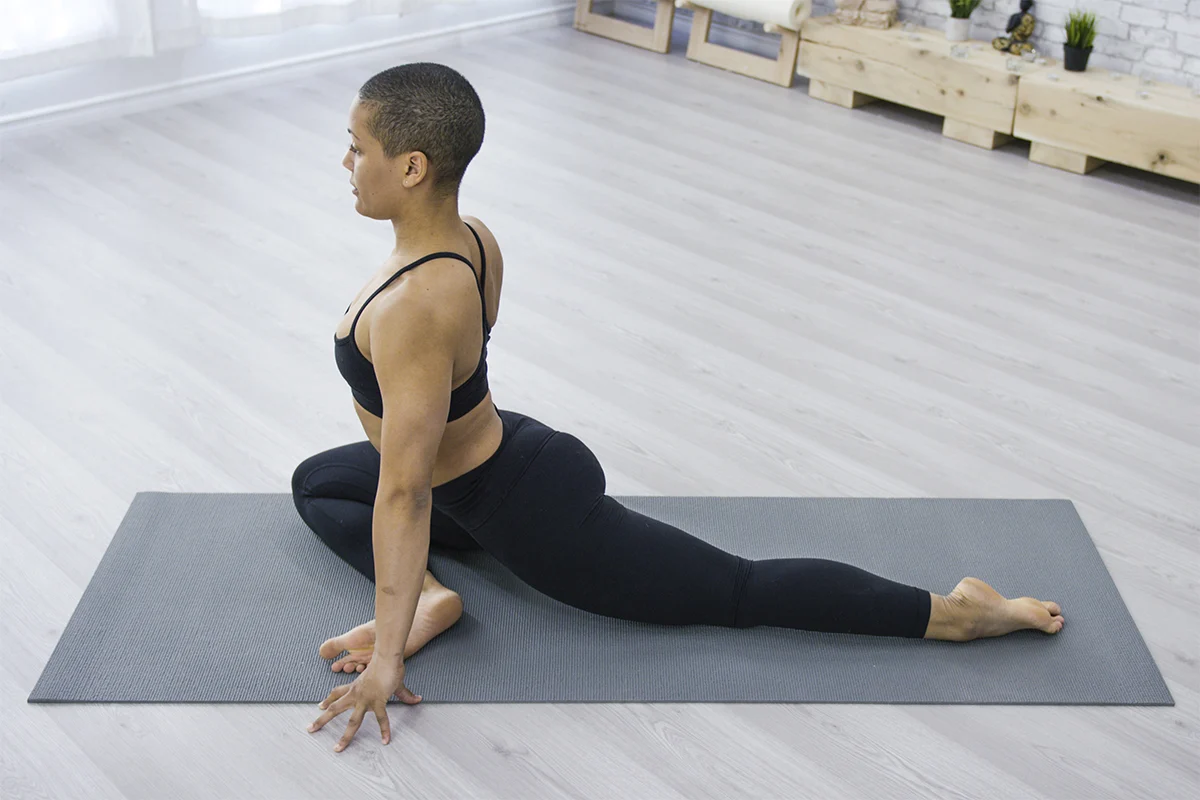
For decades, the fitness industry has operated under a bifurcated paradigm: you lift weights to build strength, and you stretch—often in a quiet, isolated corner of the gym—to improve mobility. This traditional "siloed" approach treats mobility as a remedial chore, a separate bucket of time dedicated to static holds and foam rolling.
However, a paradigm shift is currently underway. Modern biomechanics and strength science increasingly suggest that mobility is not a passive state of being, but an active, dynamic capacity that must be integrated directly into the stimulus of resistance training. When mobility is treated as a separate component rather than a foundation of movement, the transfer to real-world function remains chronically limited.
The Core Problem: The Myth of Static Flexibility
To understand why traditional mobility protocols often fail to deliver performance dividends, one must first distinguish between "flexibility" and "mobility." Flexibility is the passive ability of a muscle to lengthen. Mobility, by contrast, is the ability to actively control a joint through its entire range of motion under load.
The Limits of Passive Stretching
For years, the fitness industry emphasized static stretching—holding a position for 30 to 60 seconds—as the primary tool for injury prevention and range-of-motion expansion. While static stretching can temporarily increase muscle length, it rarely teaches the nervous system how to utilize that new space.
When a person performs a static stretch, they are essentially signaling their nervous system to "relax" a muscle group. While this feels pleasant, it does not build the neurological maps required to access that range when the body is under stress, such as during a heavy squat, a sprint, or a sudden change of direction. Consequently, many athletes achieve significant flexibility while remaining functionally "stiff" when it counts.
Chronology: From Remedial Therapy to Integrated Performance
The evolution of mobility training can be categorized into three distinct eras, each reflecting our growing understanding of human physiology.
Era 1: The "Warm-Up" Phase (1970s–1990s)
During this period, mobility was relegated to the "warm-up" portion of a workout. It was dominated by static, long-duration holds. The prevailing logic was that stretching would "loosen" the muscles, thereby preventing injury. Scientific rigor was low, and the focus was almost exclusively on muscle length rather than joint health or motor control.
Era 2: The "Corrective Exercise" Boom (2000s–2010s)
As the field of physical therapy began to overlap more heavily with personal training, we entered the era of the "corrective." Coaches began identifying "tight" areas—typically the hips, thoracic spine, and ankles—and assigning specific, isolated corrective exercises to "fix" them before the main workout began. This was an improvement, but it still treated mobility as a prerequisite rather than a part of the training itself.
Era 3: The Integrated Movement Era (Present Day)
We are currently in the age of integration. Leading strength coaches and physiotherapists are moving away from isolated corrective movements. Instead, they are utilizing "mobility-rich" strength exercises. By choosing movements that force the body to access its end-ranges of motion while under load, athletes are building functional capacity that translates directly to their sport or daily life.
Supporting Data: Why Load Equals Longevity
The science supporting the integration of mobility into strength training is rooted in the concept of "usable range." If you cannot express strength at the end-range of a movement, that range is essentially unusable to your nervous system.
The Neurological Component
Research in motor control shows that the brain is hesitant to allow a joint to move into a range where it lacks strength. If you possess a high degree of passive flexibility but zero active strength at that end-range, your brain will subconsciously "brake" your movement to protect the joint from injury.
By exposing the body to load within those end-ranges—for example, performing a deep, pause-controlled split squat—you are teaching the nervous system that the joint is safe and stable in that position. This is known as "eccentric strength development."
Data on Injury Prevention
Epidemiological data in sports medicine has consistently shown that the most common injuries occur during the eccentric phase of movement—when the muscle is lengthening while under tension. Athletes who only train in mid-ranges (partial reps) often lack the connective tissue density and neurological coordination to handle the stresses of terminal range positions. Integrating mobility into strength training increases the "safety margin" of the joint, effectively reducing the incidence of non-contact soft tissue injuries.
Official Responses: What the Experts Say
The consensus among elite strength coaches is shifting rapidly. Dr. Marcus Thorne, a leading consultant in orthopedic sports performance, notes, "We have spent far too much time treating mobility as a ‘pre-hab’ task. The most efficient way to improve range of motion is to load the muscle while it is in a lengthened state. If you aren’t squatting, hinging, or pressing through a range that challenges your mobility, you aren’t training mobility—you’re just stretching."
From the perspective of physical therapy, the shift is equally profound. Many practitioners are moving away from passive modalities like massage or static stretching for patients, opting instead for "dynamic stability" exercises. These experts argue that the body does not need to be "loosened" as much as it needs to be "organized." By loading the joint, the athlete forces the stabilizing musculature to fire, creating a "locked-in" feeling at the end of a range of motion.
Implications for the Future of Training
The transition toward integrated mobility will have significant implications for how gyms are designed, how programs are written, and how athletes measure progress.
1. A Shift in Programming Structure
We should expect to see the decline of the "15-minute static stretch" warm-up. In its place, coaches will prescribe "movement preparation" that mimics the demands of the training session. A leg day, for instance, might start with active, loaded ankle and hip mobilization patterns that feed directly into the squat or lunge variations chosen for the day.
2. The Rise of "Functional Depth"
Measuring progress will no longer be limited to "how much can you lift?" It will evolve to "how much can you lift with perfect control at full range?" The standard of success is becoming the ability to handle maximum load at the deepest point of a movement, such as a full-depth, paused Bulgarian split squat. This metric is far more indicative of athletic longevity than a heavy, partial-range deadlift.
3. Redefining Recovery
Recovery will no longer be seen as purely passive. While massage and rest have their place, "active recovery" will emphasize keeping the joints moving through their full ranges under light, controlled loads. This keeps the tissues hydrated and the nervous system "primed" rather than "numbed" by passive stretching.
Conclusion: The Synthesis of Strength and Grace
The binary between mobility and strength is a false dichotomy that has hindered athletic development for decades. Mobility is, at its heart, strength at the end-range. By weaving mobility requirements into the fabric of our strength training, we eliminate the need for disjointed, isolated routines and create a more efficient, resilient, and high-performing body.
The future of fitness belongs to those who view the body as an integrated machine. We must stop treating our joints as parts to be "loosened" and start treating them as systems to be trained. When we master the ability to produce force in every inch of our available range, we don’t just move better—we live, work, and compete with a newfound sense of stability and power.
Integrating mobility into strength training is not merely a technical adjustment; it is a fundamental re-imagining of human potential. By honoring the range of motion as a foundational element of strength, we unlock a level of physical autonomy that static stretching alone could never provide. The gym should not be a place where we stretch to get ready for exercise; it should be a place where the exercise itself becomes the mobility.